

*This has been updated June 2025
I love red squirrels, they are so much fun to watch as they dart, bounce and jump through tree canopies and undergrowth. Such inquisitive little creatures that make me smile. I can spend hours watching and photographing them, and seek the squirrels out whenever possible. In this blog I will share some of my favourite locations for photographing them (as well as a few others with potential) and include a handful of images from each to show what the location is like for photography. I do now have my own red squirrel feeding station (a dream come true!) so I’ll give information on that too. I’ll write about free, wildlife membership and pay to hire hides. Obviously this is just the tip of the red squirrel iceberg, and if you have any places you go to in Scotland to photograph them please do add in the comments below.
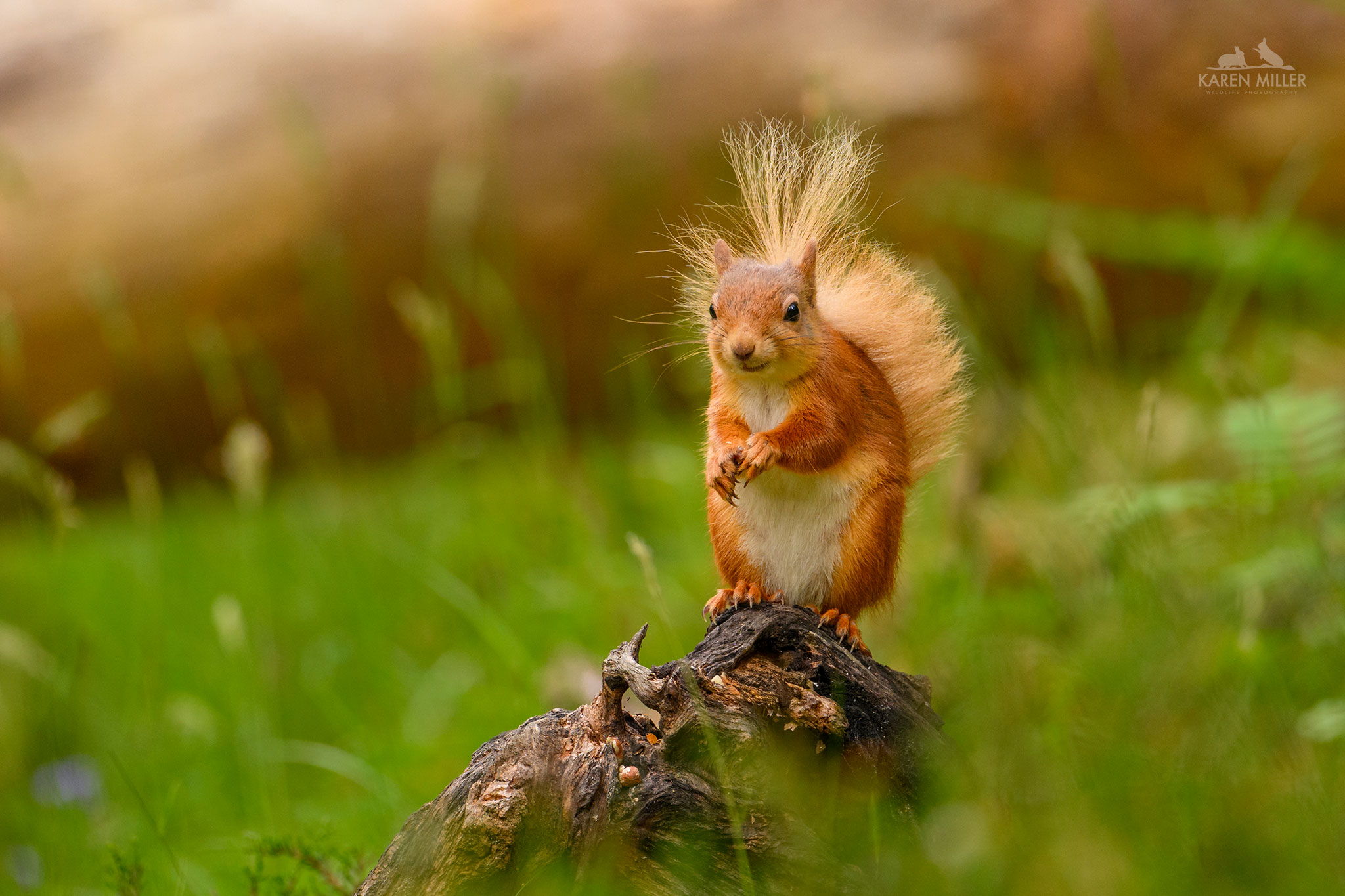
A few photography tips based on my experiences.
- Unless it’s specifically stated that you shouldn’t feed them, or if you’re going to a paid photo hide, always take nuts, preferably hazelnuts with you. A nut cracker is useful too as the squirrels will often take whole nuts and stash for later so unshelled nuts are more likely to be eaten in situ, (although they are more often than not stolen by birds!) so you have more time for photographs. They also love sunflower hearts.
- Red squirrels are speedy wee creatures, and the majority of places you’re likely to find them are quite shady due to the trees. This makes it difficult to use a high enough shutter speed for moving squirrels, unless you push the ISO up very high and/or have a fast lens (although then you have the challenge of a shallow depth of field). It’s therefore best in these conditions to concentrate on photographs of them when relatively static – this is true for photographing any bird/animal in low light. Being curious animals, they will often pause to check you out, and of course stop to munch on nuts so have the camera ready. By doing this you can keep the shutter speed lower and therefore reduce the ISO.
- Try and photograph them away from feeders (same for birds) and if possible attempt at least a few images where they don’t have a nut in their mouth or front paws – not the easiest thing to do at times! Also good to try for eye contact, it makes the photograph more engaging. They have massive personalities, so images that capture an element of this are great too.
- If you’d like jumping squirrels then you’re best to go to a professional photography hide which has a set-up for this.
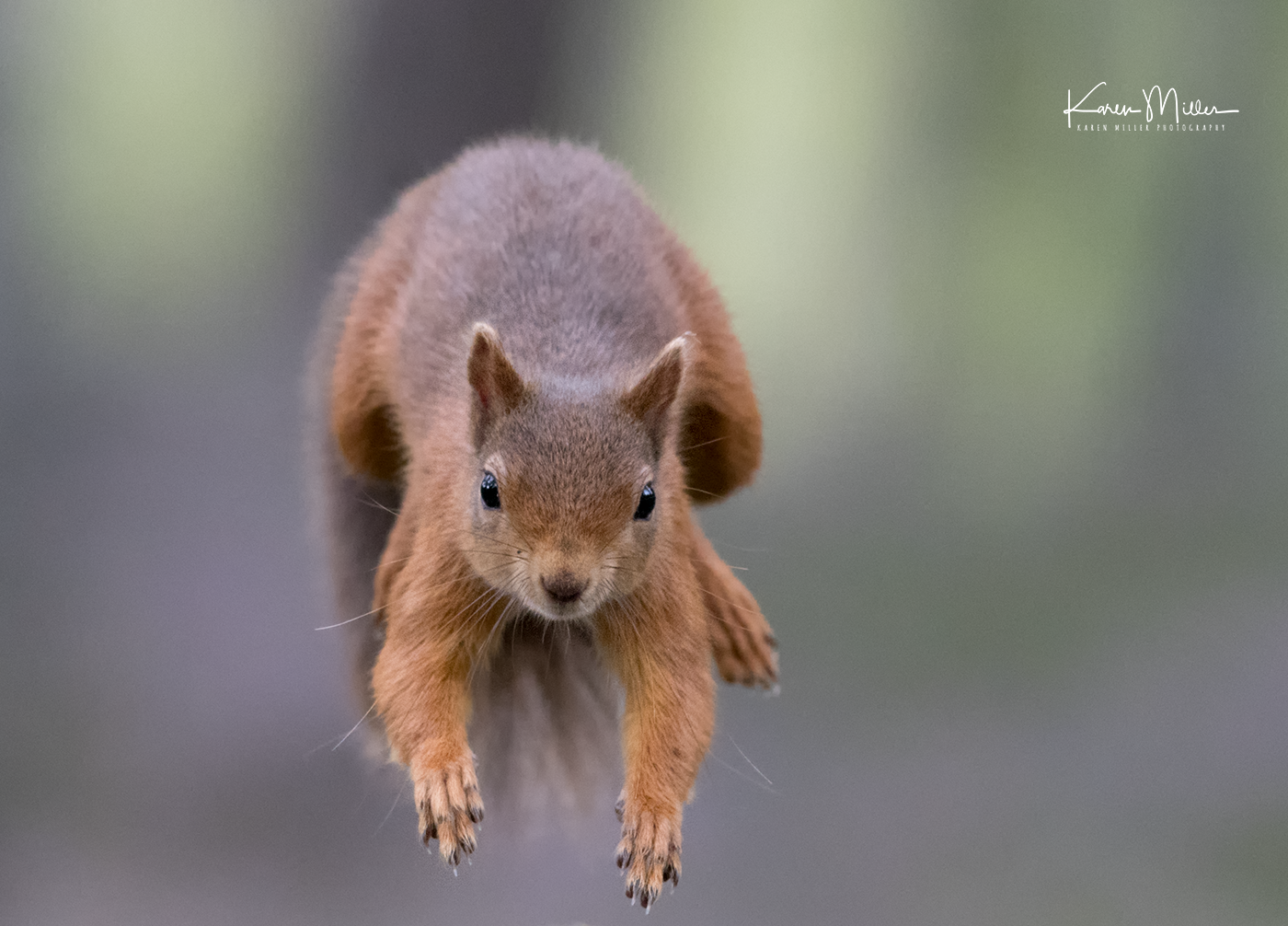
Before I move on to a few of the free sites available I want to mention my own site in the Scottish Highlands near Inverness. This is a deciduous site and I run it as a workshop. We sit outside with the squirrels who go about their business mostly unconcerned at our presence. We can talk and move slowly. I don’t encourage them to come too close and have never attempted to hand feed them as they are, and should be wild. Because we sit outside we have a great view of the surrounding trees as well as the feeding area and can often witness lots of behaviours which is really interesting. The site is natural, there are no set-ups, I rely on a few stumps and the trees themselves. I feed them hazelnuts, sunflower hearts and a few peanuts. Being deciduous the site changes throughout the year. From autumn onwards the beech trees’ leaves turn orange and many keep these leaves right through until May, providing a beautiful bronze backdrop. The trees all have many branches unlike in pinewoods.
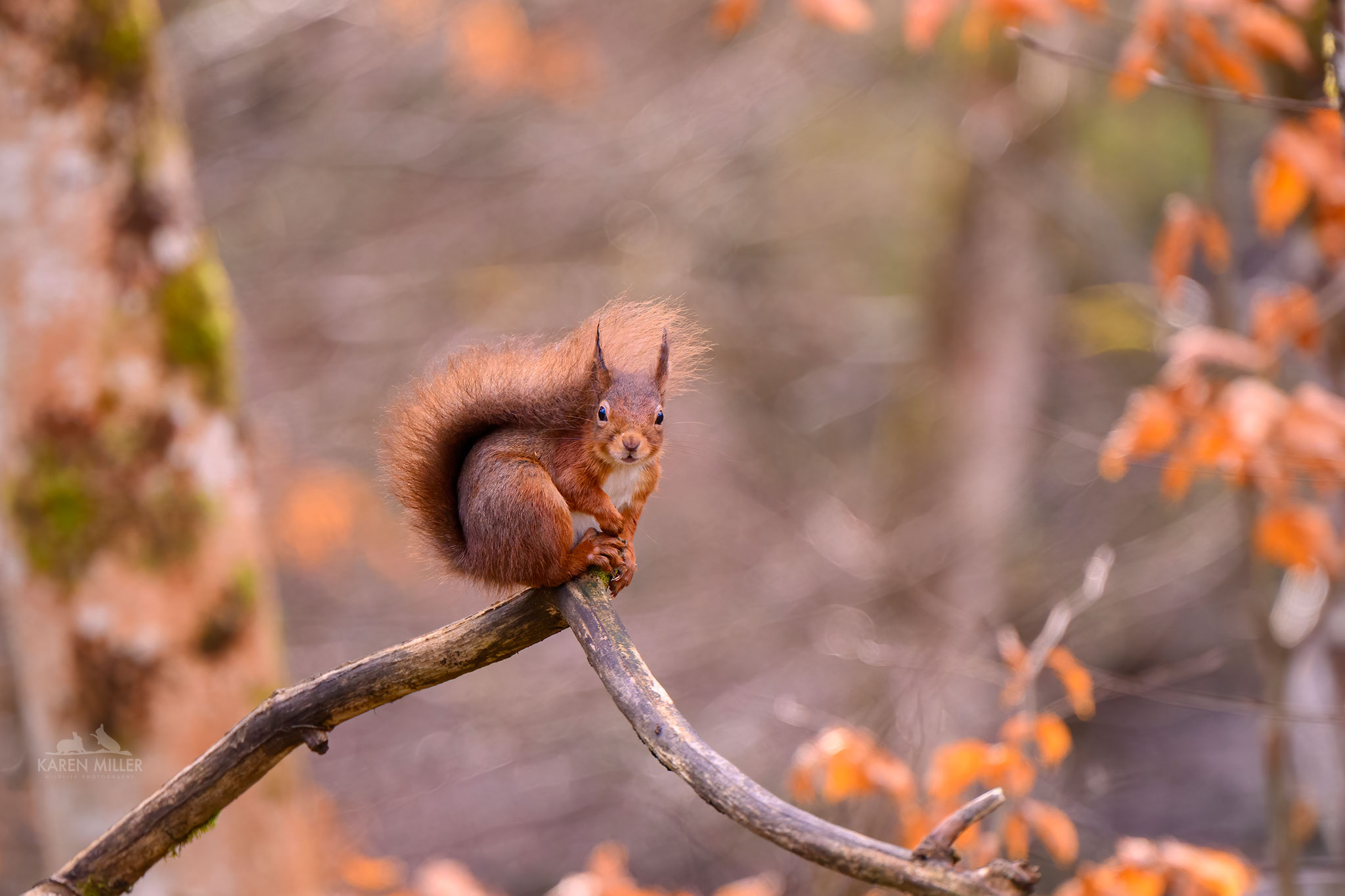
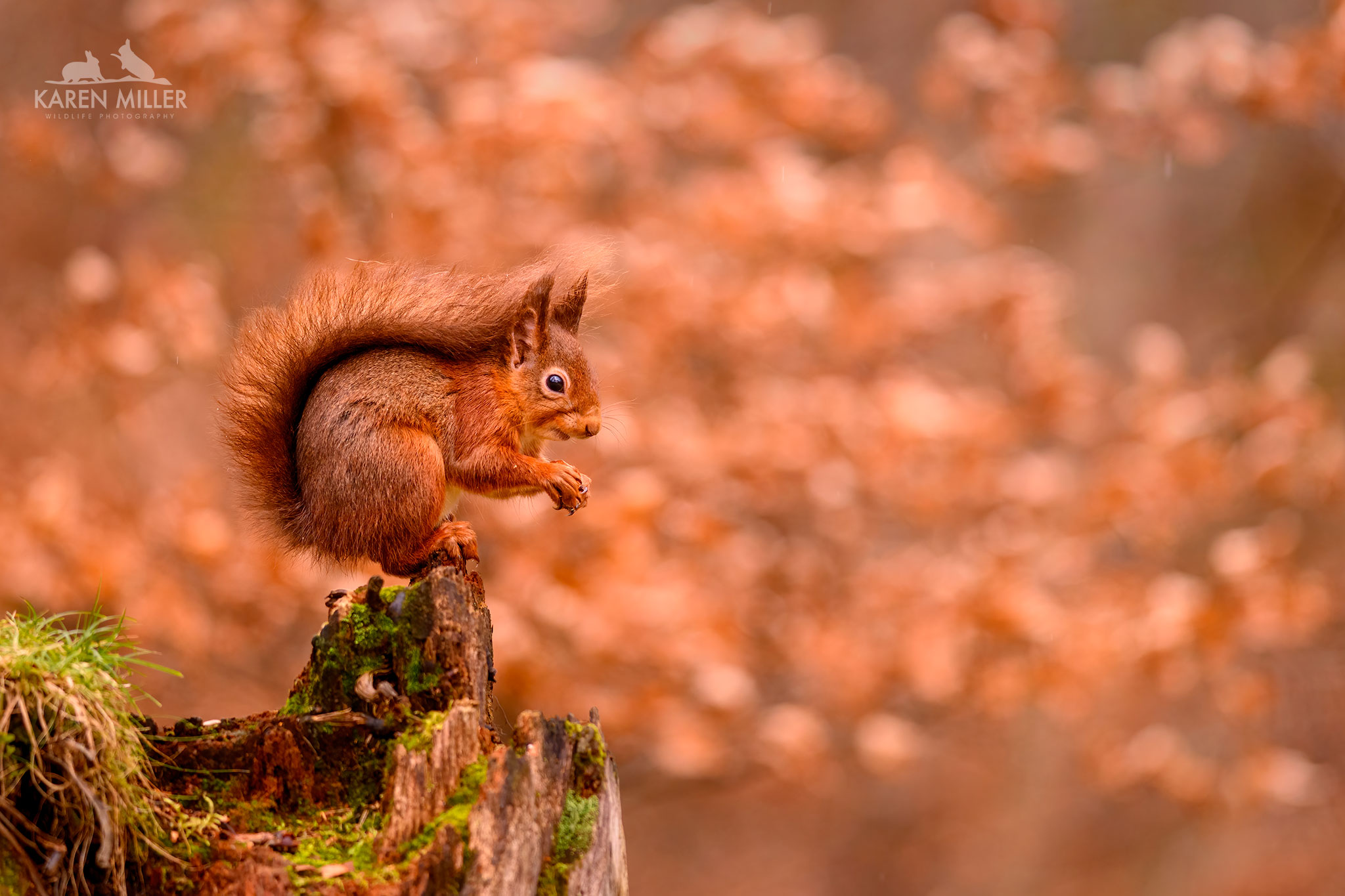


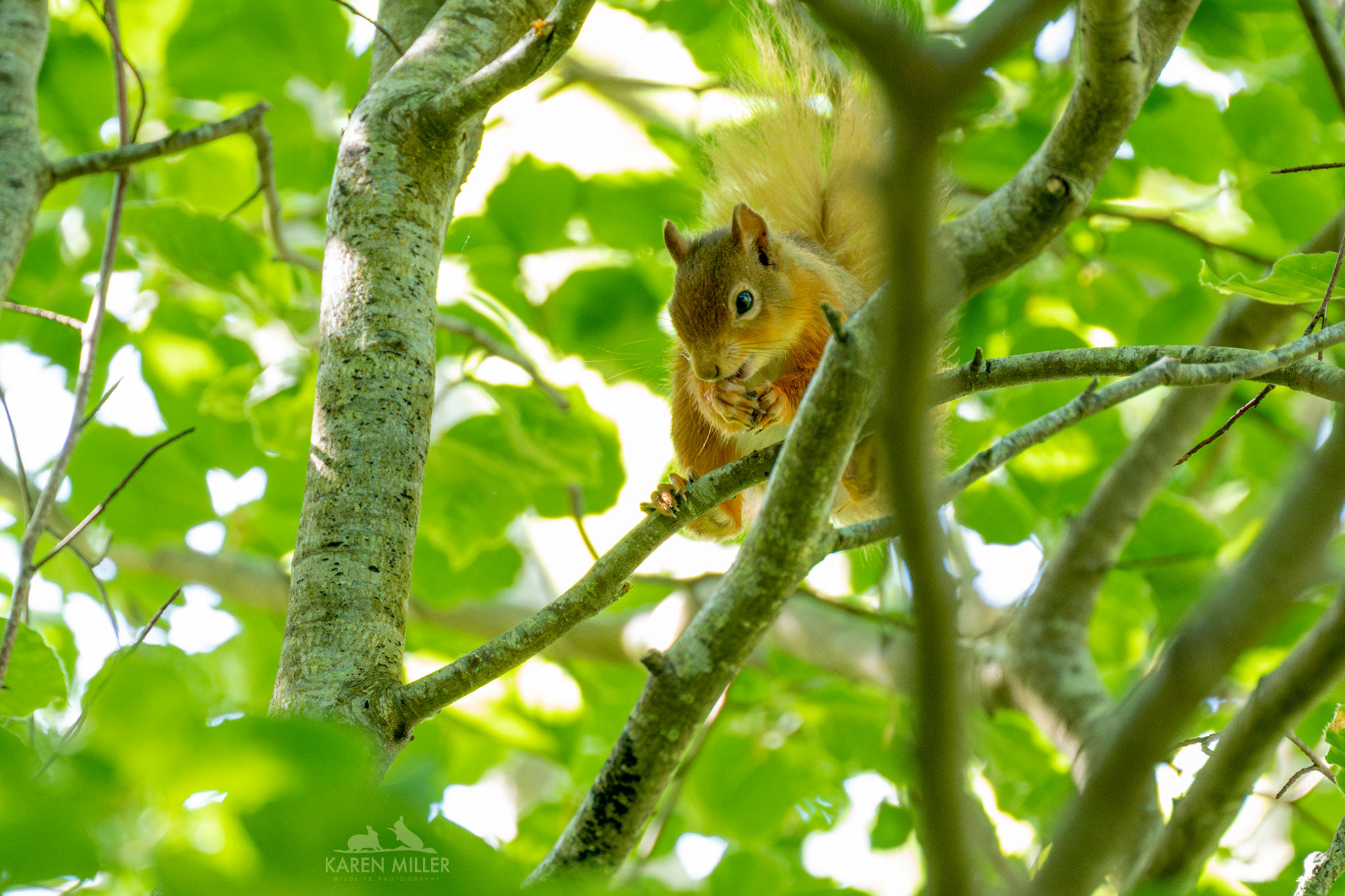
If you’d be interested in joining me for a workshop please do get in touch. Full details are on my website. Not only will I help you with settings but I’ll talk about behaviours, facts and the individual squirrels. I also run a three day “red squirrel therapy” workshop which includes accommodation at my rental cabin “The Drey Inchberry“.
Coming soon I hope, a second site, this one in a pinewood also close to Inverness. Here you can be left on your own and it’ll take up to 2 people, sitting in a spacious pop up hide. Because you’re using a hide there’s a great chance to see jays, great spotted woodpeckers and other wildlife that might pop by up close. Please contact me for details regarding this too. I hope to have it available from mid August 2025.
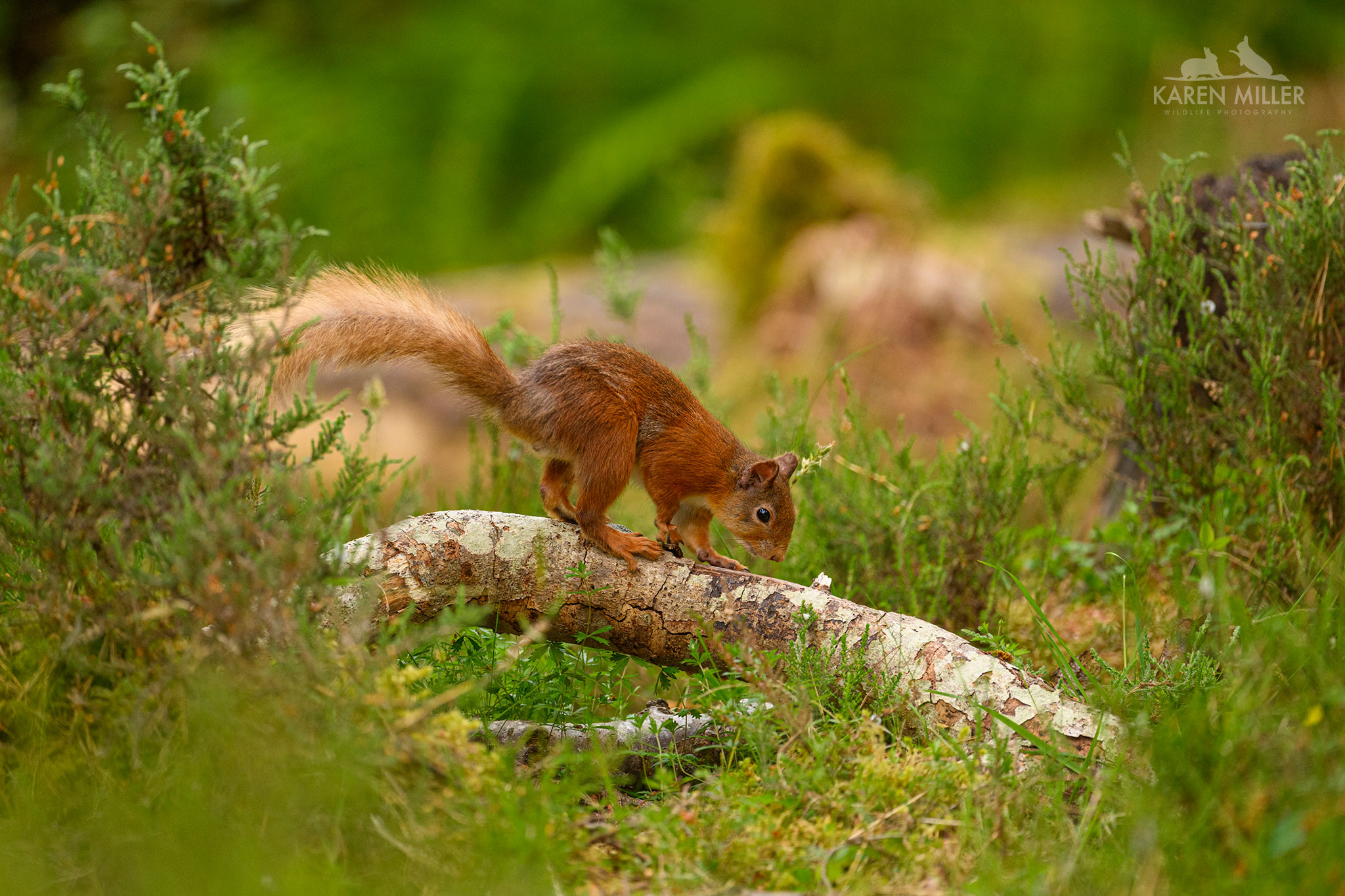
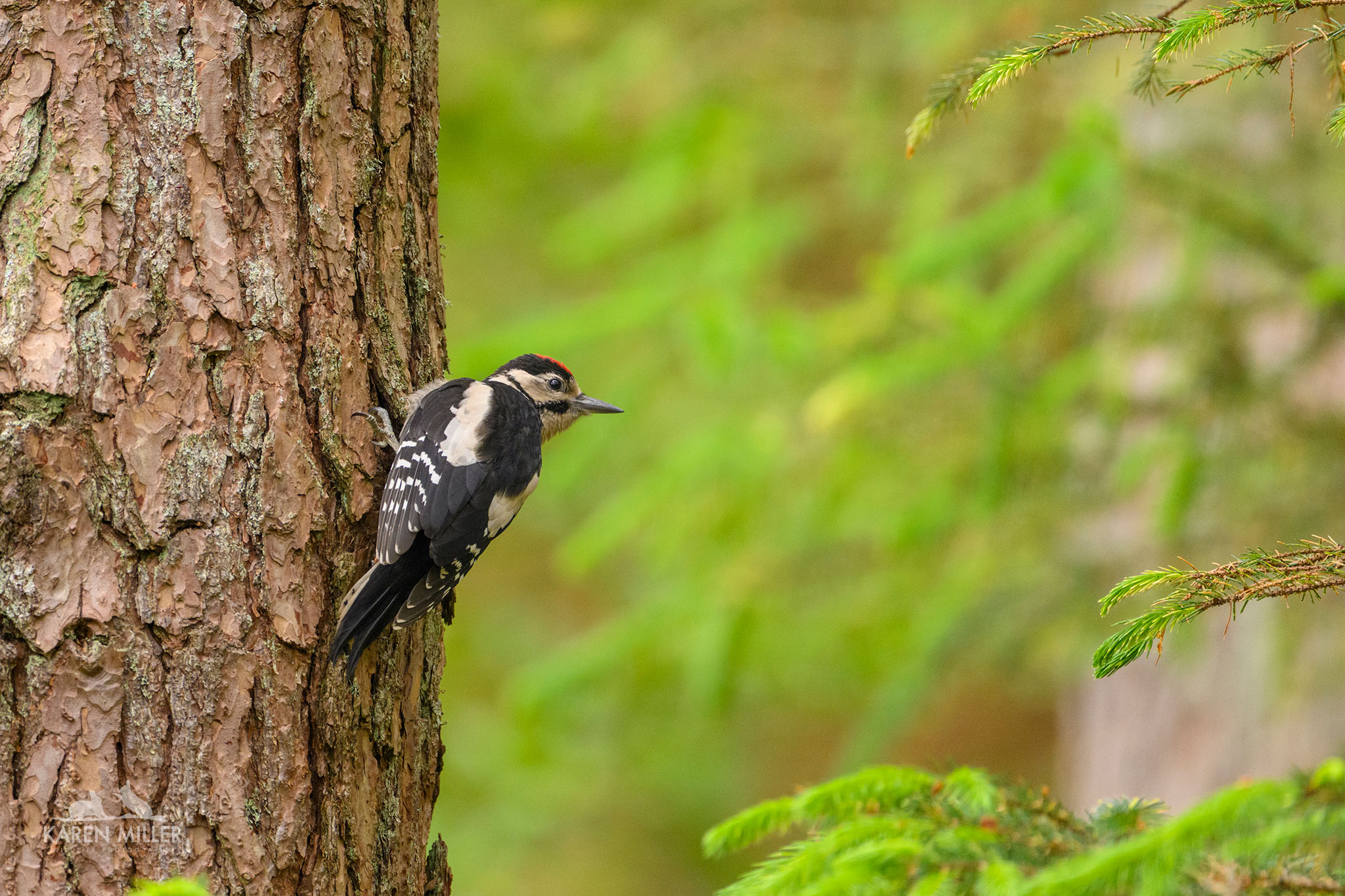

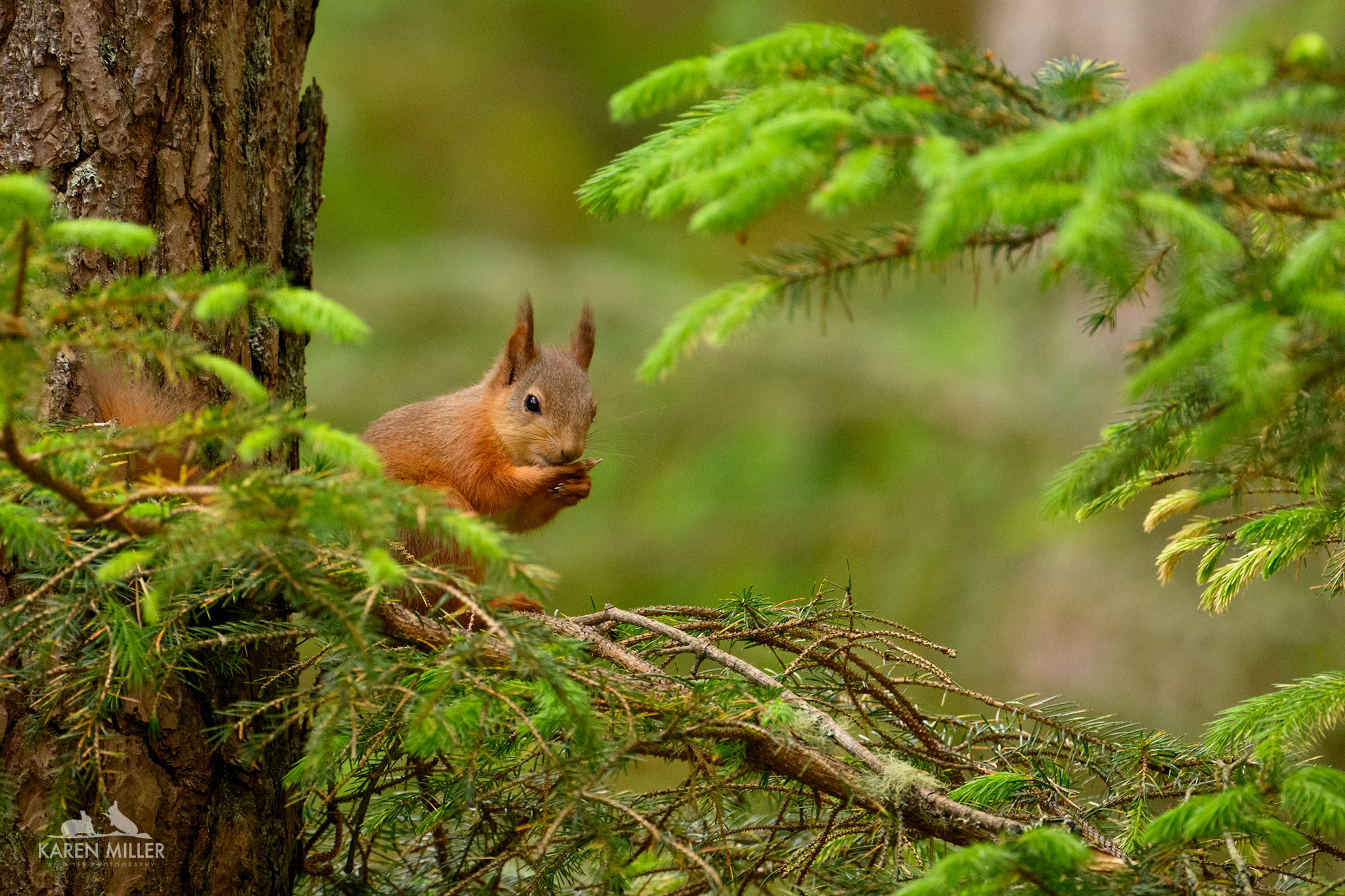

FREE LOCATIONS/RESERVES
Here are some free (or voluntary contribution) locations I enjoyed visiting before I was lucky enough to have my “own” squirrels, beginning with the wonderful Eskrigg Nature Reserve on the outskirts of Lockerbie. (2025 update) Please note, that in recent years the squirrels have not been showing as well as they used to. I am not sure what the current status is. Not the easiest reserve to find, you won’t stumble upon it by accident, but google can help! There’s a red squirrel hide and nut feeders as well as a large number of bird feeders here, aside from the reds you will be unlucky not to spot a nuthatch or great spotted woodpecker as well as all the regular little birds. Sparrowhawks (I haven’t seen one here) are often sighted as are treecreepers and goldcrest (I’ve seen both) and there’s a pond with ducks, swans and apparently, on occasion kingfisher. There are a lot of red squirrels here, but I’ve found on some occasions they don’t come down regularly – I’ve had 4 or 5 at one time or, rare visits from a single animal. Early morning is good. Light isn’t bad as it’s at the edge of woodland, although it’s not bright by any means. I tend not to use the hide, but sit on the boarding next to it so I can get down to eye-level with the squirrels. Many are very tame, and will come within touching distance, often far too close to focus on. My camera/lens choices here were the Nikon D500 + Tamron 150-600mm for more distant squirrels and the birds, and my Nikon D610 with Tokina 100mm macro, for those much closer animals – you really need a short lens here and a fast one with large aperture very helpful too! A mobile phone camera/video is great too. The volunteers who run the reserve prefer that folk don’t feed the squirrels but do allow photographers to place some nuts in photogenic spots, but the hazelnuts should be shelled first. I’ve written a blog about Eskrigg, so do check that out if interested.


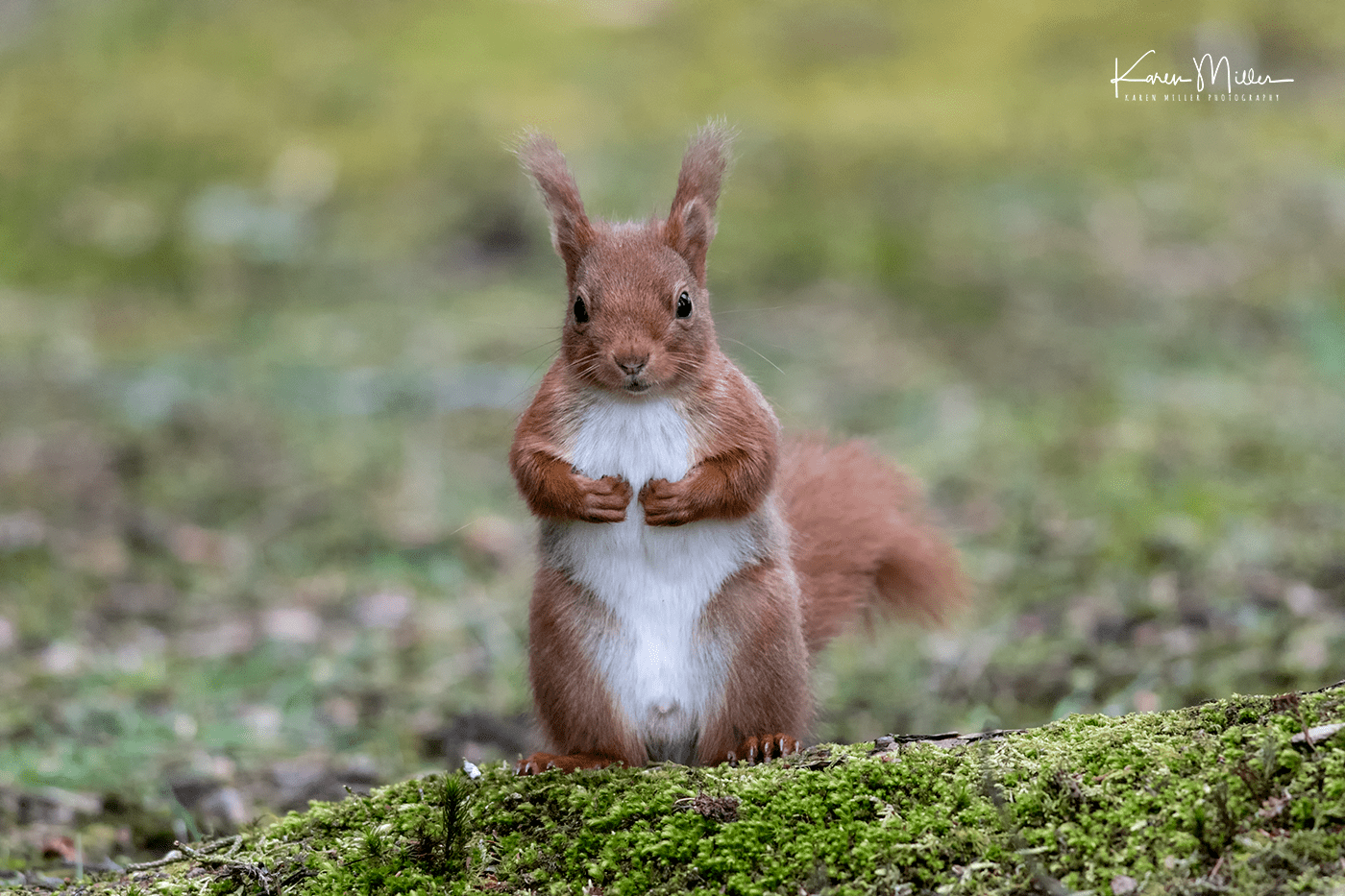
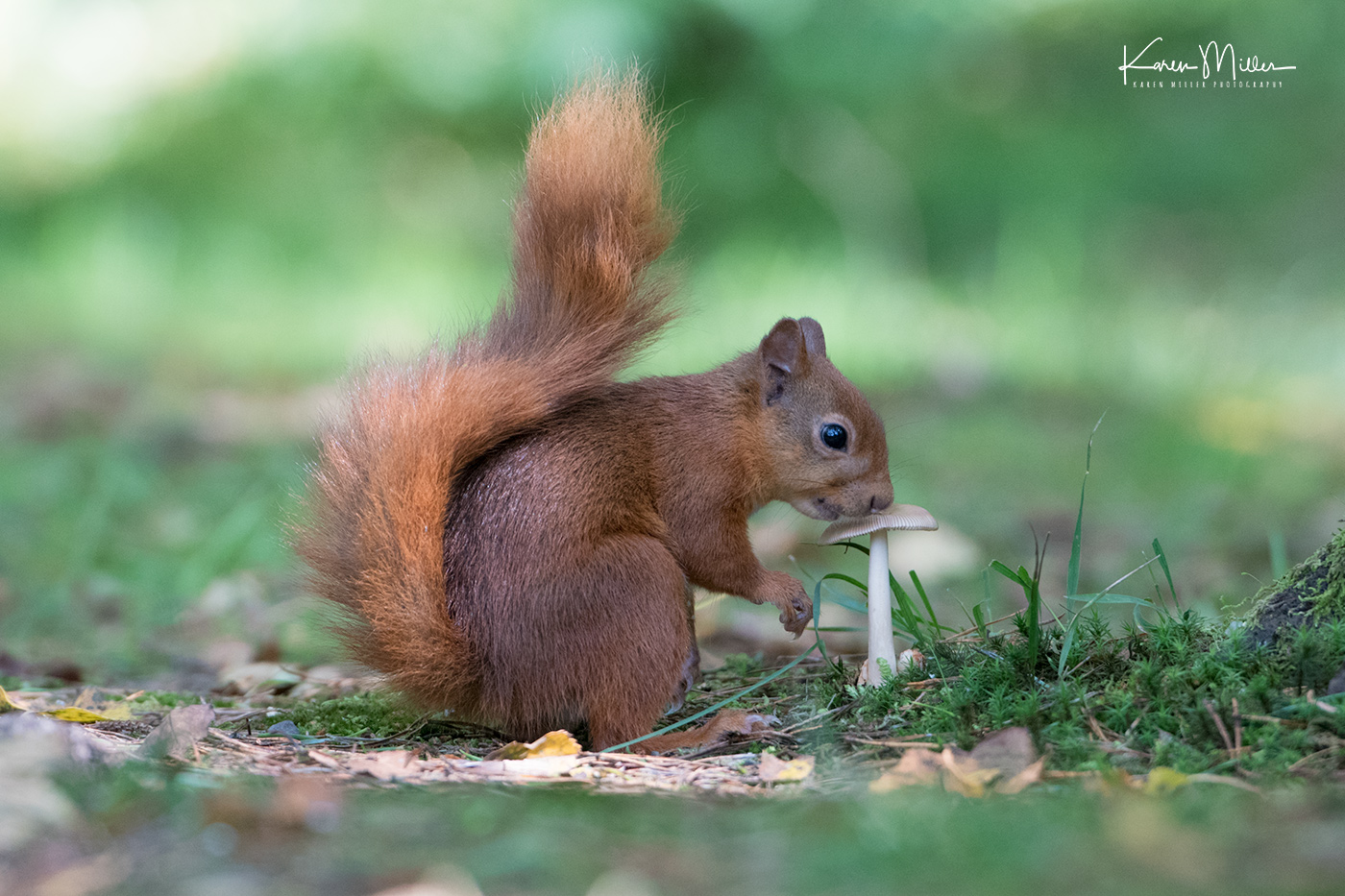
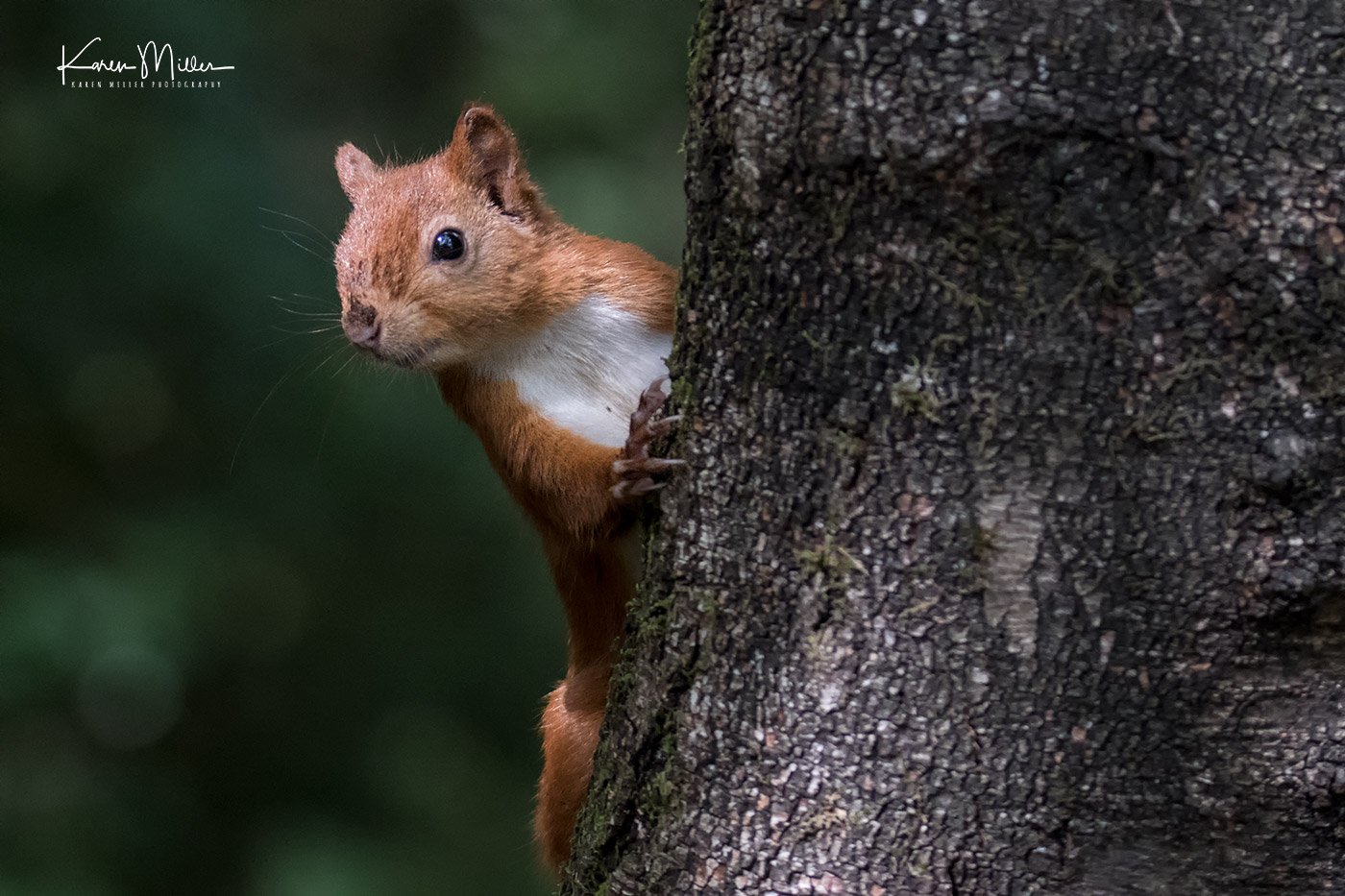
Aberfoyle – there are red squirrels throughout Loch Lomond and the Trossachs, but a good place to stand a chance of seeing them is at the David Marshall Lodge wildlife hide. Not brilliant for photographs as the undergrowth is quite high and the squirrels tend to go to the feeders, plus it’s a bit on the dark side and the squirrels aren’t too close so the best compromise between long lens and large aperture is best. Also visited by lots of families with loud excited children and dogs and there’s a zip wire close by so lots of screaming and not the most peaceful of locations. If you wander around near the hide though you might find a more photogenic spot and can maybe attract some with nuts. I had success with this on one occasion. Nuthatch and jays also regular visitors to the hide location.
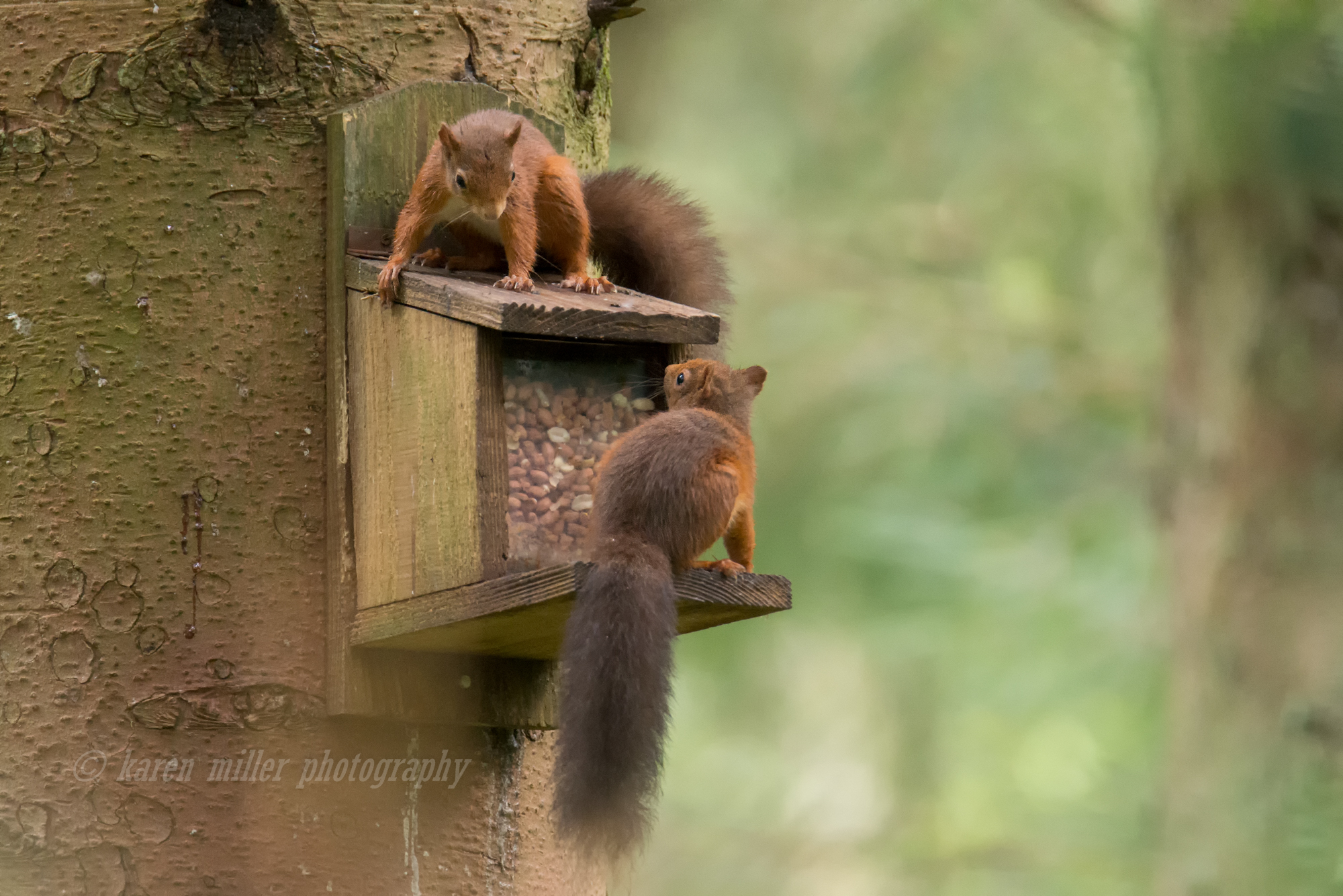

Buchanty Spout, Perthshire – I visited this area to try and photograph the jumping salmon on the River Almond, but they chose not to travel upstream that day. Very pretty spot though especially in the autumn. If you cross over the river to the side furthest from the carpark, there’s a walk along the riverbank. I saw 4 red squirrels here. A bit of patience, fieldcraft, long lens and nuts might be required to get close to them though. I had the wrong lens, as I’d come for the salmon, so struggled to photograph one sitting at the top of a tree, which is a shame as they’d have been quite interesting pictures.
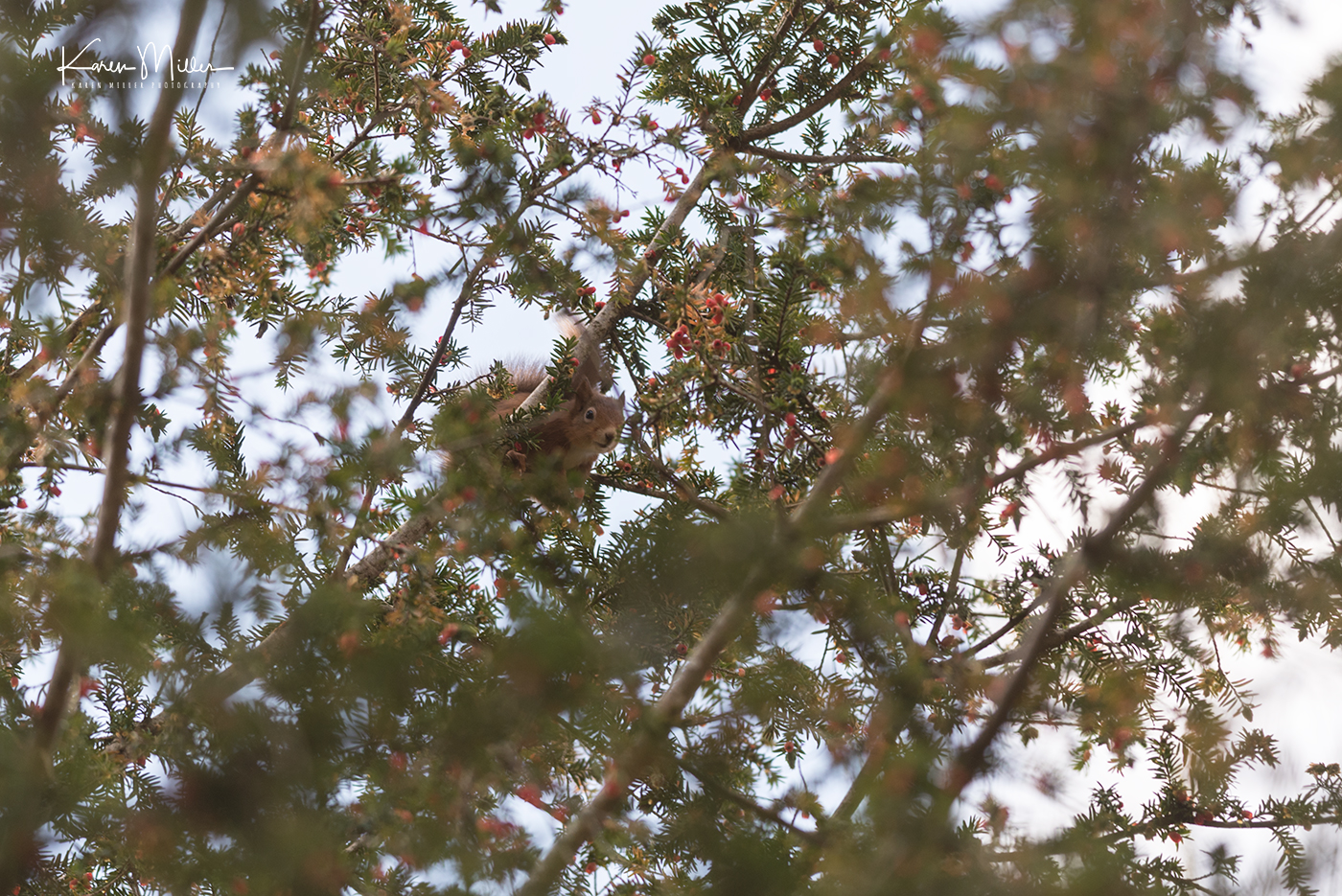
Morton Lochs (updated 2 July 2019) – First time I visited I saw nothing but that may have been because it was a bitterly cold November day and the entire area was frozen. However, On my return at the beginning of July 2019, after a bit of a wait three reds visited the squirrel hide. Not the most photogenic of hides as there are no bird feeders so the seed is scattered over the tops of the logs, but the squirrels come pretty close so a long lens isn’t necessary. I used a Nikkor 70-200mm f2.8 on my Nikon D500 (so focal length of approx 100-300mm). Plenty of bird life there too – at the hide you’ll see blue, great and coal tits, robins, wrens, blackbirds, dunnock, chaffinches, great spotted woodpecker and jays. In the surrounding areas there are spotted flycatchers and (apparently) whitethroat (both summer only) plus goldcrest, yellowhammer, treecreeper and reed bunting.

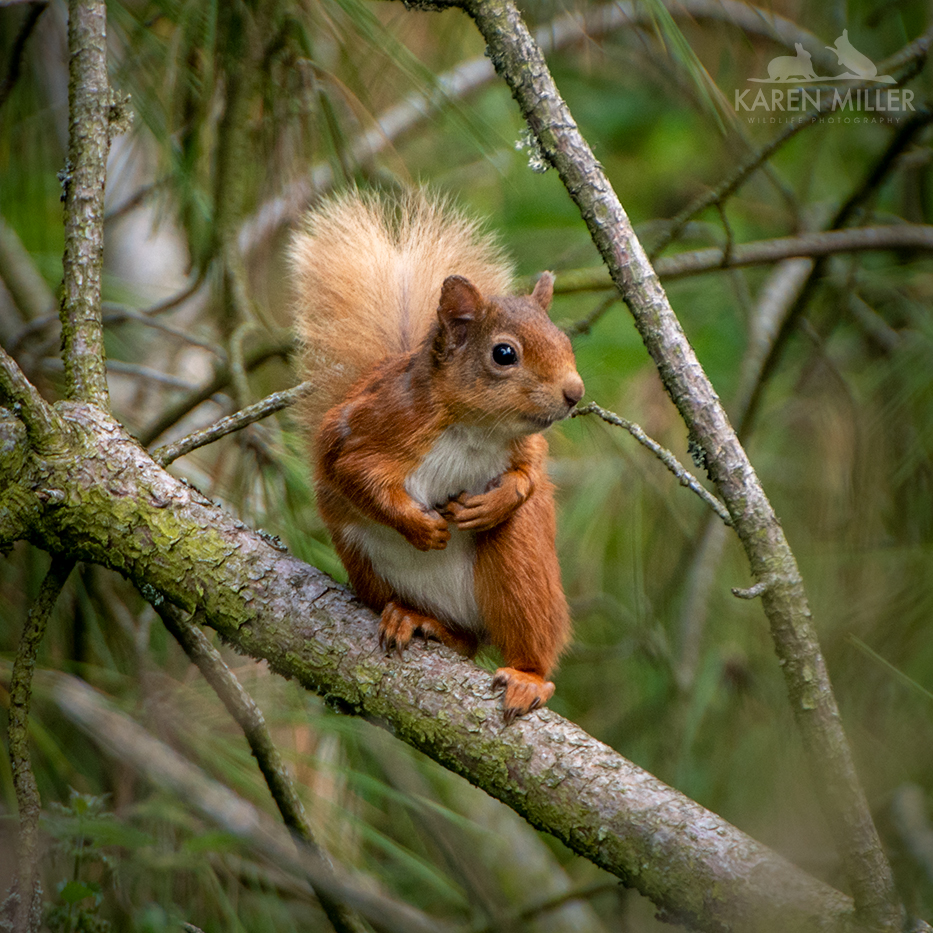
Loch an Eilein on the Rothiemurchus Estate near Aviemore is one of many places in that area you can spot red squirrels. The Loch is gorgeous and is surrounded by the remnants of the old Caledonian pine forest. Read on to find out about a fantastic, pay to rent, hide here, but you can spot squirrels at the feeders in the carpark opposite the hut where you pay to park (you do have to pay to park), and also down towards the loch itself. Early morning is best to see them and it’s not that easy to get close, but worth trying for the stunning location.
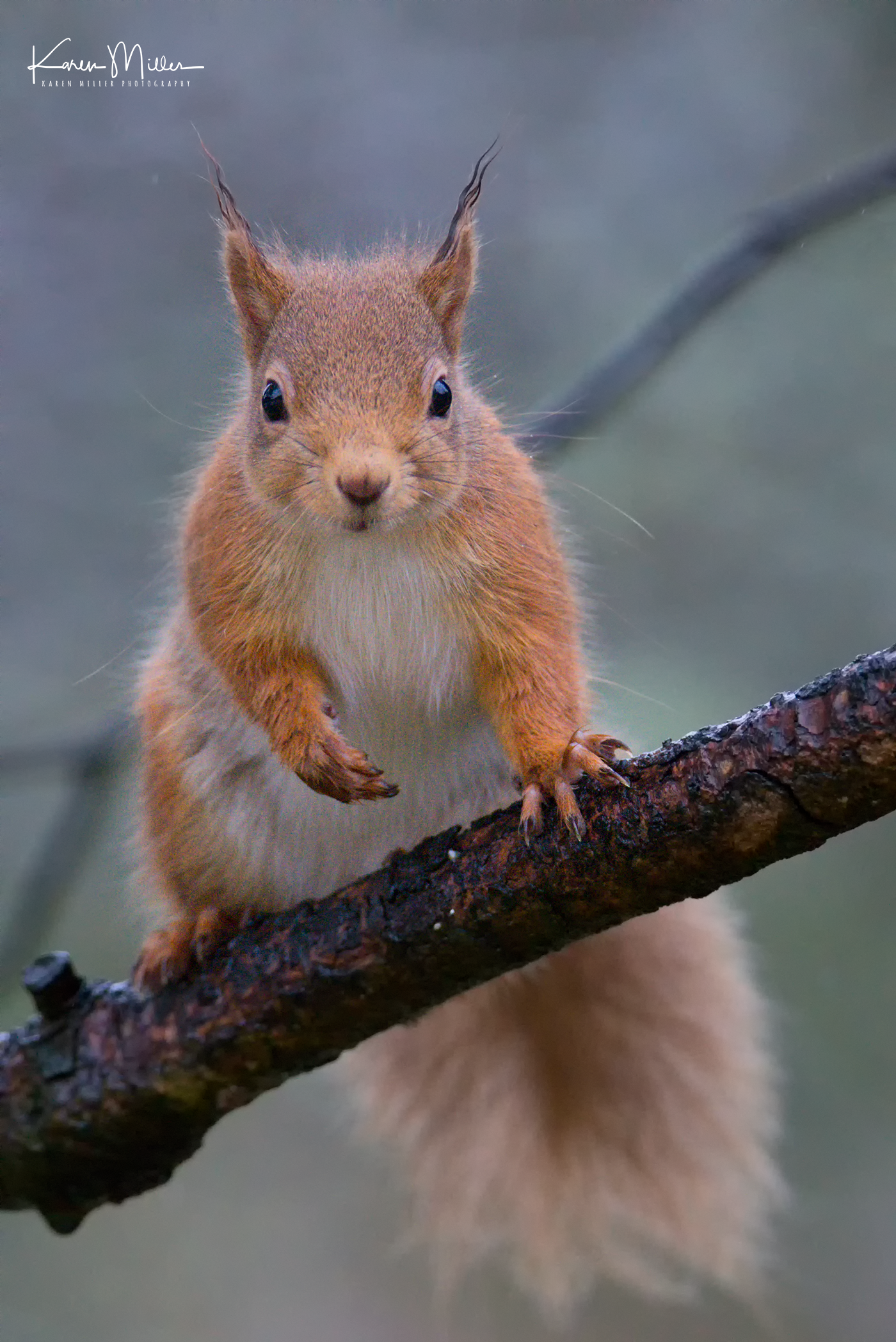
Lossiemouth Woods: Not the easiest place to find, the feeding station is deep within the wood, but park at the caravan park and head into the woods from there. Best to ask folk you meet as they’ll be able to point you in the right direction. This site has regular visits from red squirrels and crested tits. However it is not in the most photogenic location in the woods and light can be very tricky. My 70-200mm f2.8 lens had just died so I struggled to come away with anything using my 300mm f4 on a crop frame Nikon D500 – focal length was too great. I have seen good images from here though and if you’re in Moray it’s worth checking out.
Also in Moray is Spynie Loch which has a fab little hide where you can see all sorts of things including red squirrels. Pine martens and osprey have also been recorded here.
PAY TO ENTER (FREE FOR MEMBERS) WILDLIFE RESERVES
Many of the wildlife organisations have red squirrels visiting their sites. The best I’ve found of these is RSPB Loch Leven. There is a fee for non-RSPB members. Squirrels are located behind the visitor centre, by a small hide designed to encourage children to watch wildlife. This whole bit of the reserve is full of bird feeders and therefore squirrels can be sighted anywhere but this area by the wee hide has the most light and a nice photogenic log which has good dips for hazelnuts. I had to wait awhile, maybe because the feeders were pretty empty as it was 2nd Jan so the centre had been closed for a couple of days, but eventually I was visited by at least three individuals who returned again and again once they discovered my hazelnuts. I wasn’t able to put out unshelled nuts though because the birds instantly stole them! Whenever the nuts ran out, the squirrels would approach me and let it be known they’d like some more. Although the reserve was busy very few people came near this bit, so I mostly had the squirrels to myself. Any lens will do here. I used the D500/Tamron combination, but mostly at the short focal length (200-300mm). Sit opposite the fallen log and you’ll get some nice shots, but look behind and to the sides as well as the squirrels will sneak up on you!
(Close to RSPB Loch Leven is Portmoak Moss, there are red squirrels here too – I had a brief glimpse of one. No feeding station though so very hit or miss. Lovely woods and raised peatbog here. Woods hold green woodpeckers, but I didn’t see any on my visit.)
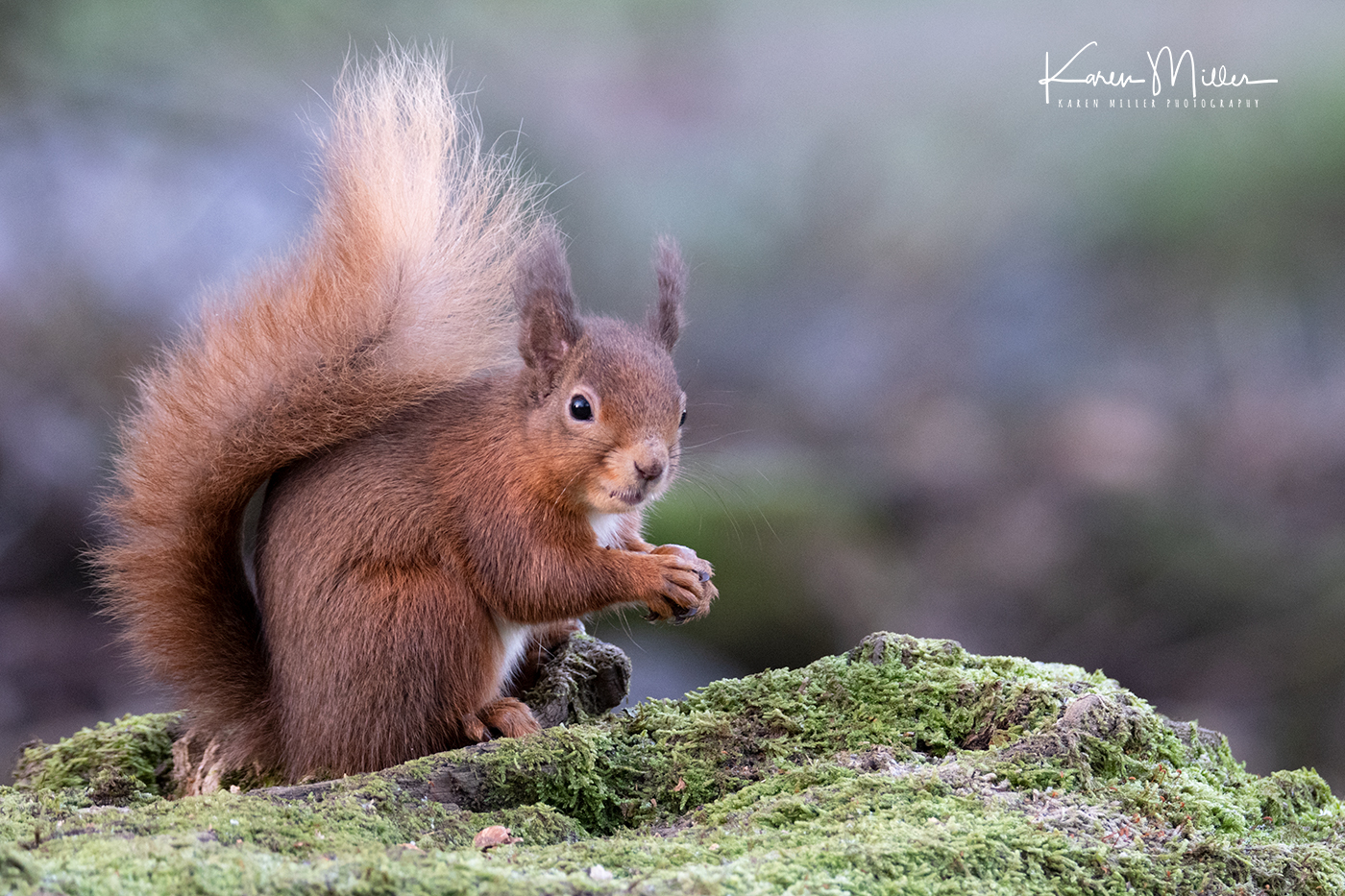


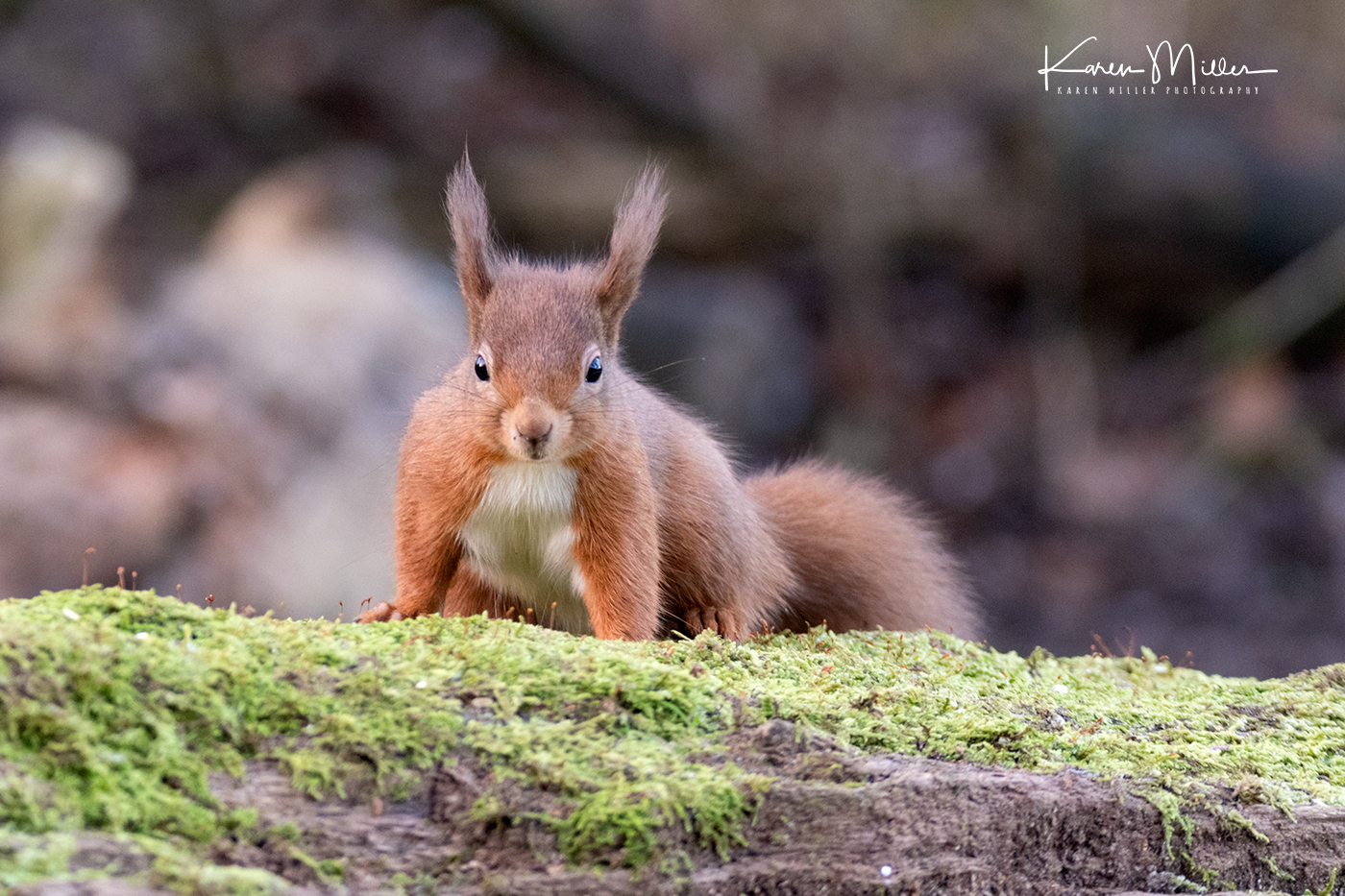


Loch of the Lowes (Scottish Wildlife Trust – members get in free) by Dunkeld is best known for its ospreys, but there are red squirrels visiting the feeders outside the visitor centre. They do apparently have a small pop-up hide that can be rented too. Not the best for photography as you’re sitting behind (clean) glass, but lovely to sit in the warmth of the centre watching them and the many varieties of birds that come for a snack. I don’t have any red squirrel photographs from here though as they were always sat at a feeder…
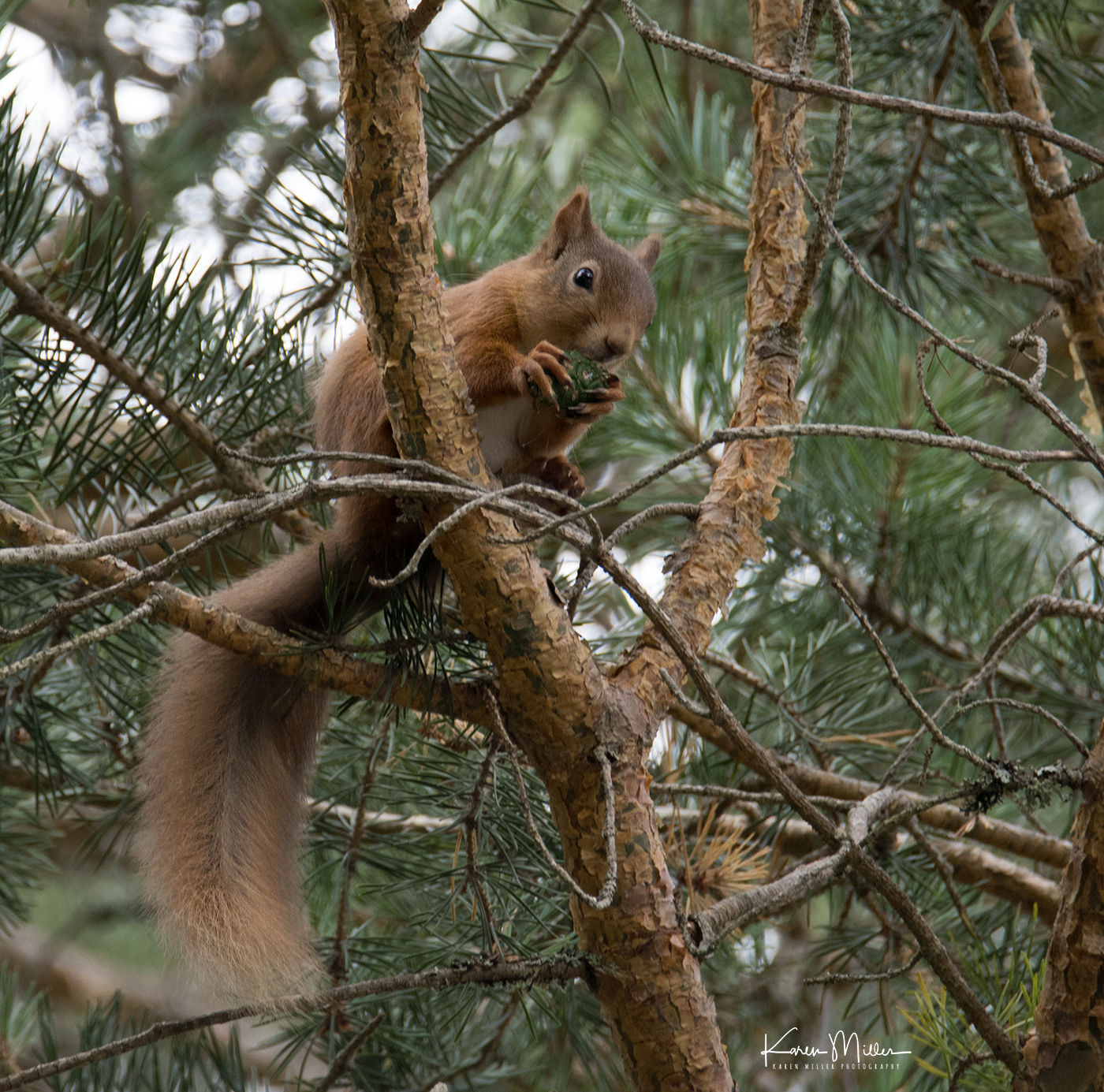
RSPB Loch Garten – Best known now for it crested tits and coal tits that feed out of your hand, but red squirrels are sometimes seen up by the visitor centre at the bird feeders – especially the long nut one. I’ve had two sightings here, one of which was a squirrel high up a tree actually eating proper natural squirrel food – a pine cone!!
PAID PHOTOGRAPHY HIDES
Added July 2021
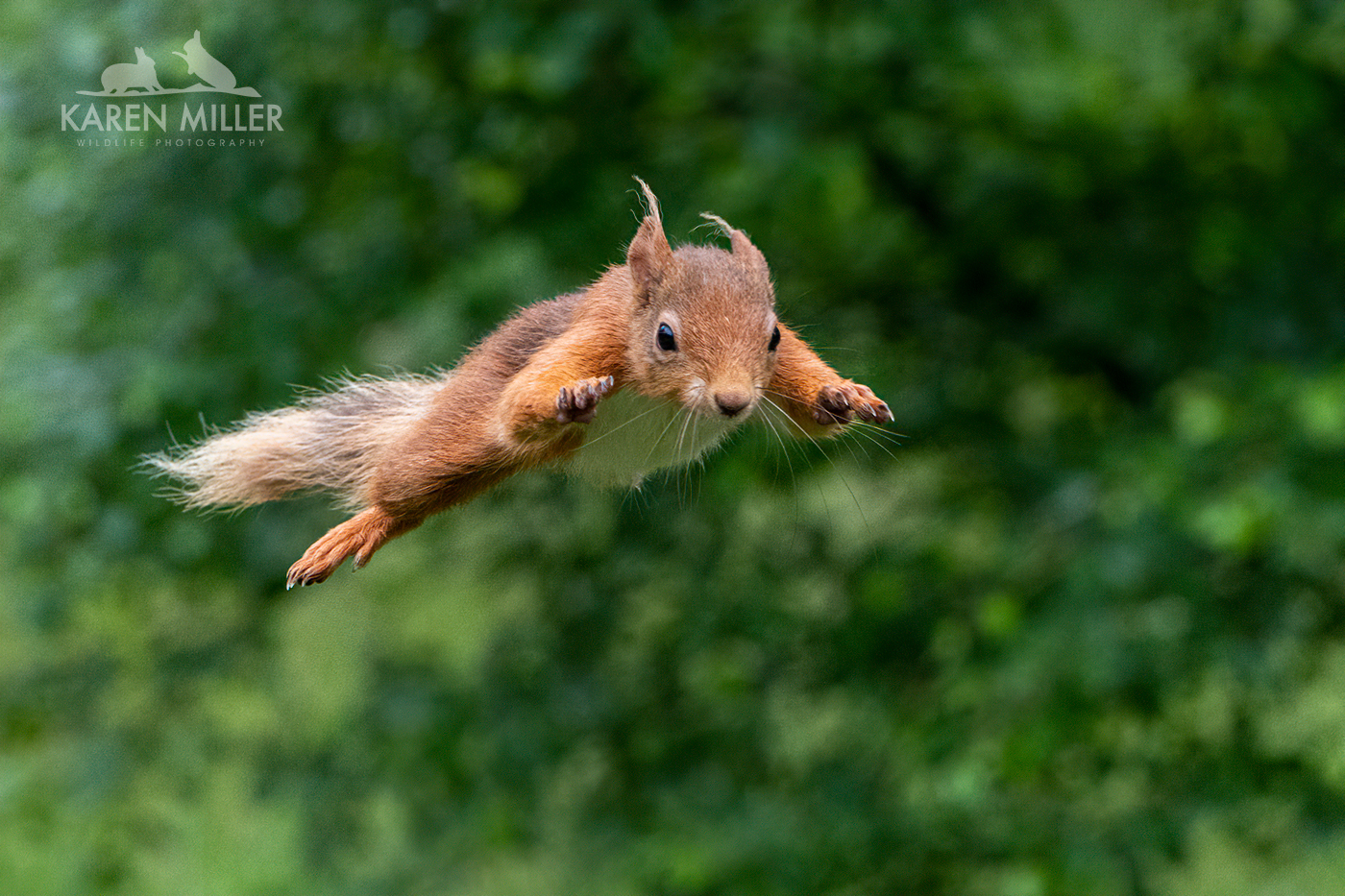
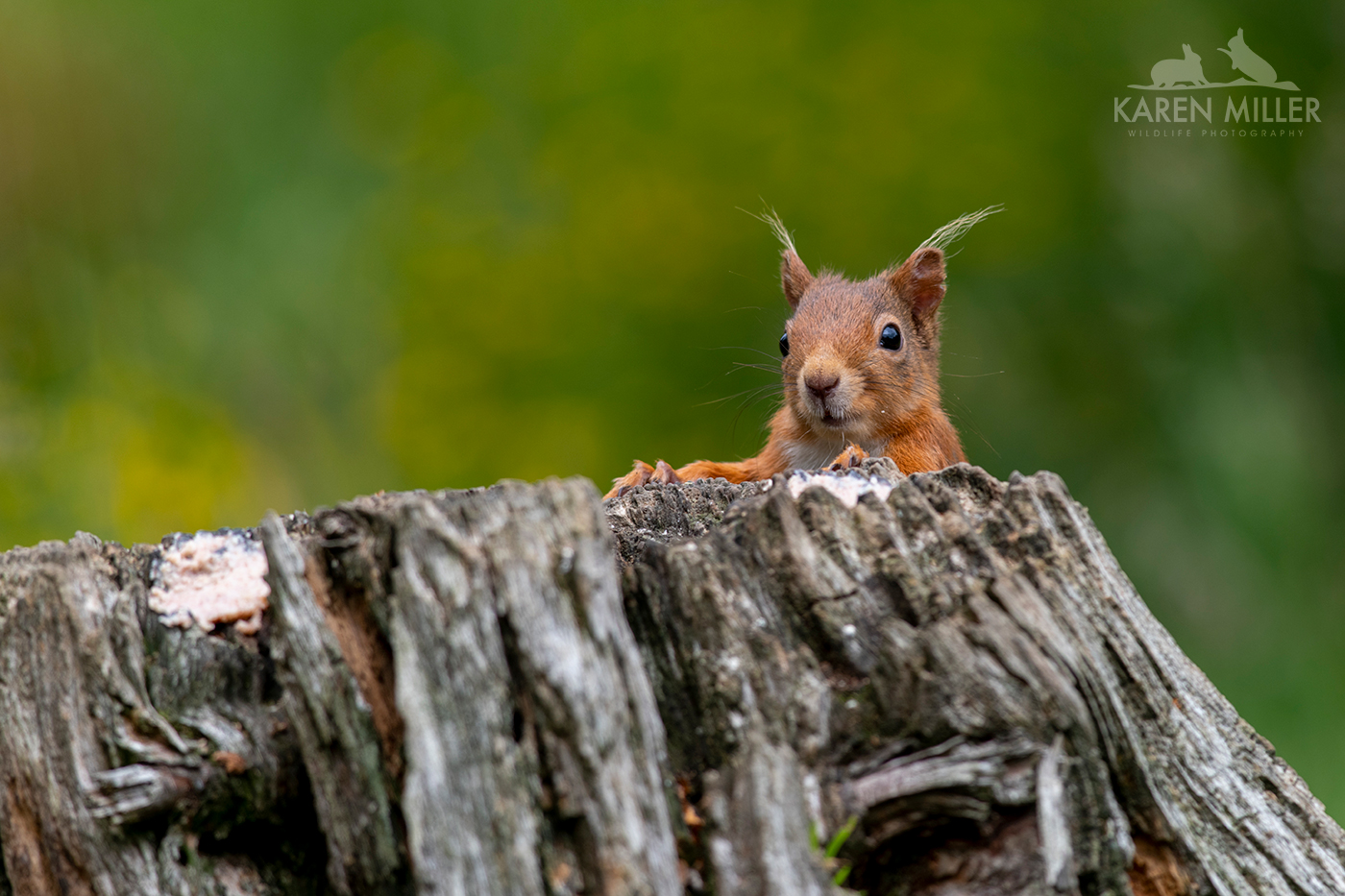
Penny Hedge is a wonderful hide located in the grounds of Mark and Sue Johnson’s house near Blairgowrie. It’s a large comfortable hide and they provide not only an amazing selection of food for their very spoilt wildlife, but also gorgeous baking for guests – win win! This is a pretty and open site so light is good, and it’s possible to sit outside with the squirrels too. The hide has tripod plates screwed into the viewing windows so all you need is your tripod head. For squirrels lens length 100-500mm, 300mm best. They have quite a large number of very pretty red squirrels and being photographers themselves it’s photogenic too. There’s a jump available as well if you want to try your hand at this. You can pay extra and come back in the evening for the chance of pine martens. In winter months they have a light set-up for this too.

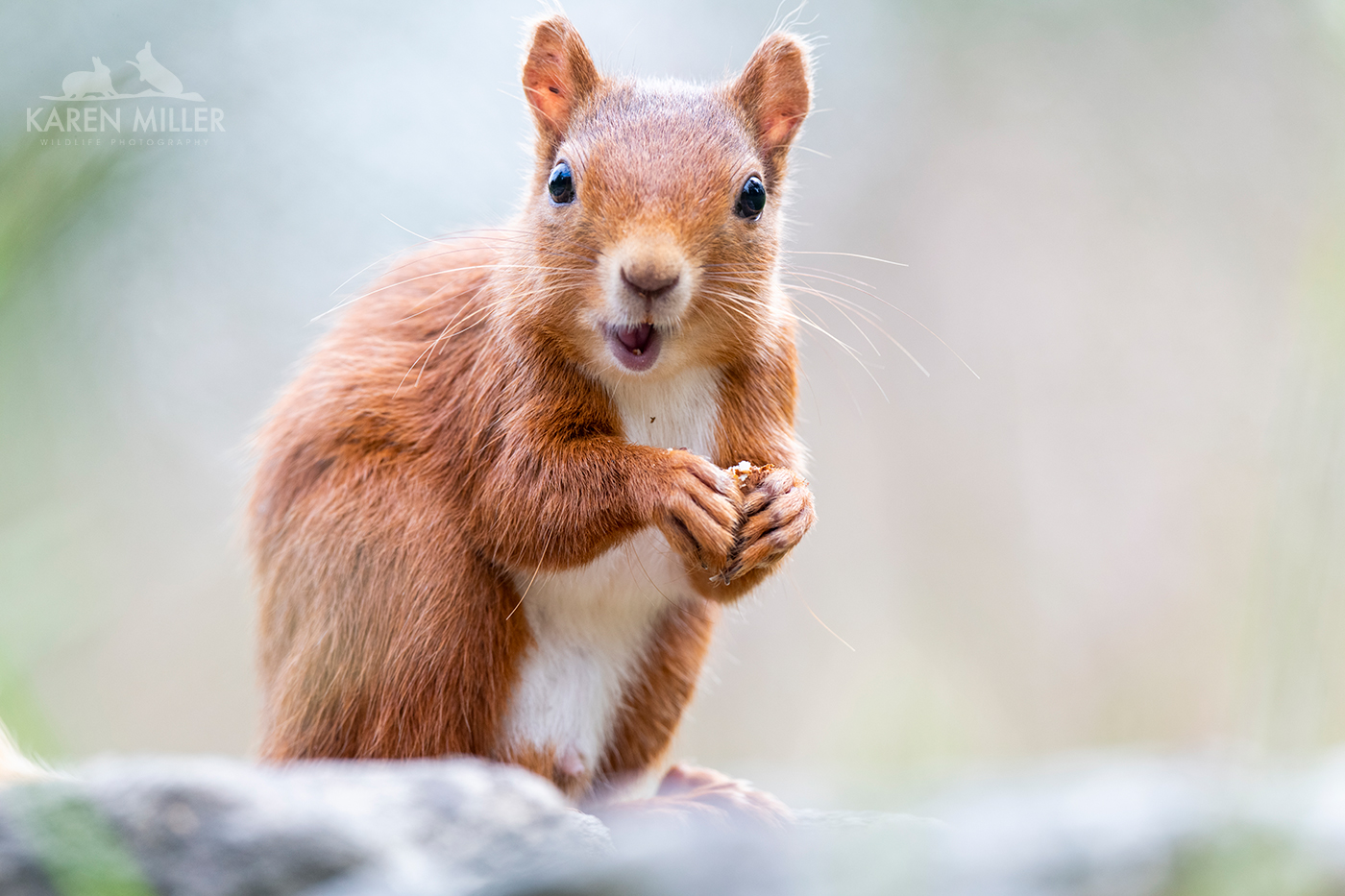


*UPDATE MARCH 2020 – Alvie Estate Red Squirrel Hide*
This is a hide I use for workshops sometimes in the winter for clients who are based in the Cairngorms rather than Inverness. It’s on the grounds of the Alvie Estate and is booked through the Estate Office (it isonly be open Dec-Mar though). It was set up by the gamekeeper because he wanted somewhere to watch the squirrels, and therefore a lot of love and thought has gone into it. The location is lovely with a backdrop of mountains and pine trees. Light is good and there are a fair number of squirrels visiting, often 3 or more at one time. The hide sits 4 people, it’s a bench, it’s a short walk from the road. No room for tripods but the estate provide decent beanbags. I used a full-frame DSLR with 300mm F2.8 lens and that worked perfectly distance-wise. I would suggest anything from 200-400mm would be best, 500mm would be too long for many of the logs. Plenty of nuts were put out, many in hidden locations, and the squirrels were, for the most part, comfortable enough to stay and eat them on the logs, so always something going on. It wasn’t quite as good for wide-shots as I’d thought it might be due to some small spindly trees behind, but for mid and close-ups it was great. If you’d like to join me for a workshop here please get in touch. Note: Alvie also do red deer photography sessions over the winter which are great.
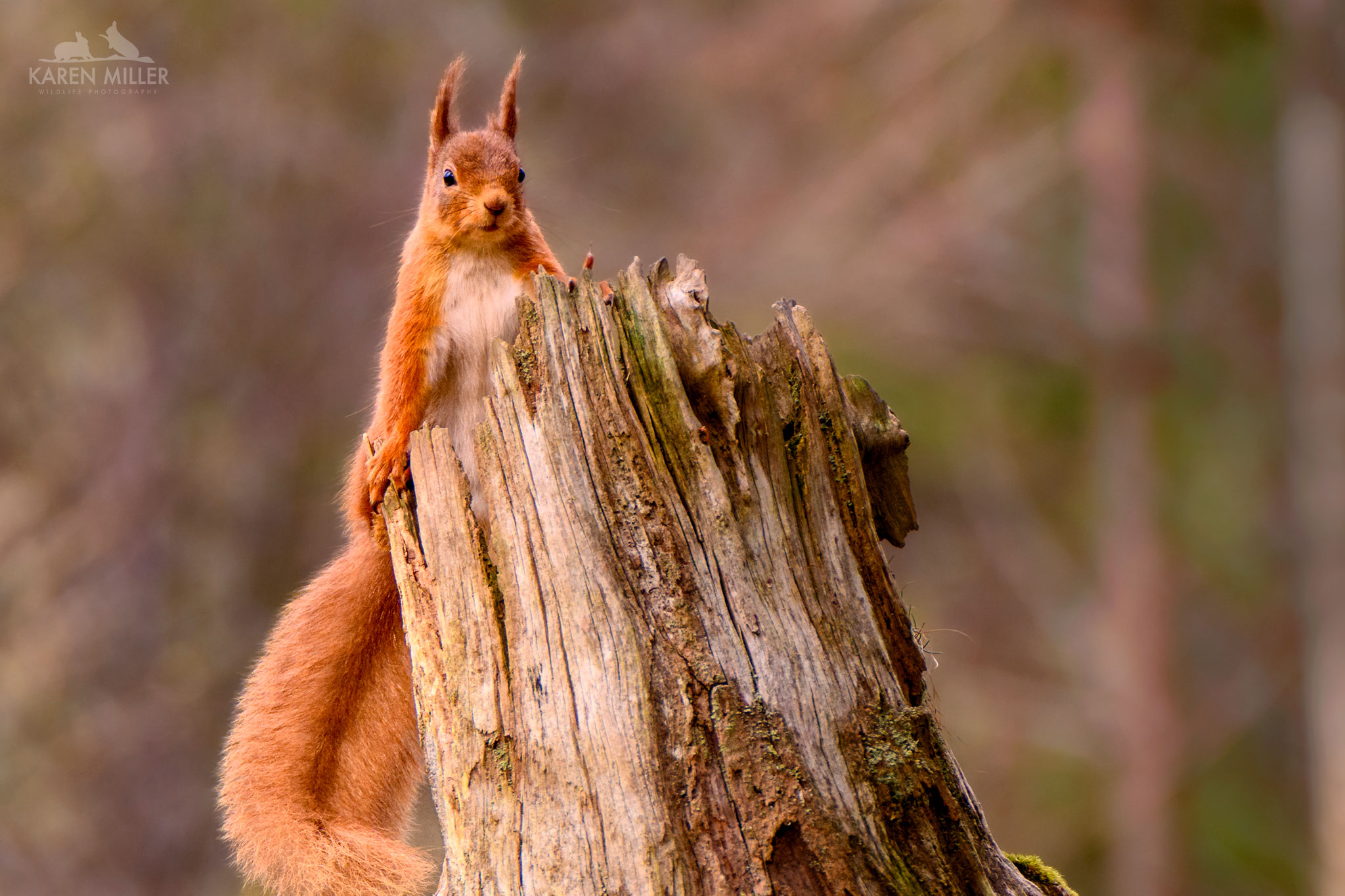


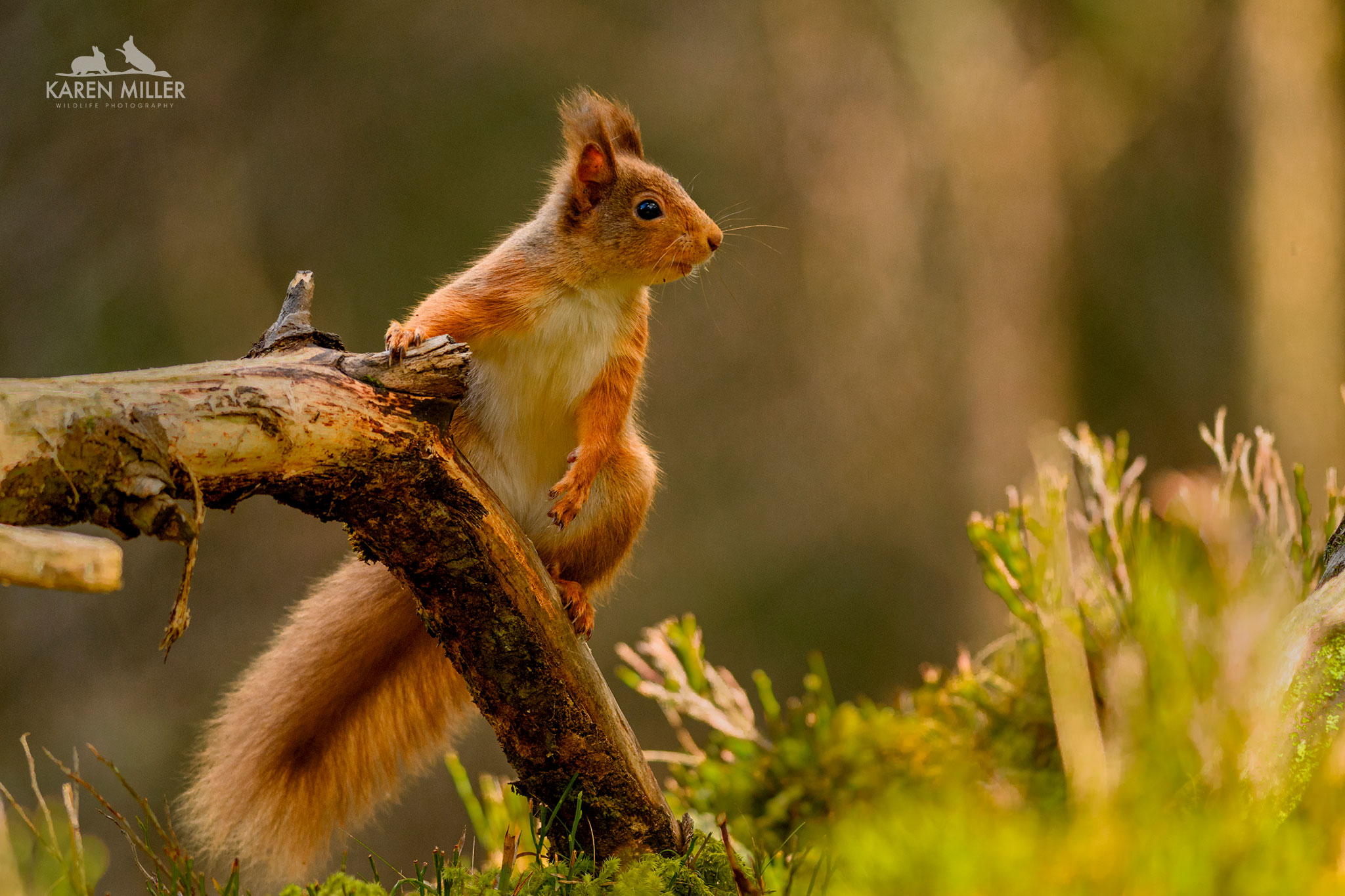
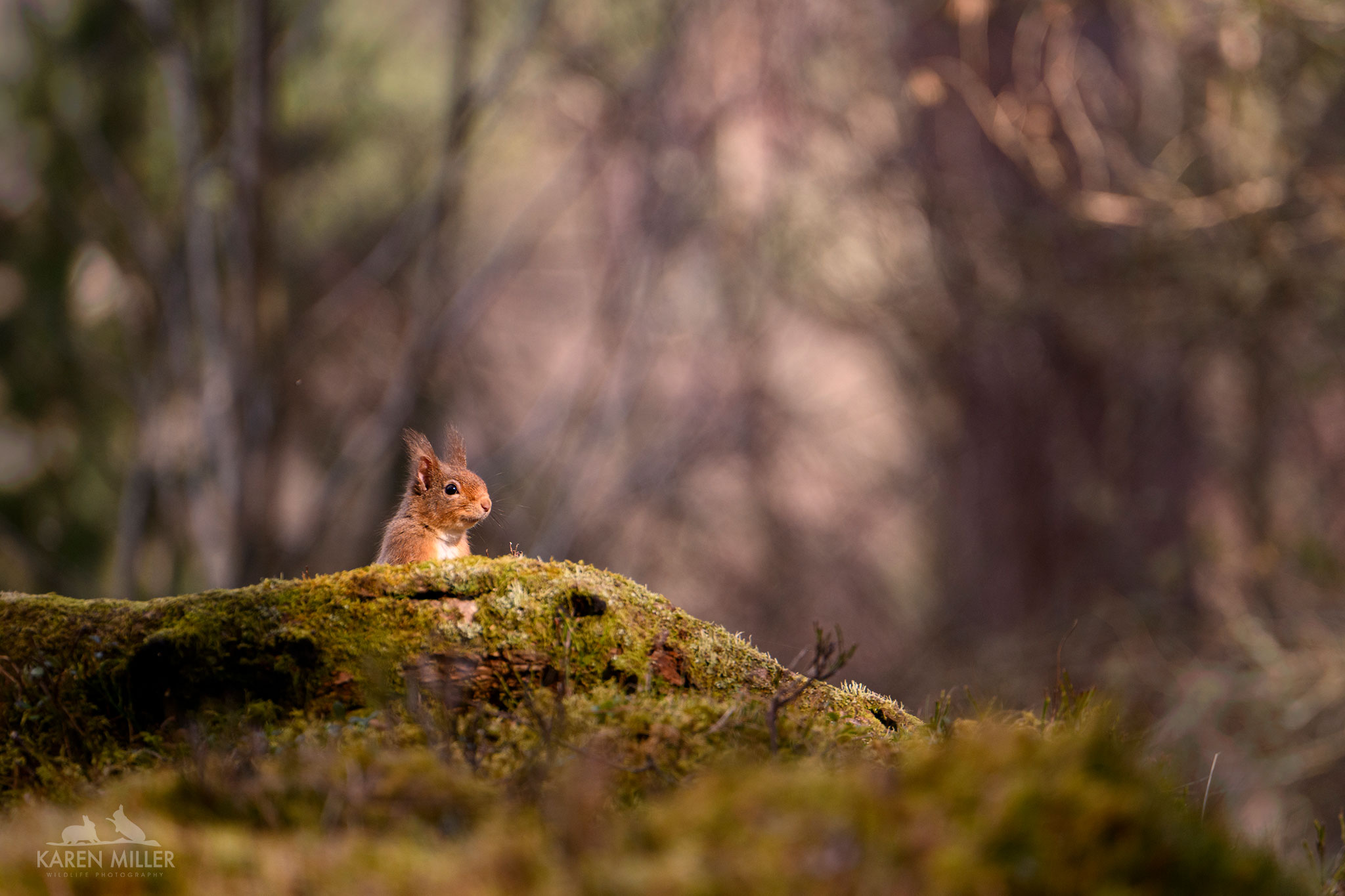

(Updated July 2021) Bob Smith’s Nature Nuts hide in Perthshire, near(ish) to Blairgowrie sees regular visits from a number of red squirrels – some very pretty red squirrels! He has turned the hide round and there is now more light than before plus a large reflection pond which is quite fun. There’s plenty of other action here too including almost daily visits from pine martens. I’ve enjoyed my days here. Medium length lens best, again, fast if possible. You park right next to it though, so bring everything with you. No space for tripods, bring a beanbag. Day rate hide, stay as late as you can to see the pine martens. Bob also does beaver tours. Blog featuring the red squirrels (and pine martens)

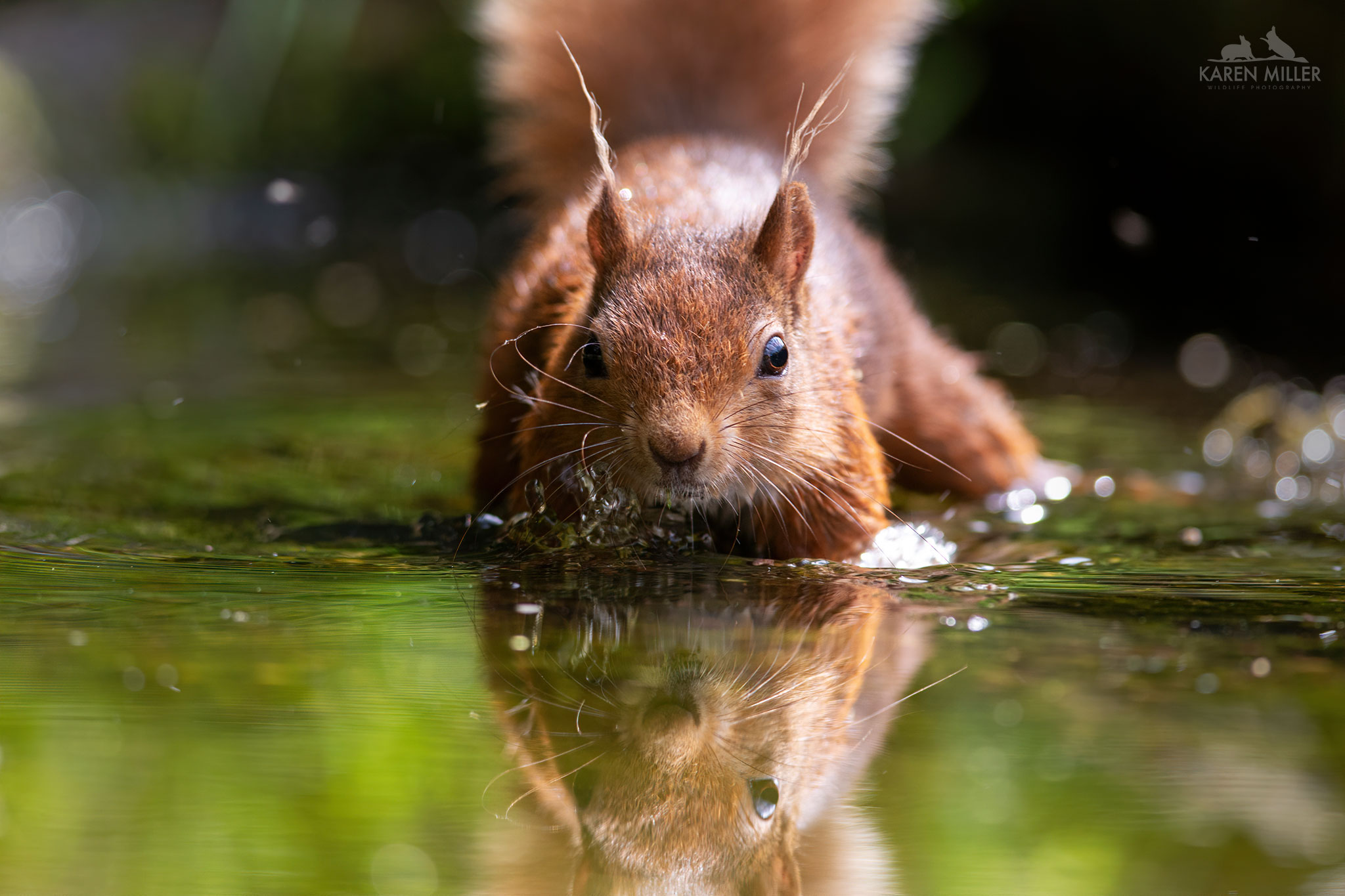
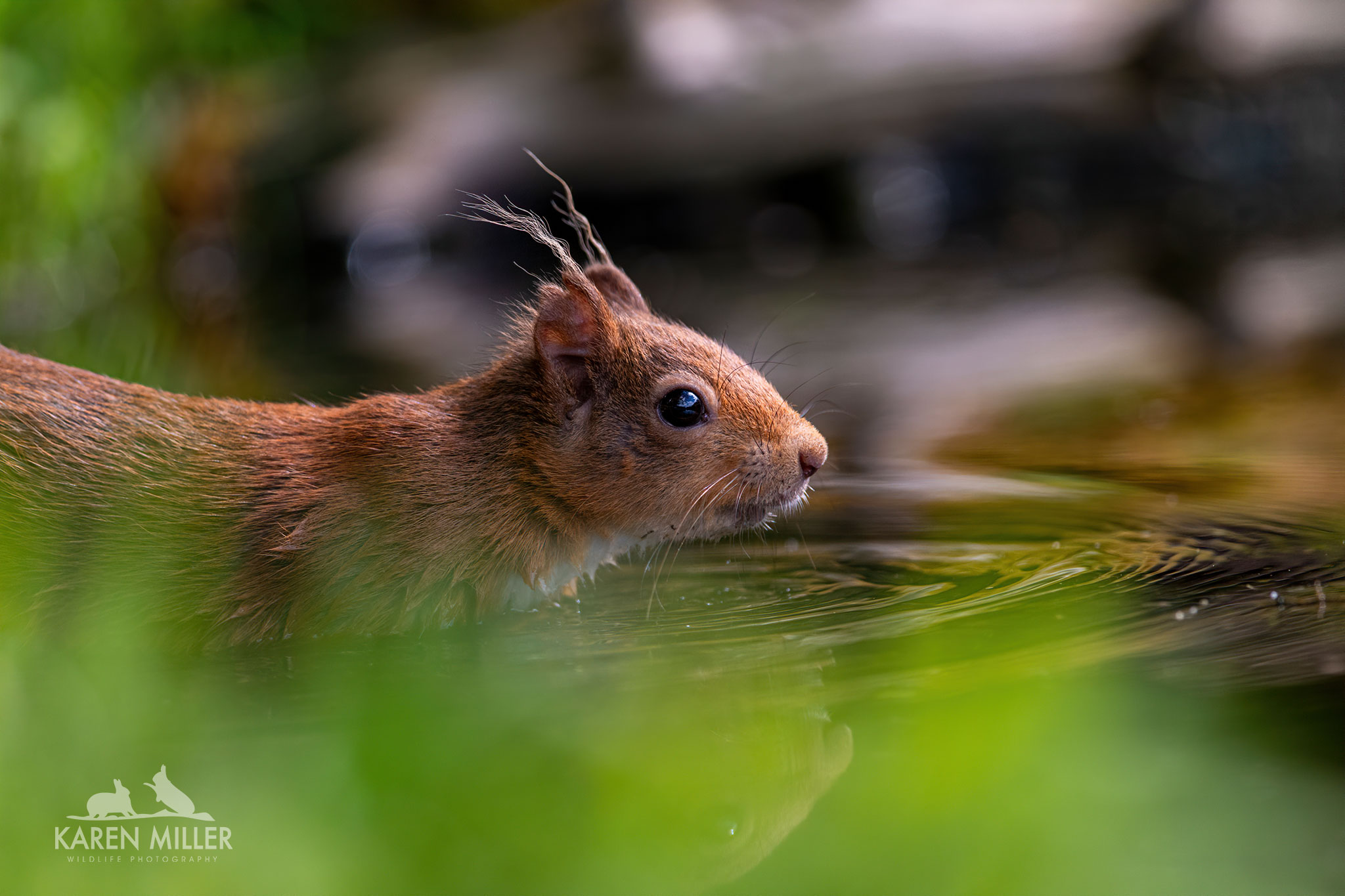
Argaty Farm, best known as a red kite feeding station now has a wildlife hide on the edge of a piece of woodland. I was there the week after it opened and I think it was still a bit of a work-in-progress but I’ve seen some great photos from there since. This hide is unique to all the others I’ve visited in that it has viewing windows at ground level so you can (if not too tall, or if on your own) lie on the floor and take eye-level images. Again, light was challenging, and it was a sunny day in June, so take medium length lenses with large aperture. I used my Nikkor 70-200mm F2.8 until it broke… (FEB 2020) Note they now have a new one-person photography hide with 2 squirrel jumps, looks good, but haven’t tried it. Featured in this blog.
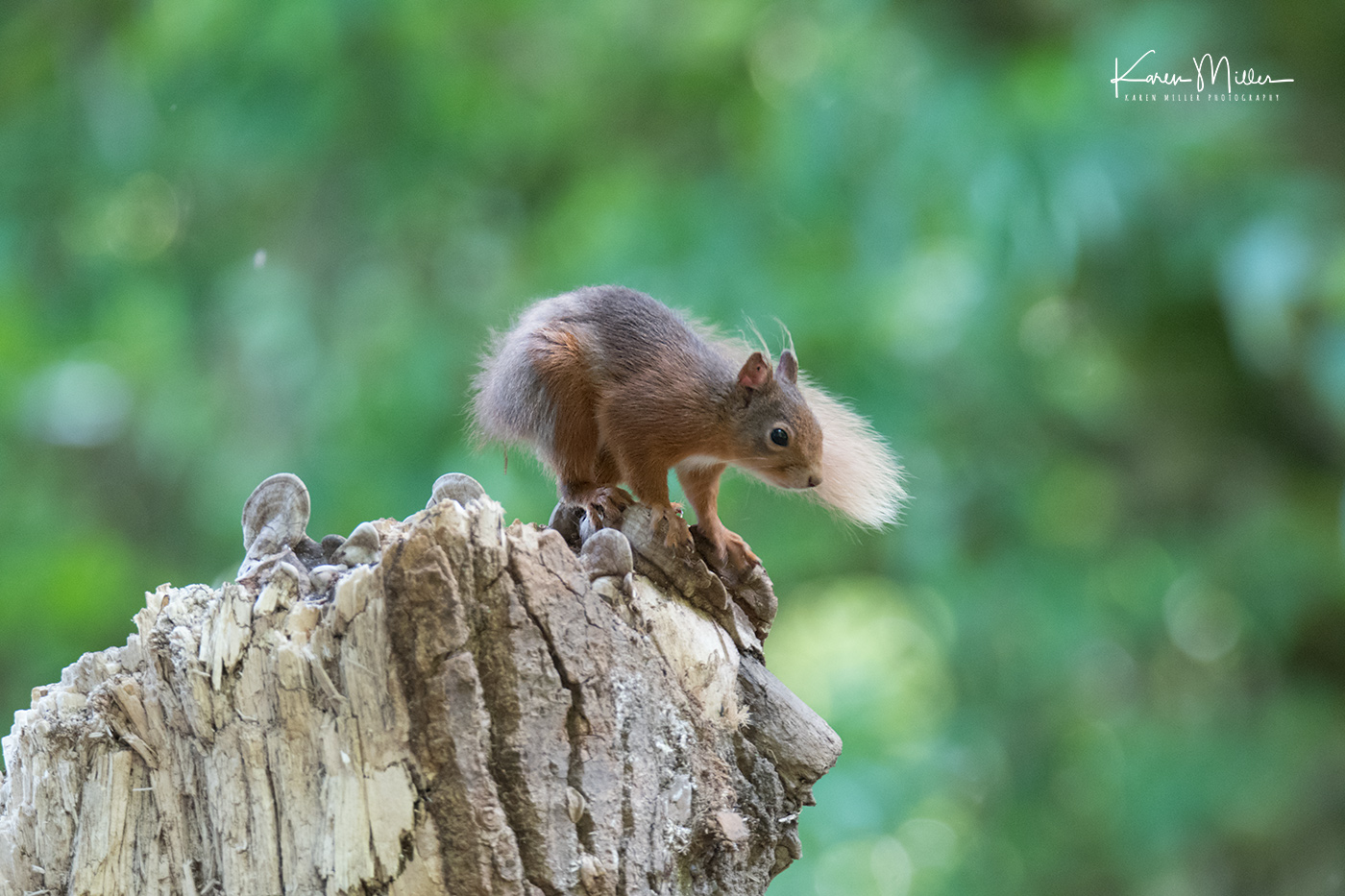
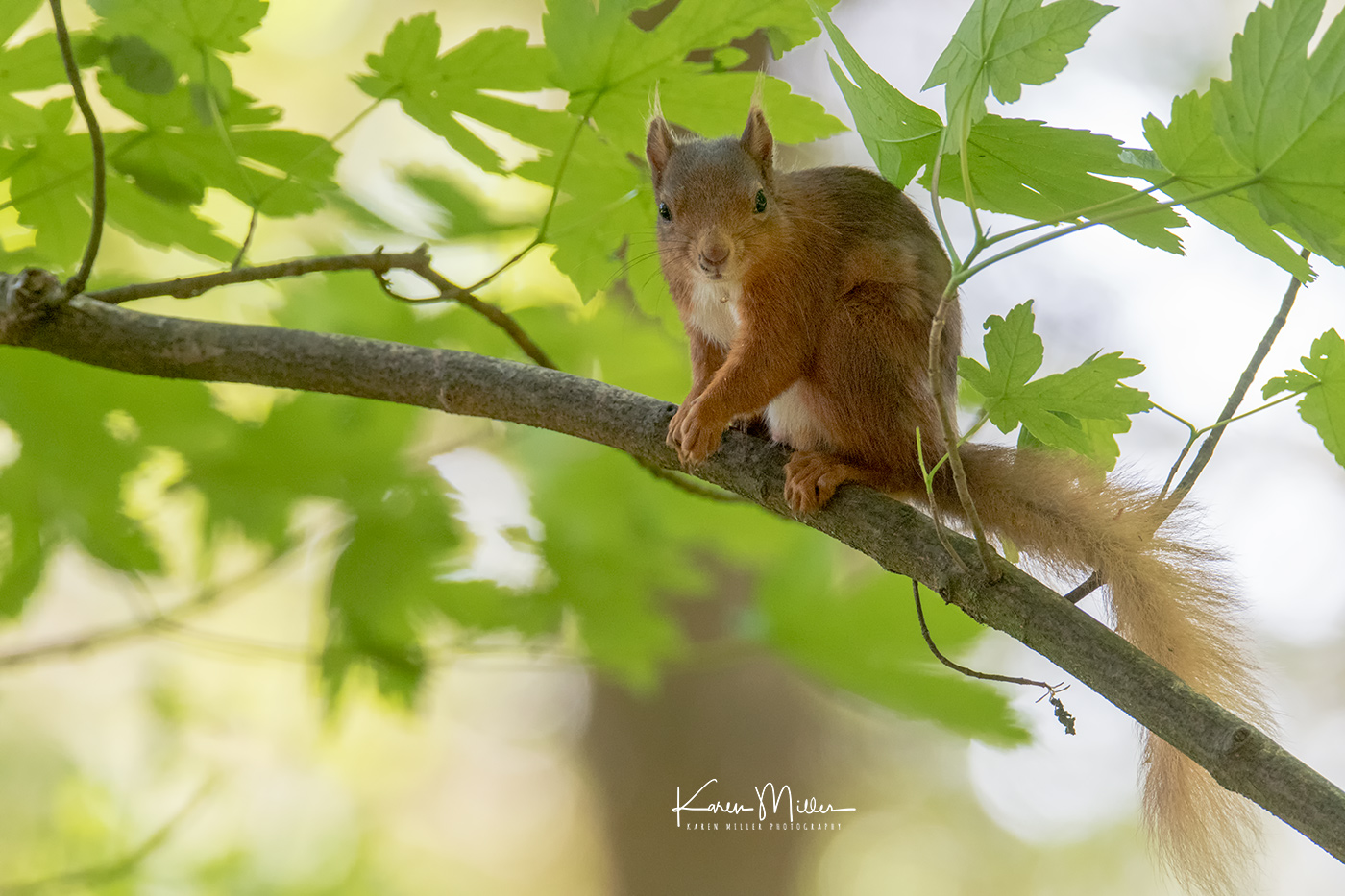
So, I hope this is of some assistance if you’re in or visiting Scotland and hoping to see red squirrels. I know there are tonnes of other places, so please do add your recommendations in the comments section below.
Also, it’s worth looking at the Saving Scotland’s Red Squirrels website where people can report sightings (and please report any of your own sightings) and you can see them all on a map.

 Karen Miller's Wildlife photography blog
Thanks for sharing your experience and skills. Photos are awesome as always!
LikeLike
Thanks Carole!! Very kind of you.
LikeLike
so wish I’d seen this before my recent visit to Glenmore 😦 , another good spot is Inchree, near Fort William, dappled light, squirrels are regularly fed in the area but easy to get natural shots of them scampering around the area.
LikeLike
Thanks Ann! Good to know.
LikeLike
thanks for sharing this information and wonderful images, I’m off to the Ardnamurchan peninsula next week so may stop off at Eskrigg on the way ( weather permitting 😦 )
LikeLike
You should – squirrels are best in the morning, but lovely place to visit (not easy to find though!). Enjoy Ardnamurchan, it’s on my “must visit” soon list!
LikeLike
Excellent informative read Karen, Thank you!
LikeLike
Thanks Jeff!
LikeLike
Hoya, thanks for sharing all of this information. I had a great day out at Penny Hedge near Blairgowrie which I think is a recent paid hide. Lovely squirrels and lots of other wildlife there. Caught the wildlife bug and looking to visit Cairnie woods next.
LikeLike
Great! I’ve never made it there as yet, but love seeing the images from Penny Hedge – I’ve only included sites I’ve actually been to. Carnie woods pretty good, plenty of squirrels who are very tame. Take hazelnuts with you.
LikeLike
Just an update – Carnie Woods near Aberdeen no longer very suitable – it was trashed by storm Arwen and the squirrel feeding area has been cleared. Don’t know where the squirrels have gone!
LikeLike
Thanks Alan. Sorry to hear that.
LikeLike
what a fantastic page, so much (useful) information. inchree is a great place to spot them, got some lovely natural shots despite the low light
LikeLike
Thanks!
LikeLike