
The final stop on my friend Gemma and my Borneo adventure was the Tabin Wildlife Resort. This was a location I was really looking forward to. It’s in the middle of secondary jungle and truly wild. Depending on when you visit there’s the possibility of pygmy elephants and wild orangutan (including some released from the Sepilok Orangutan sanctuary). I should say first up that May is probably not the right time to visit this location. There were still very heavy rain showers and these completely destroyed the road (if you can call it that) to the reserve and those around it. They became heavily rutted and incredibly uncomfortable to travel along, plus the jungle trails were also exceptionally muddy which made it hard work, especially in the humidity, to walk them. If I’d known that in advance I might have chosen to go somewhere different.
The journey to get to Tabin was painful, I won’t lie. After an early start at Kinabatangan we were driven to Lahad Datu Airport where we were checked in to the resort before being collected by a 4×4 vehicle to take us there. This was another 90 minutes, much of which was down the aforementioned rutted track. It had rained heavily for at least 12 hours before our arrival so you can imagine what this had done to the muddy surface. Horrible, and I do feel for the drivers and staff who travel it daily.
Our initial impression of the resort was somewhat marred by the fact our intended guide (one of the experienced ones) dumped us for the other two people who were supposed to be in our group but decided to go private. We were pretty much abandoned and our cabin wasn’t ready either (it had flooded in the heavy rain the night before).
While waiting we were taken to the information centre where we learned about the area and the hairy/Sumatran rhinoceros which, tragically are as good as extinct now in Malaysian Borneo although a tiny number can be found in Indonesian Borneo. They have a stuffed one in the centre and its beautiful. It’s so very sad. Scientists have taken DNA from the rhinos so you never know, maybe in the future they’ll be able to recreate but it’s a long way off still.
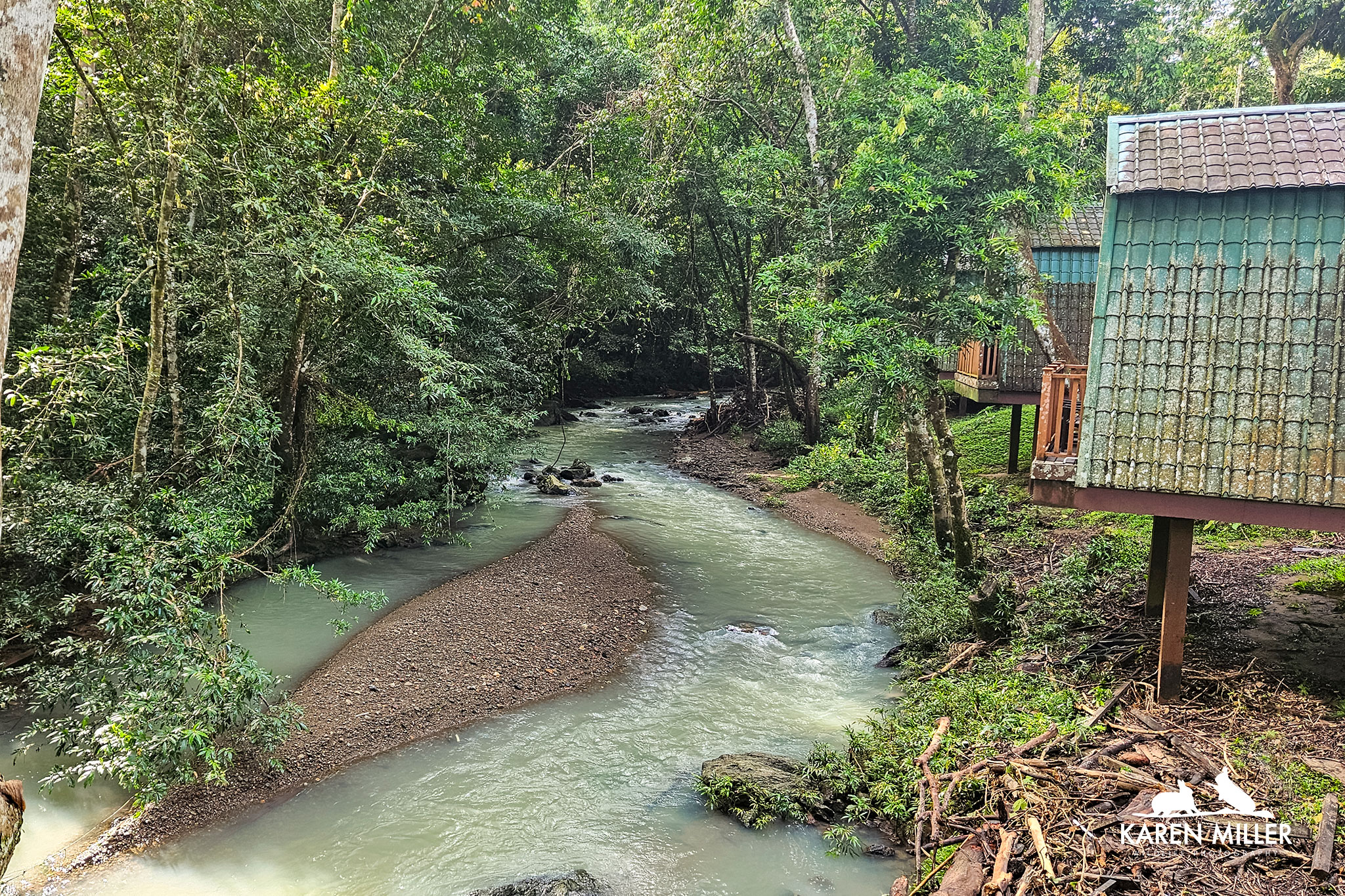
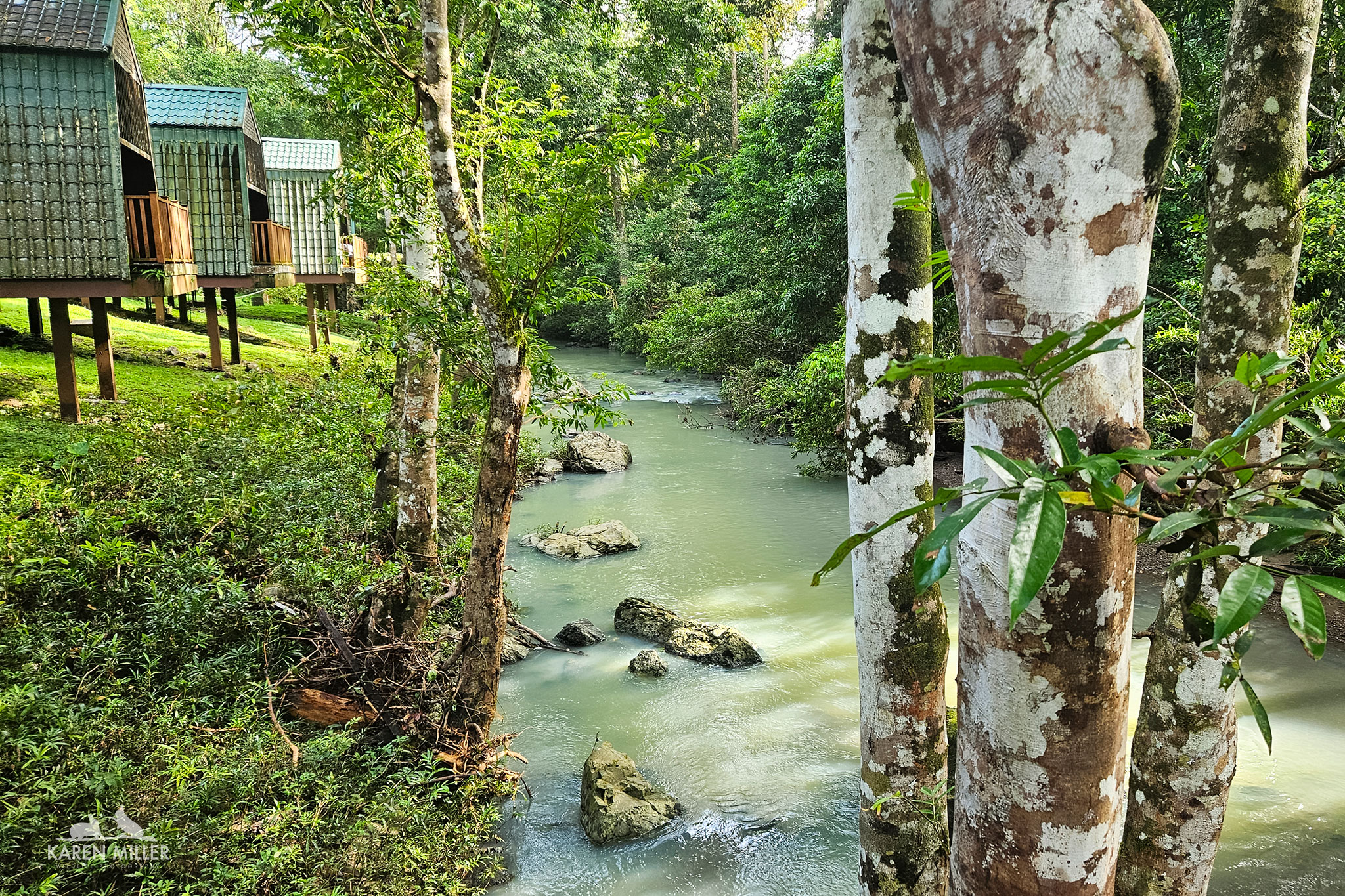
On our return we were able to access our cabin which was again, a little dated, but did have a balcony and a nice view of the river. The resort is powered by generators, and every 6 hours or so they reboot, which means we had to reset the air conditioning, plus one of the lights wouldn’t switch off. We had it fixed once, but the same thing happened repeatedly and we had it on overnight which was annoying… except of course on the morning we left when it worked as it should… typical!
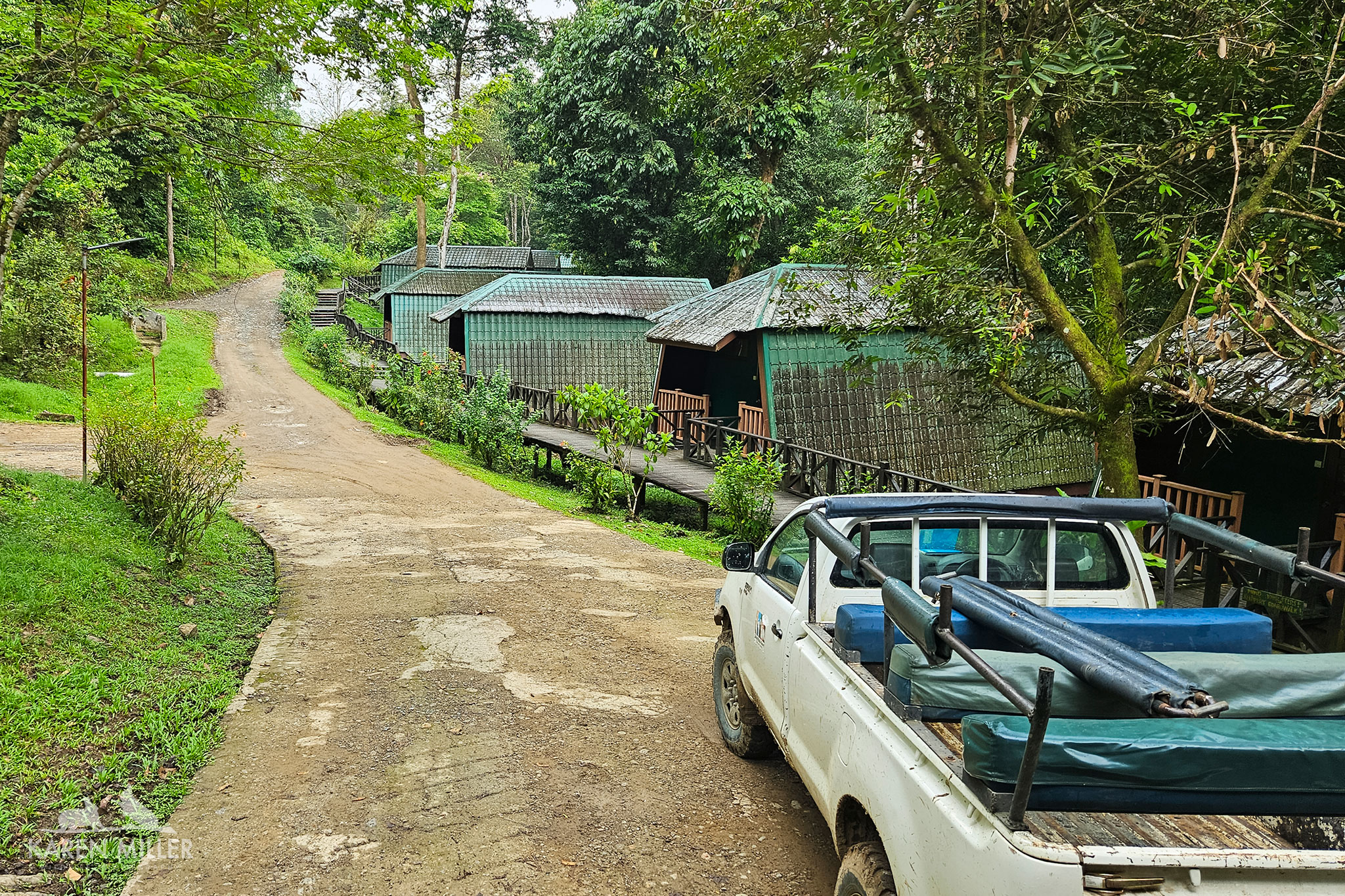
There are also cabins up the hill, nice views, but I wouldn’t want to stay there as it was a bit of a steep hike up to them and a fair distance to come for meals/excursions. Views from our balcony:
We then returned to the dining area for afternoon tea. At this point we still had no idea about our guide, nor had we had any kind of introduction to the resort. It was so different from the highly organised, nothing is too much trouble, approach at both the SI Tours run resorts at Sepilok and Kinabatangan. Meals were taken at our own table and other guests, primarily German here, weren’t chatty. Again, after Kinabatangan with Sonny and our own group where we spent our days together and even ate as a group, this felt unsociable.
We did, I think, do what we were supposed to although we were passed between mostly young, not very experienced guides who although lovely and decent spotters didn’t have the years on the job of our original guide. Almost all the excursions at this time of year (May) with the exception of the dawn walks were vehicle based. The vehicles were safari trucks with padded bars to sit/lean against and little in the way of back support. This did make it easier to see wildlife in any direction but they were so uncomfortable as we bounced along the muddy tracks.
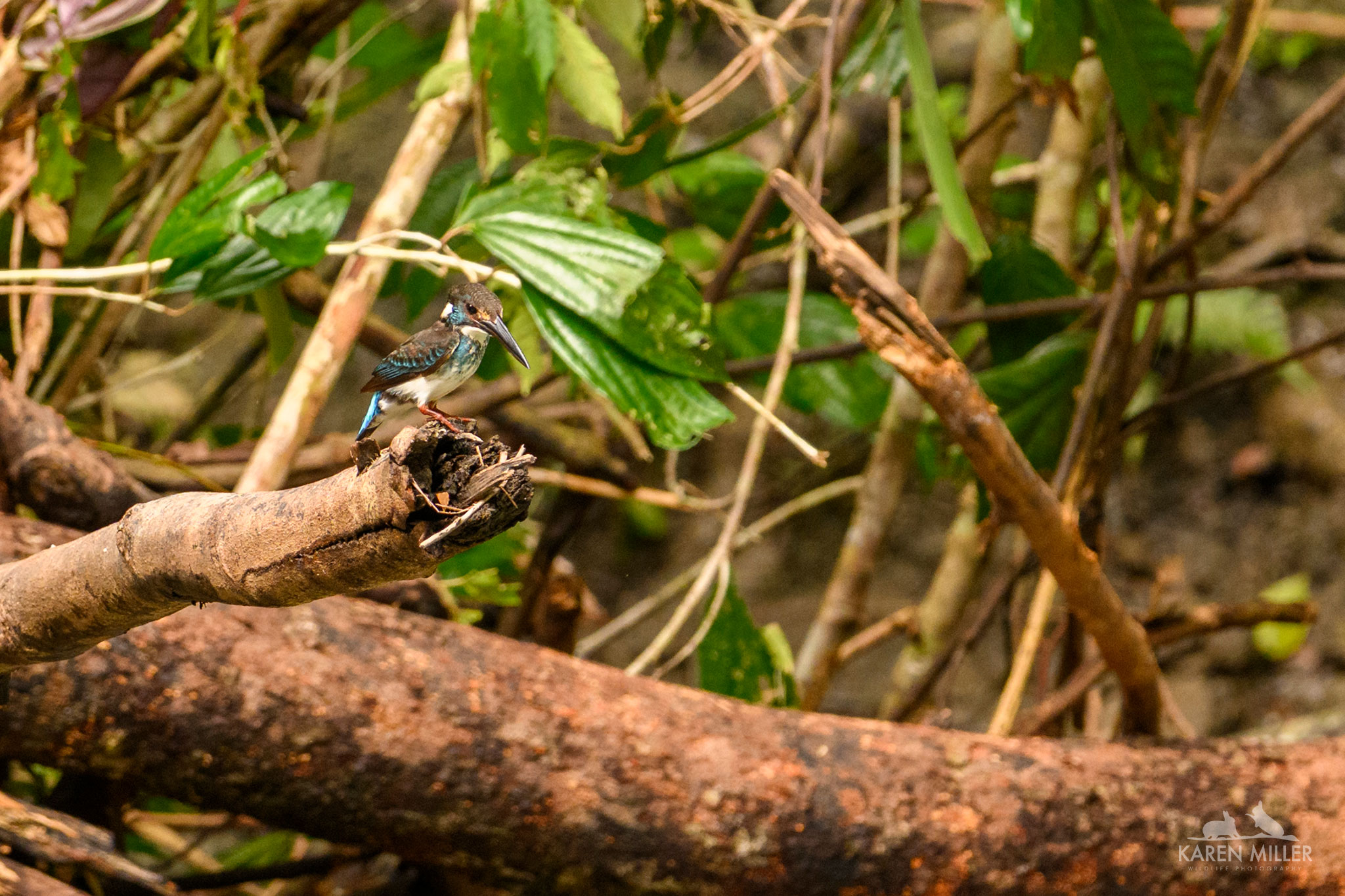
When not on an excursion there was very little to do. Although there are named trails around the resort it’s not permitted to go on them without a guide due to the dangers jungles present. There is a small hide from which you can sometimes see otters. We didn’t get those, but did have sightings of two species of kingfisher. The smaller one here is a blue-banded kingfisher which is apparently the least common of the Borneon kingfishers. The other is the largest, the stork-billed which we saw everywhere although it didn’t like to pose for photos!


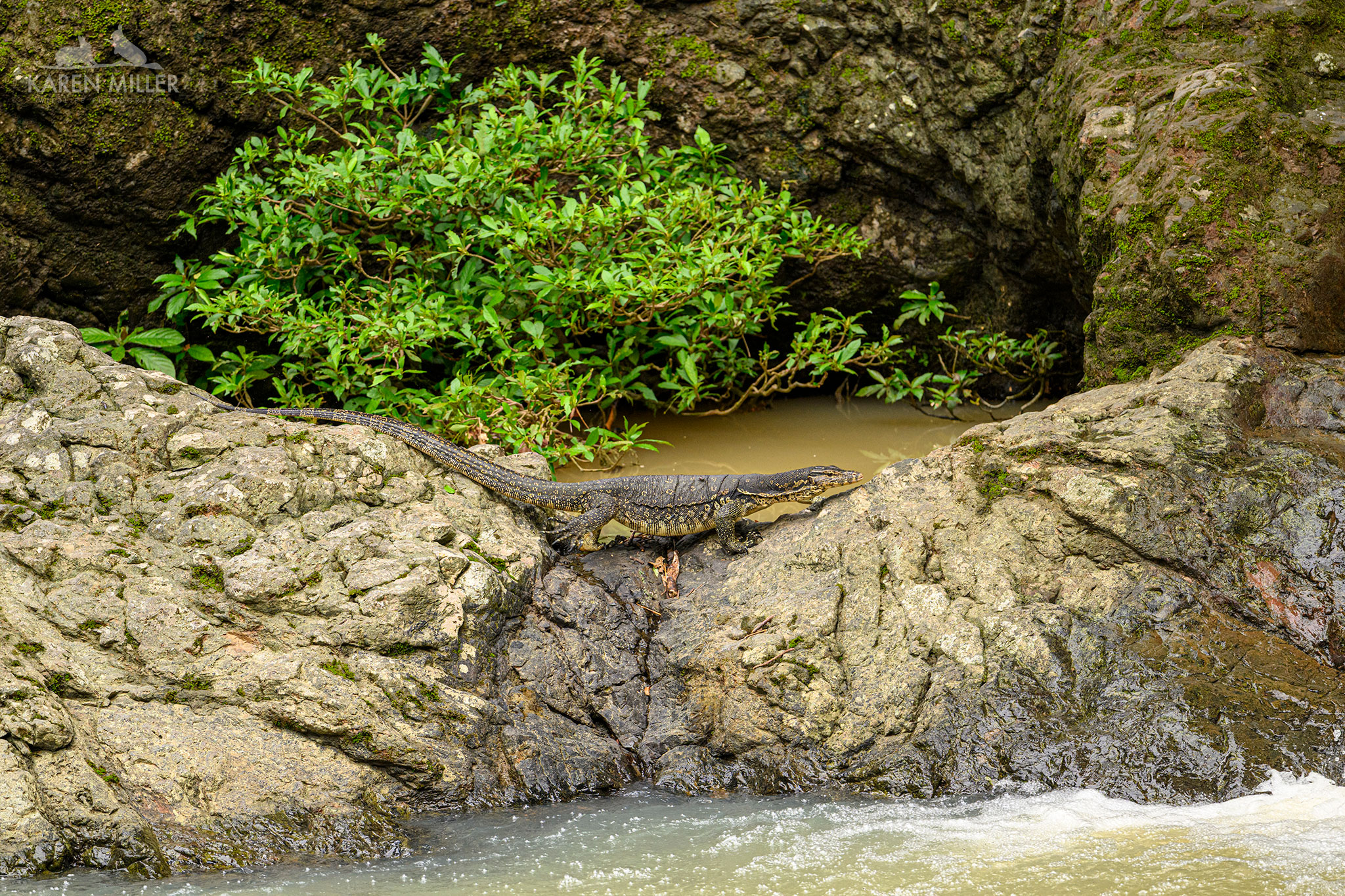
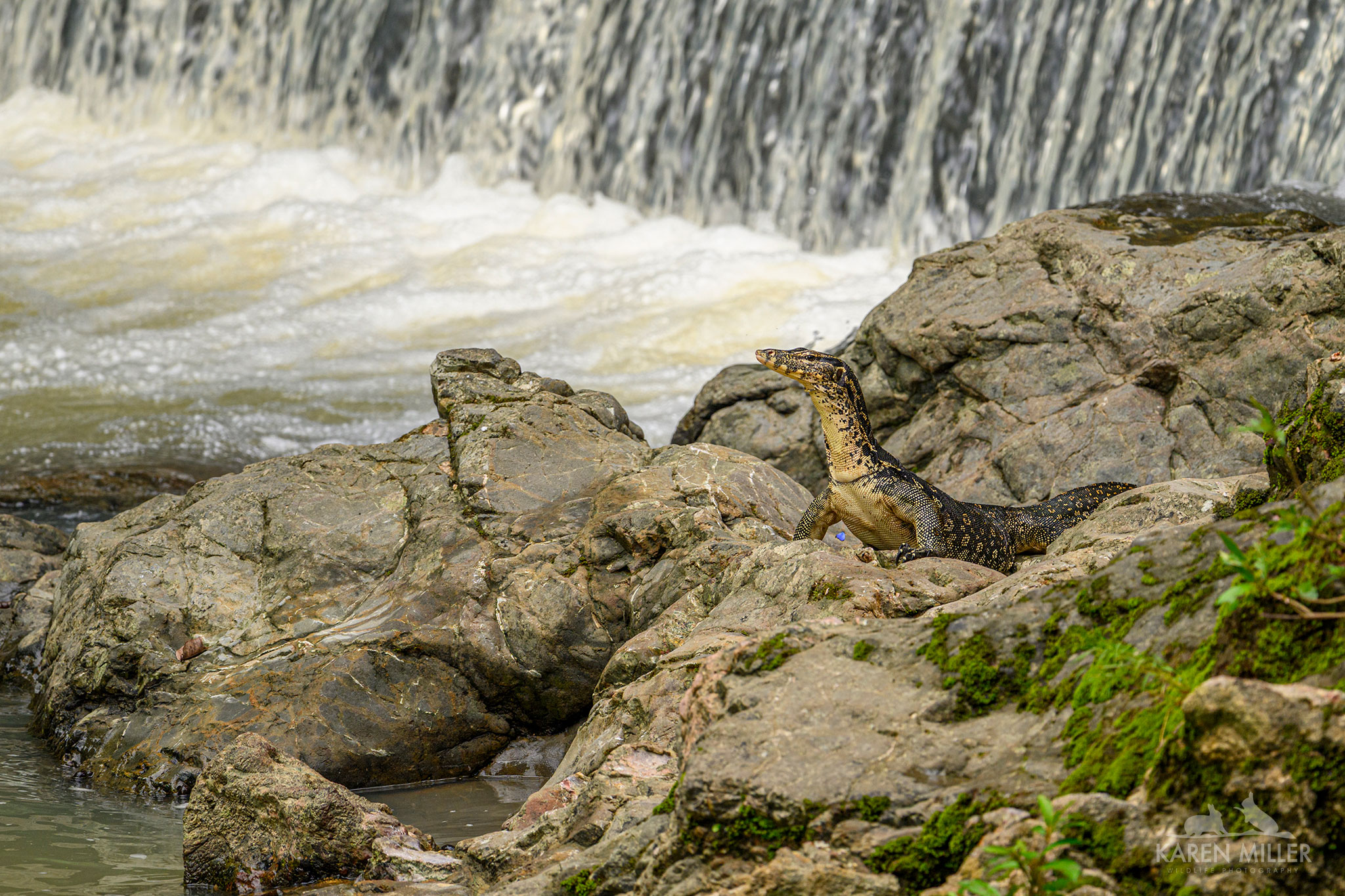
And a monitor lizard, the largest I think that we saw during our visit to Borneo.

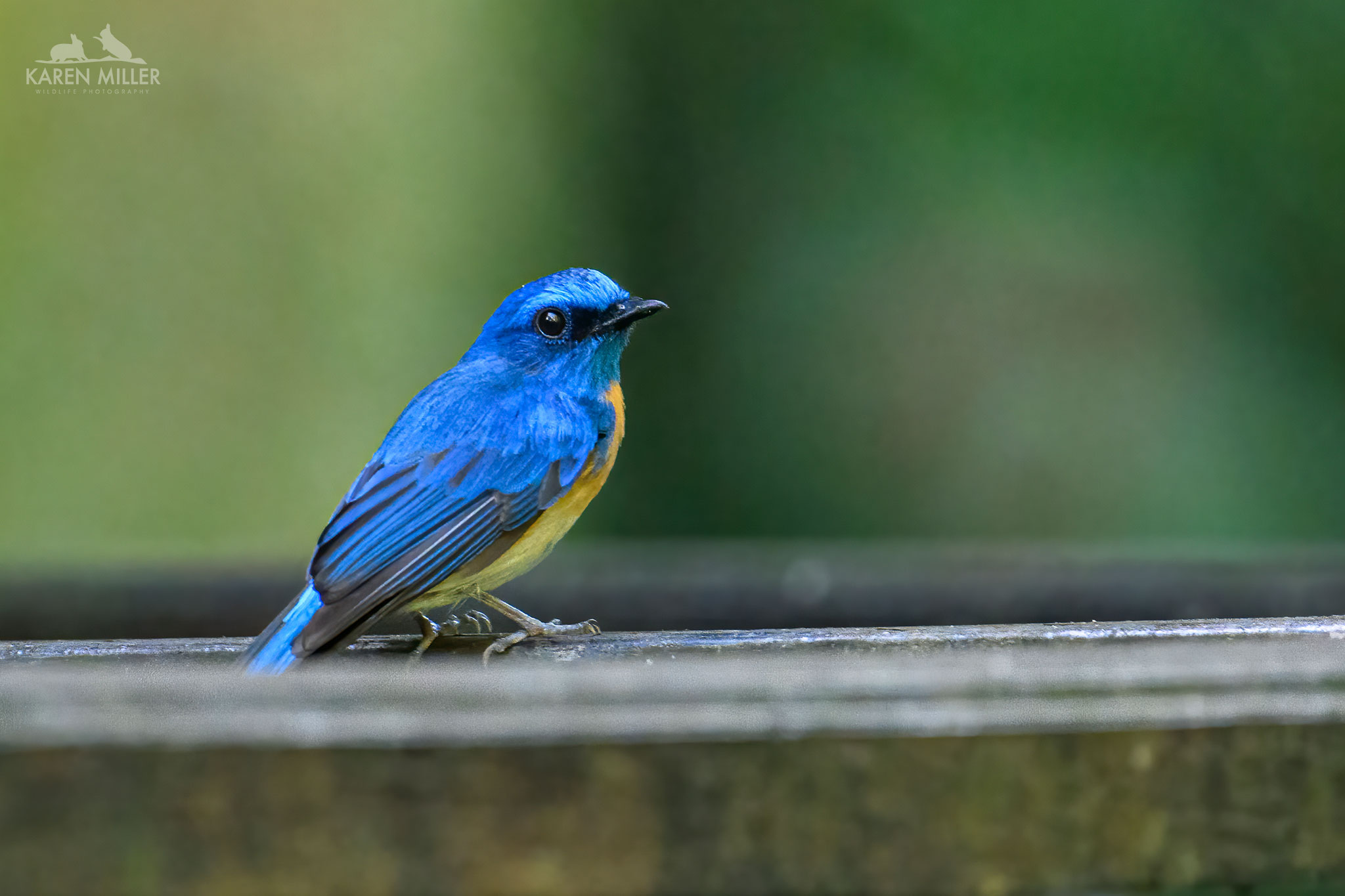
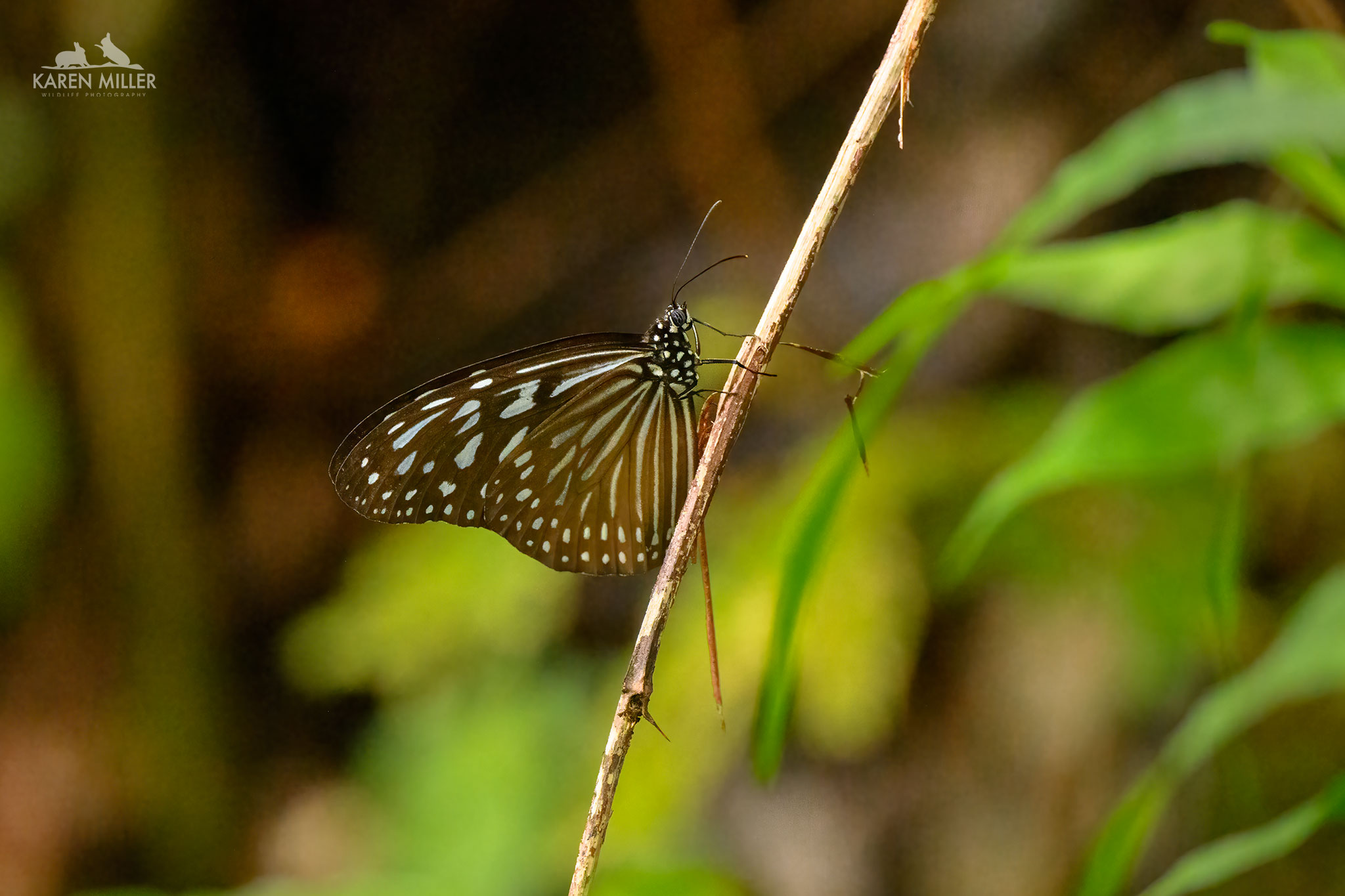
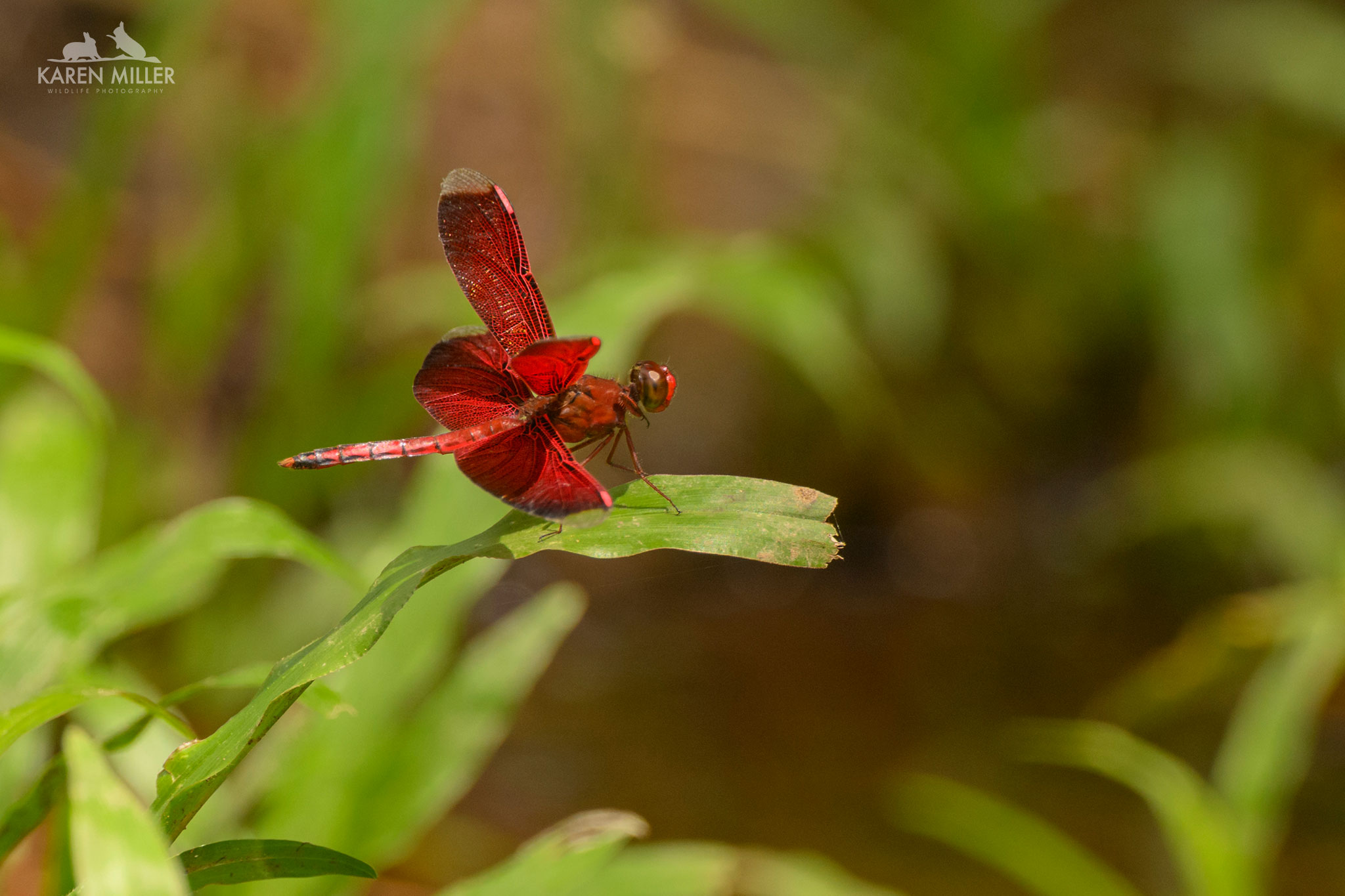
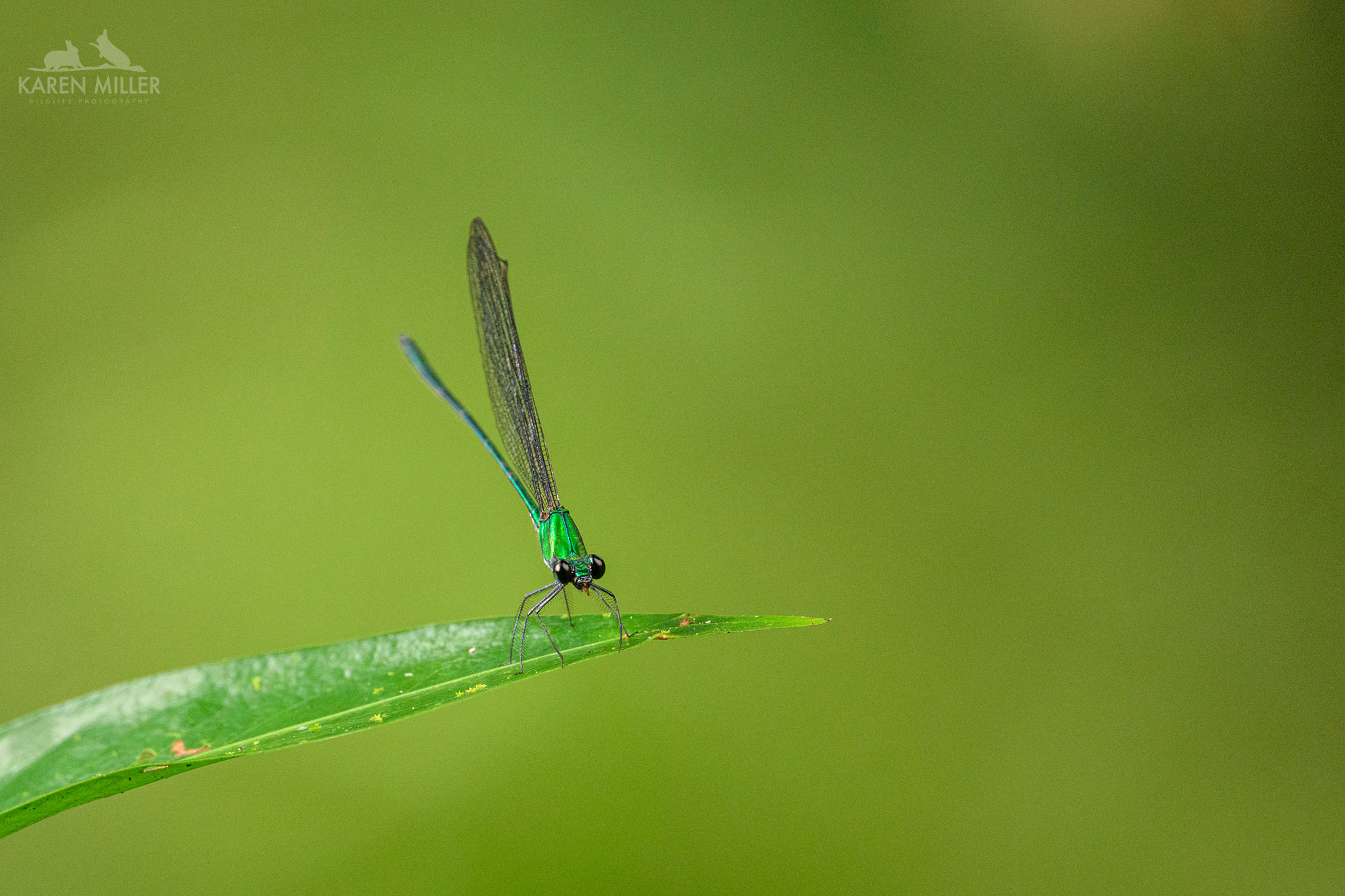
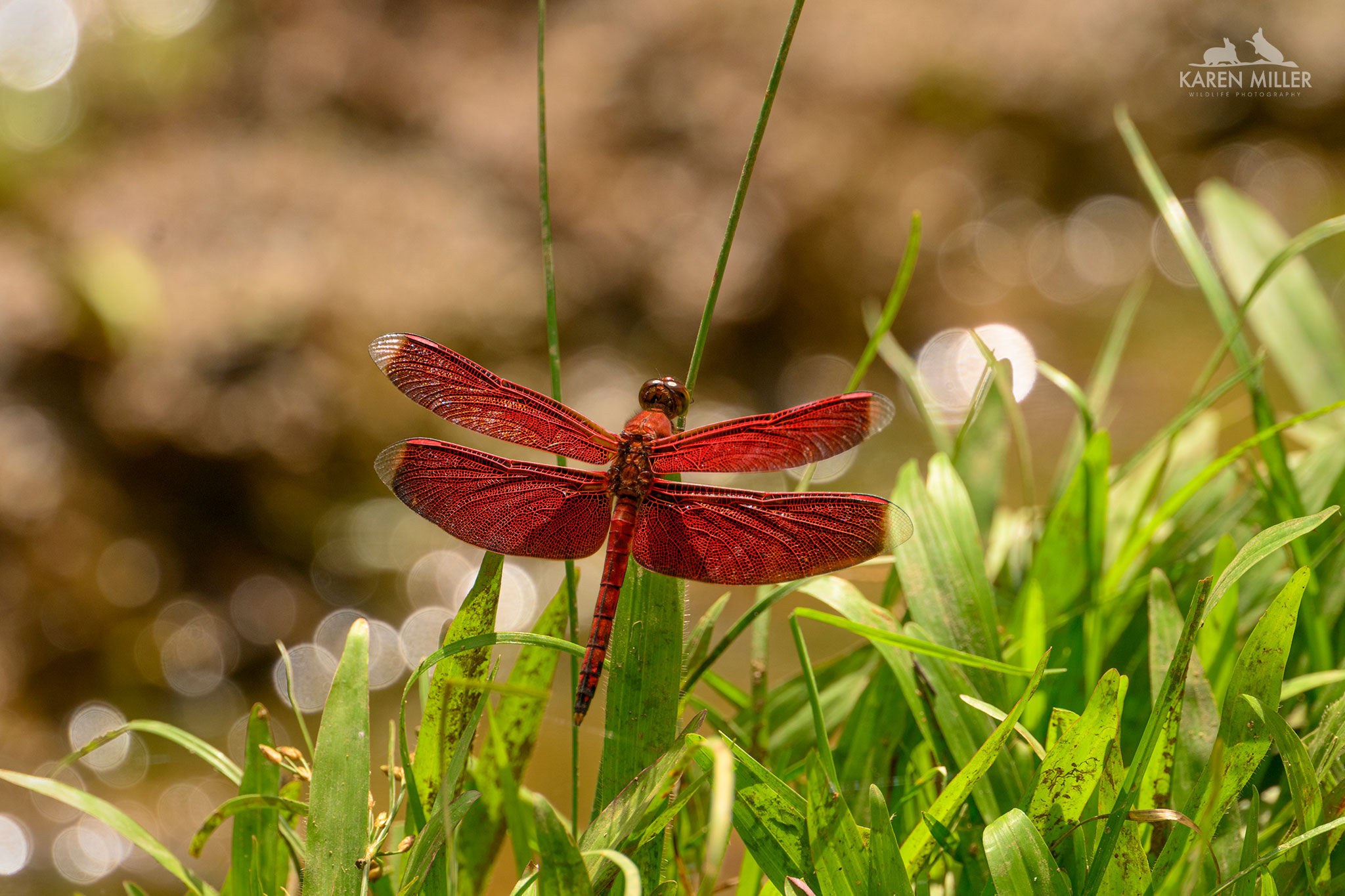
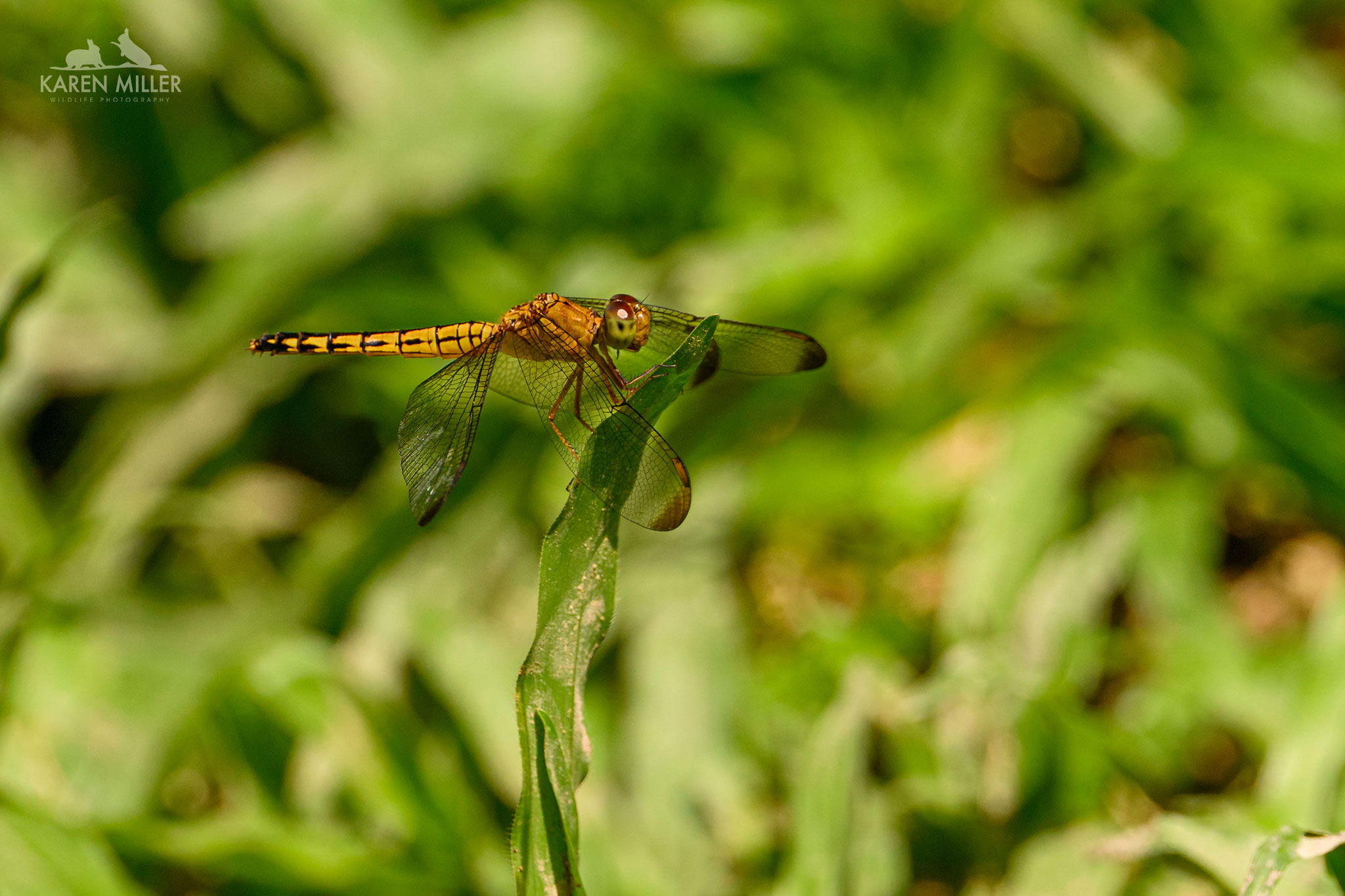
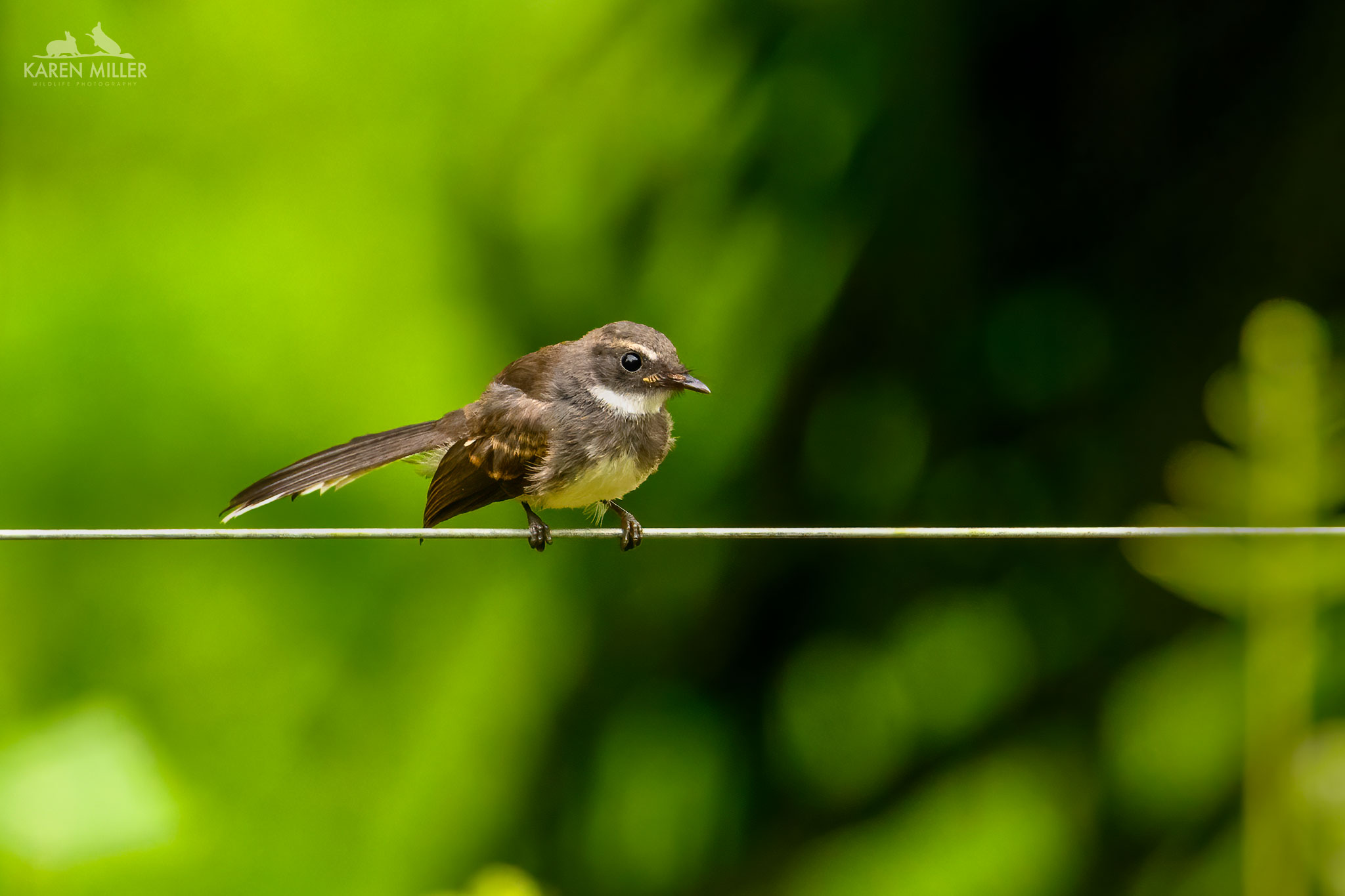
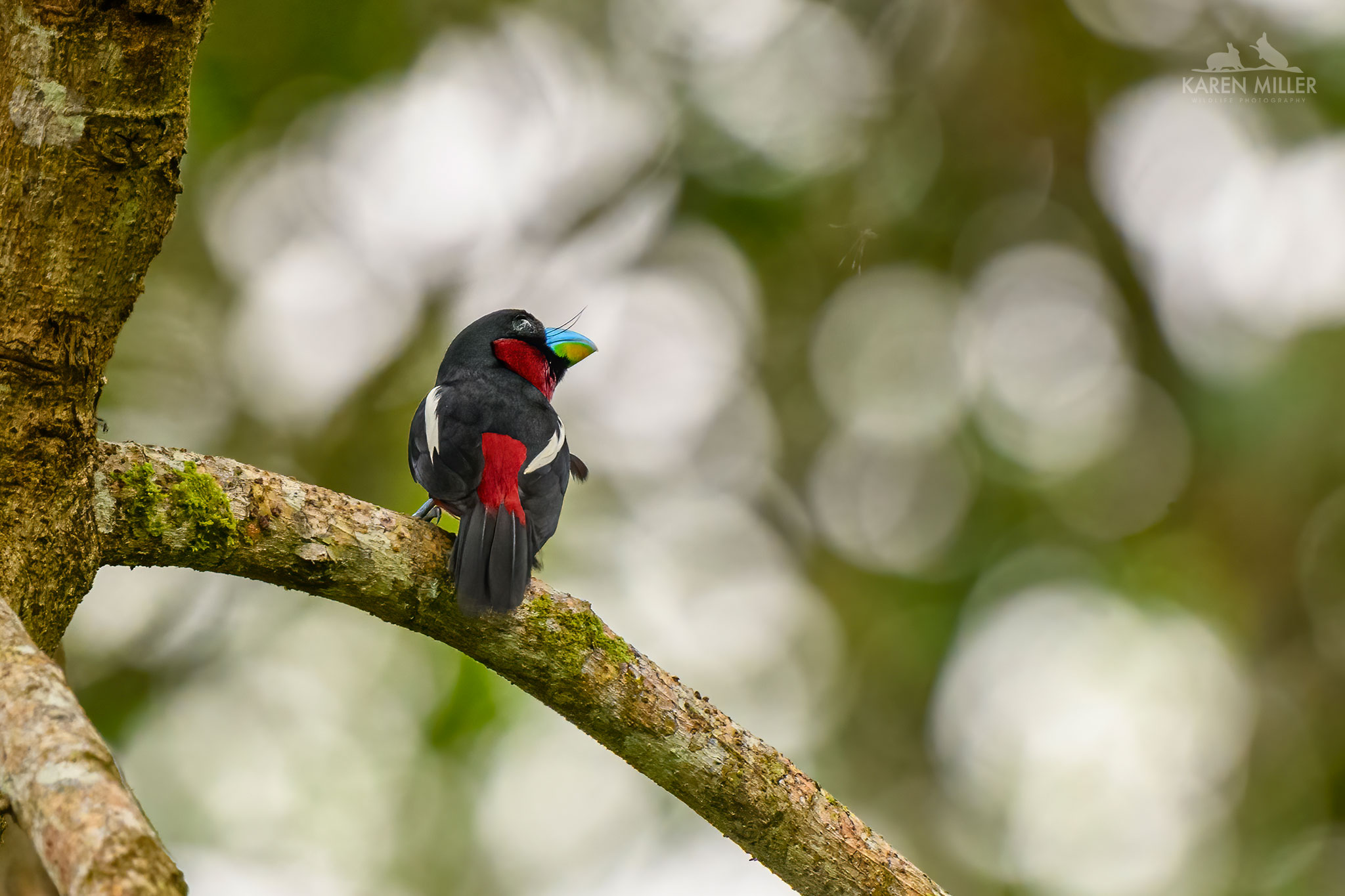
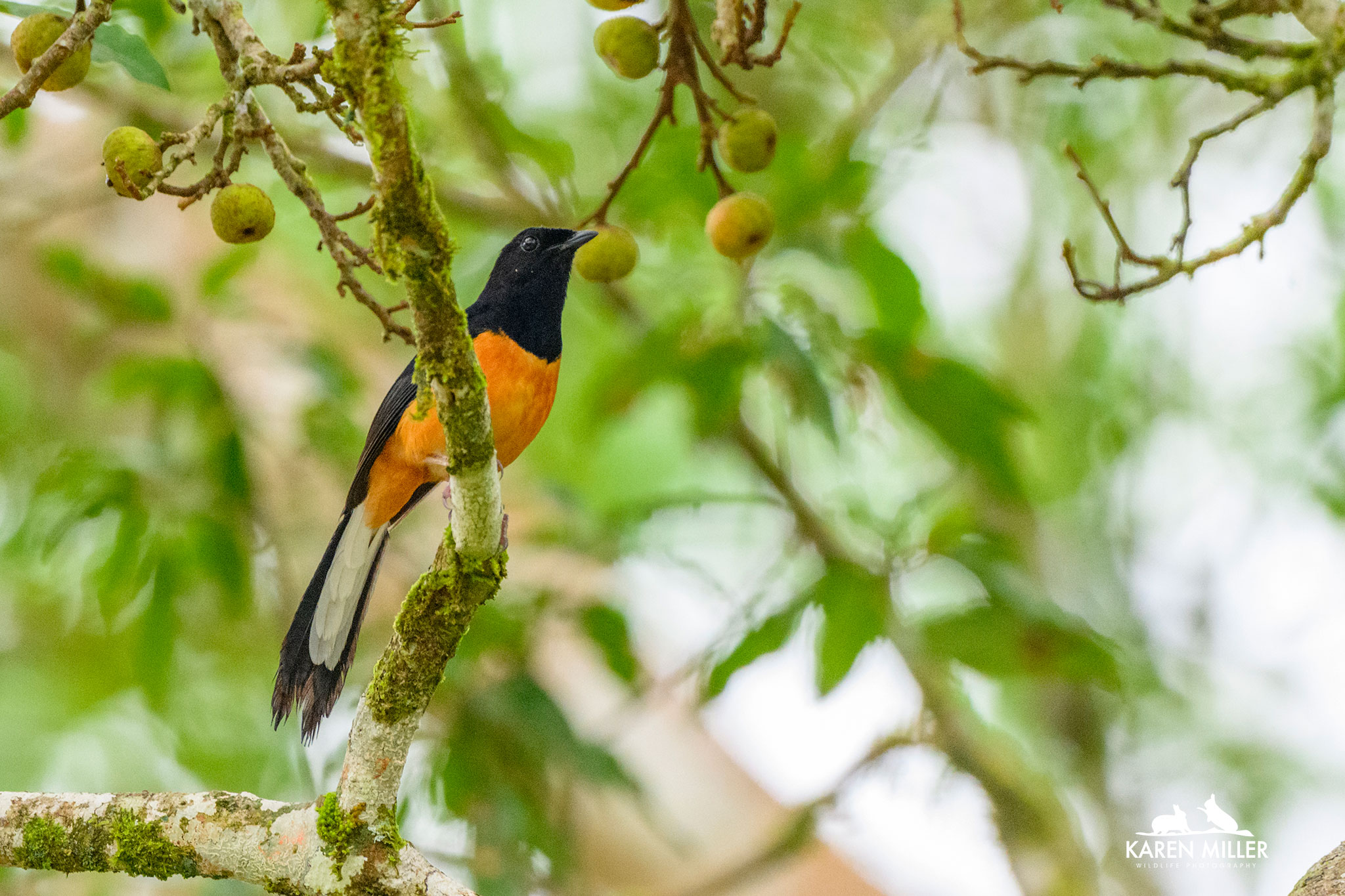
There were also a fair few different butterflies, dragonflies and birds around the boardwalk to see. The blue bird is a Borneon Blue Flycatcher, the brown one may be a fantail and the black and orange is a white rumped shama. The other is a blue and red broadbill. The butterfly a Glassy tiger. I’m not going to risk trying to identify the dragon/damselflies!
We were scheduled to do a number of excursions around the jungle. One of those on our itinerary was to visit the mud volcano, however we were told by our original guide that not only was it a fairly long and arduous walk through the mud to get there because the track was currently inaccessible for vehicles but that the observatory tower was out of use and there would be little in the way of wildlife to see. It’s apparently a great place for wildlife sightings in the dry season proper as they come for the salt. We therefore made the decision to give this a miss and instead went out with a guide through the secondary jungle to the primary jungle. Secondary jungle is the predominant kind (of that remaining) now in Borneo, it’s where all the hard wood has been felled. What was really interesting was that as soon as we entered primary jungle it felt completely different. Even if I’d had my eyes shut I’d have noticed. It was less humid and much cooler. This is a really interesting article about the forests in Borneo. There’s very little primary forest left now sadly. I love the jungle, it’s always interesting to travel through it and our guide on this occasion was one of the most experienced and very knowledgeable about everything.
Here are some phone photos of the jungle, both primary and secondary.
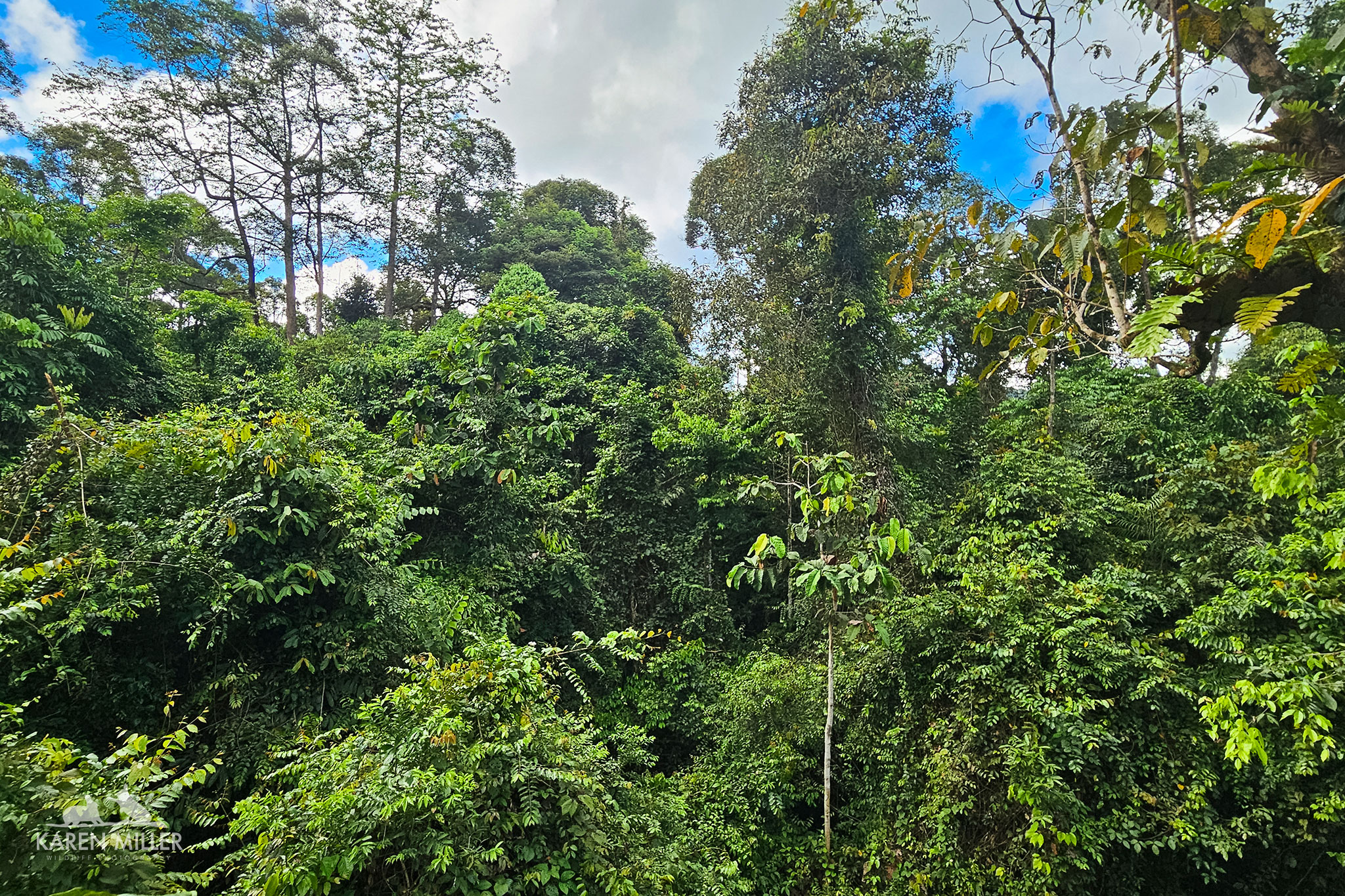
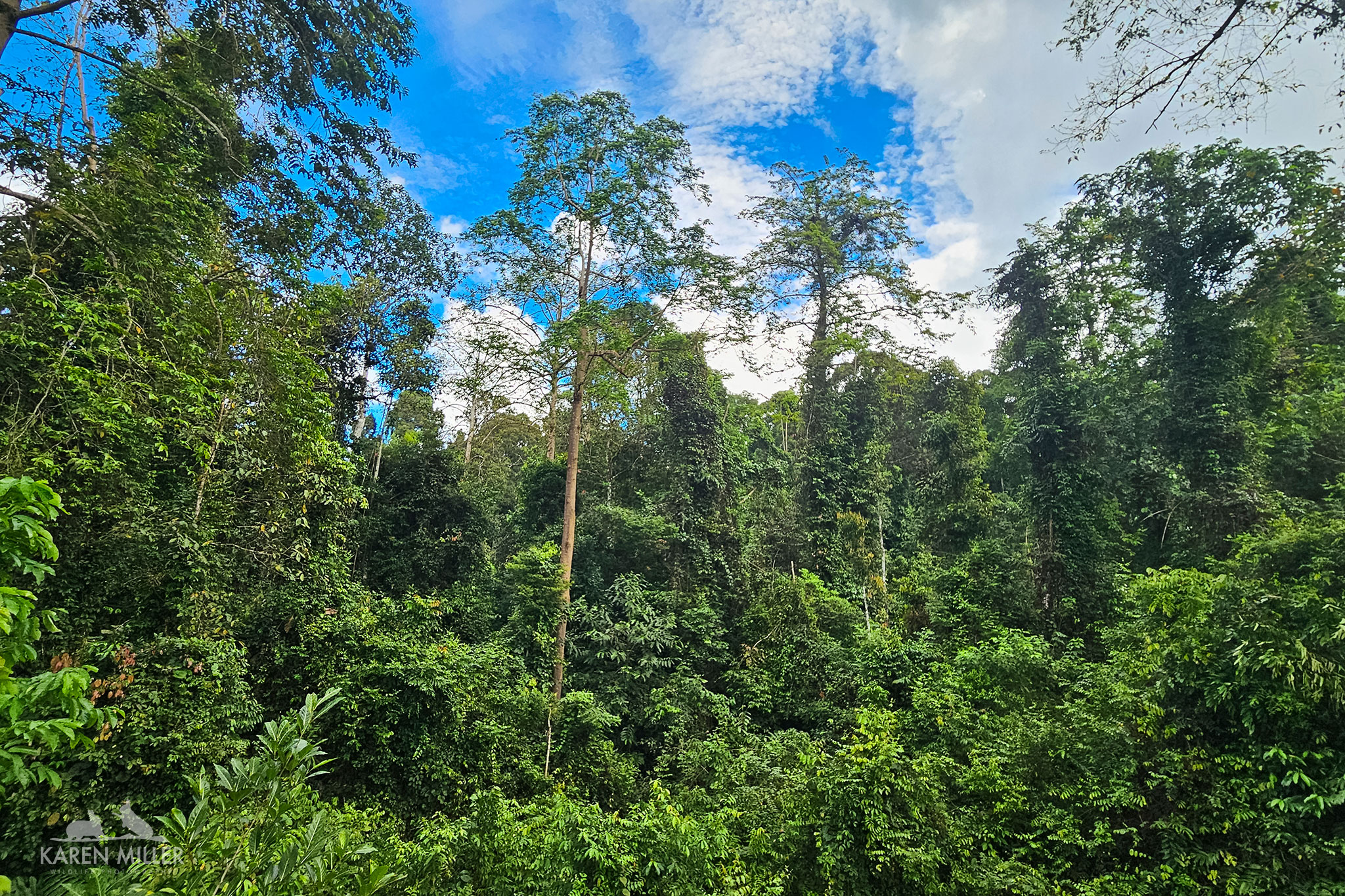
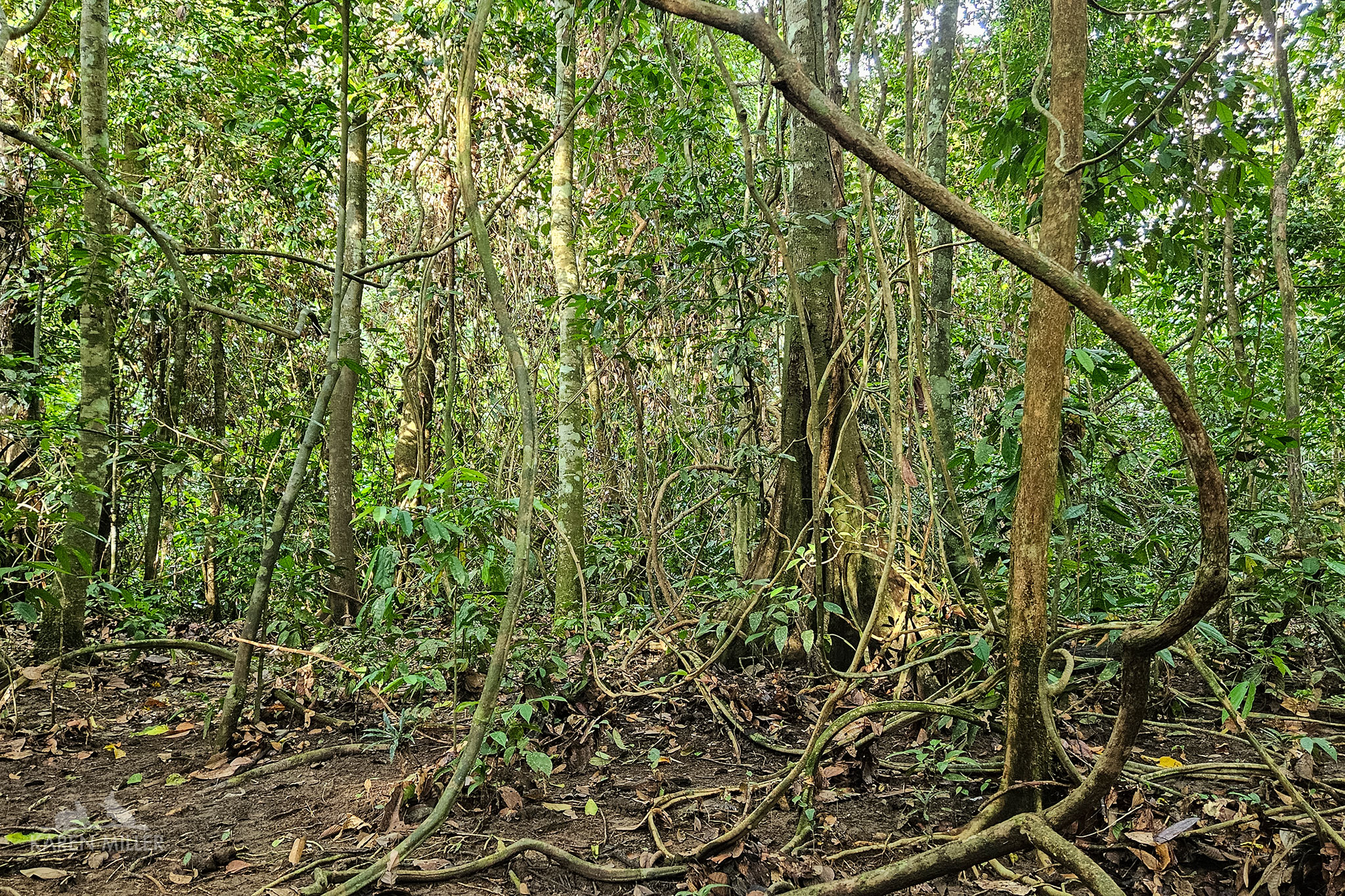
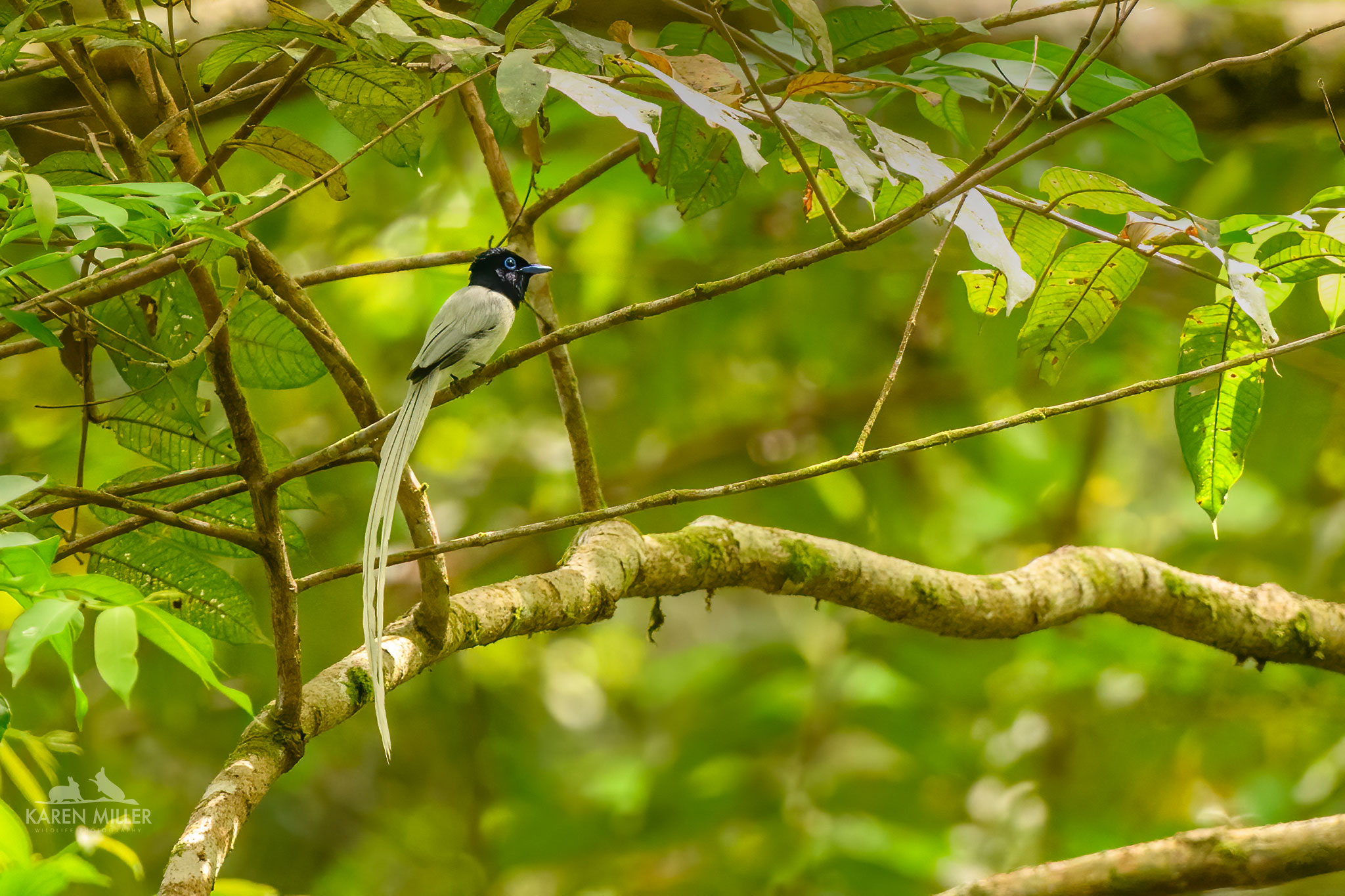
We didn’t see much wildlife. The usual macaques of course. 2 mouse deer ran across the track in front of us, but gave little opportunity to get a good look let alone a photograph. We saw a few different birds, this was the prettiest, a male blyth’s paradise flycatcher.
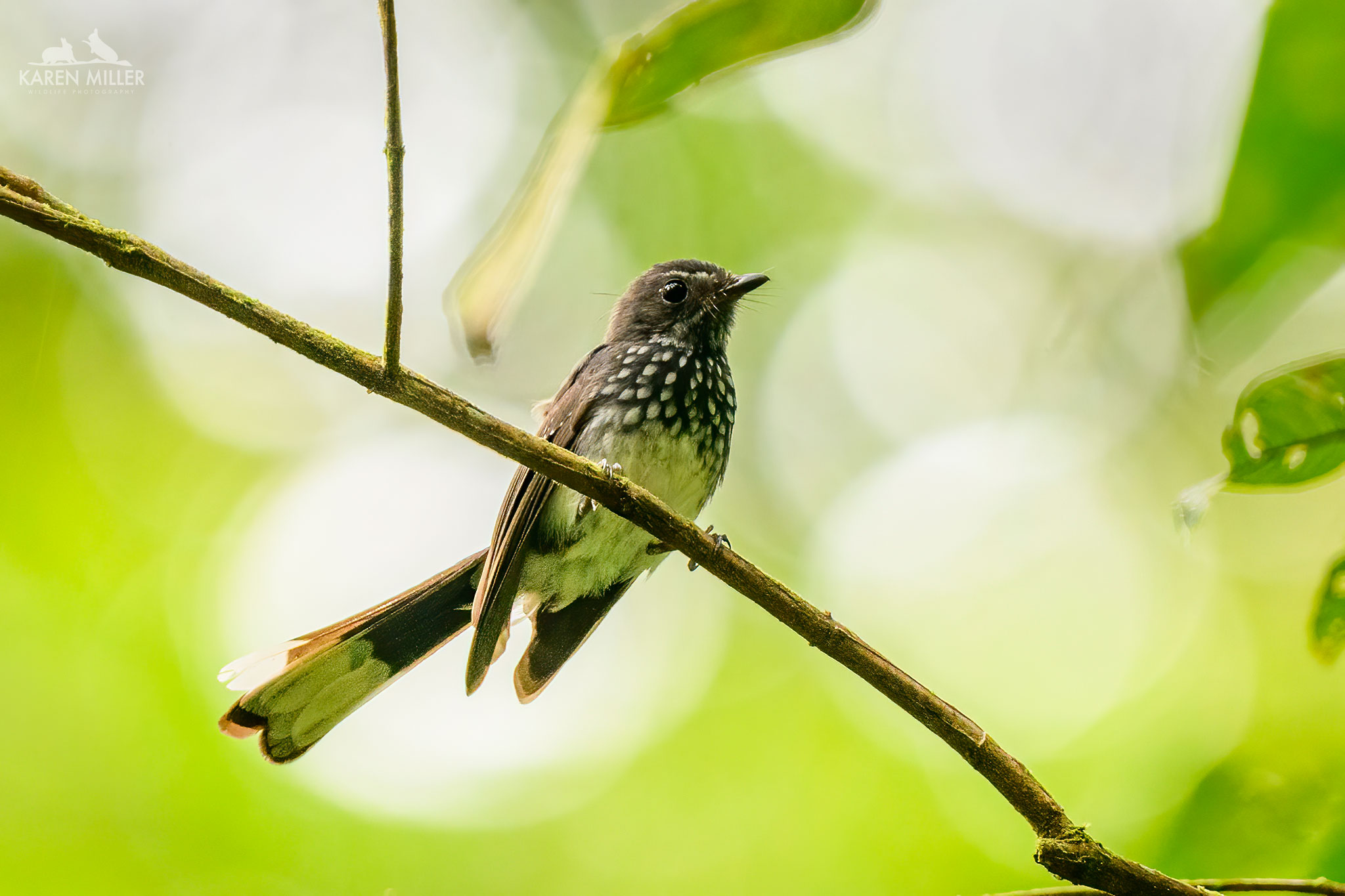
I liked this one too, a Spotted Fantail.
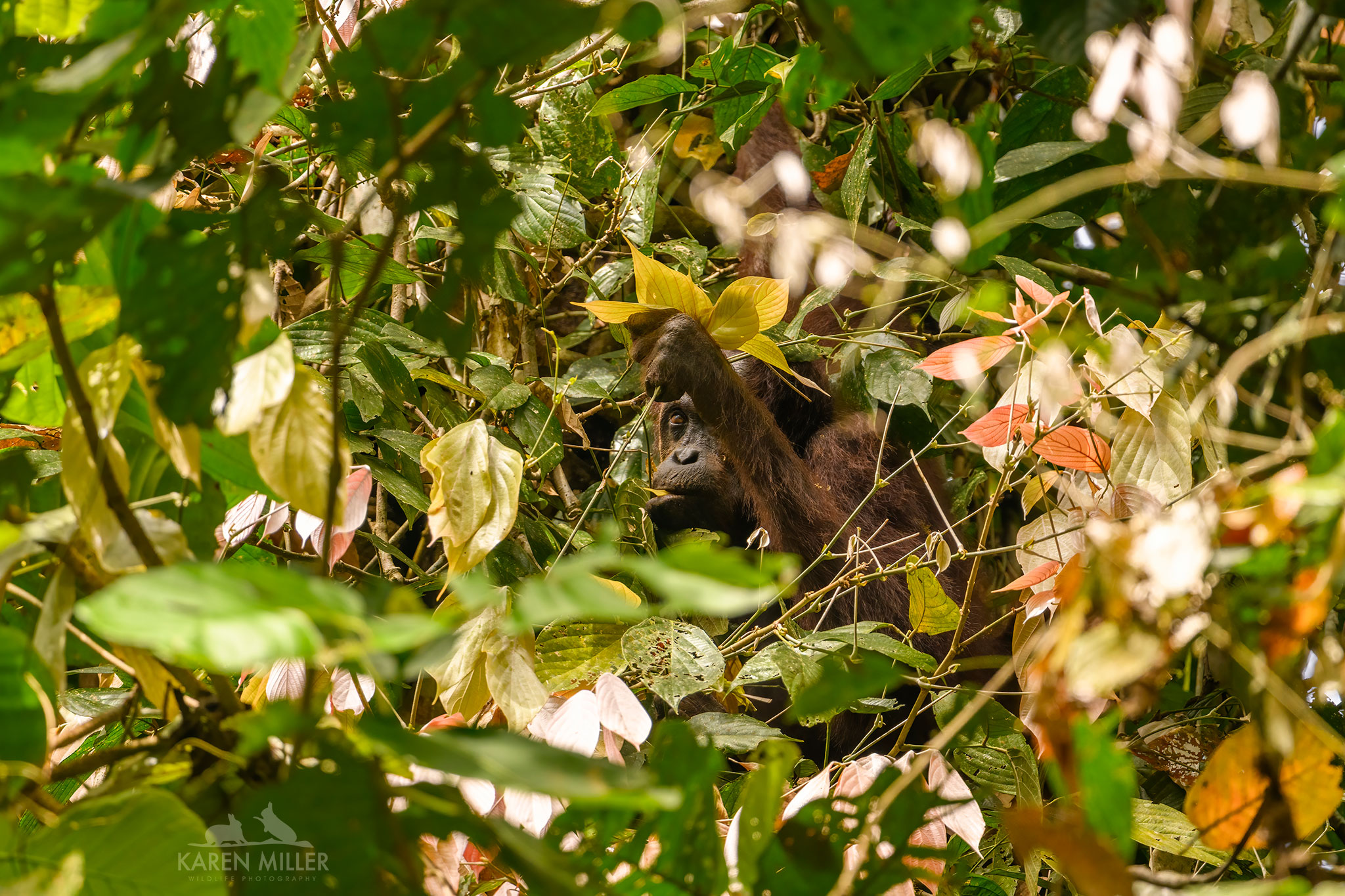
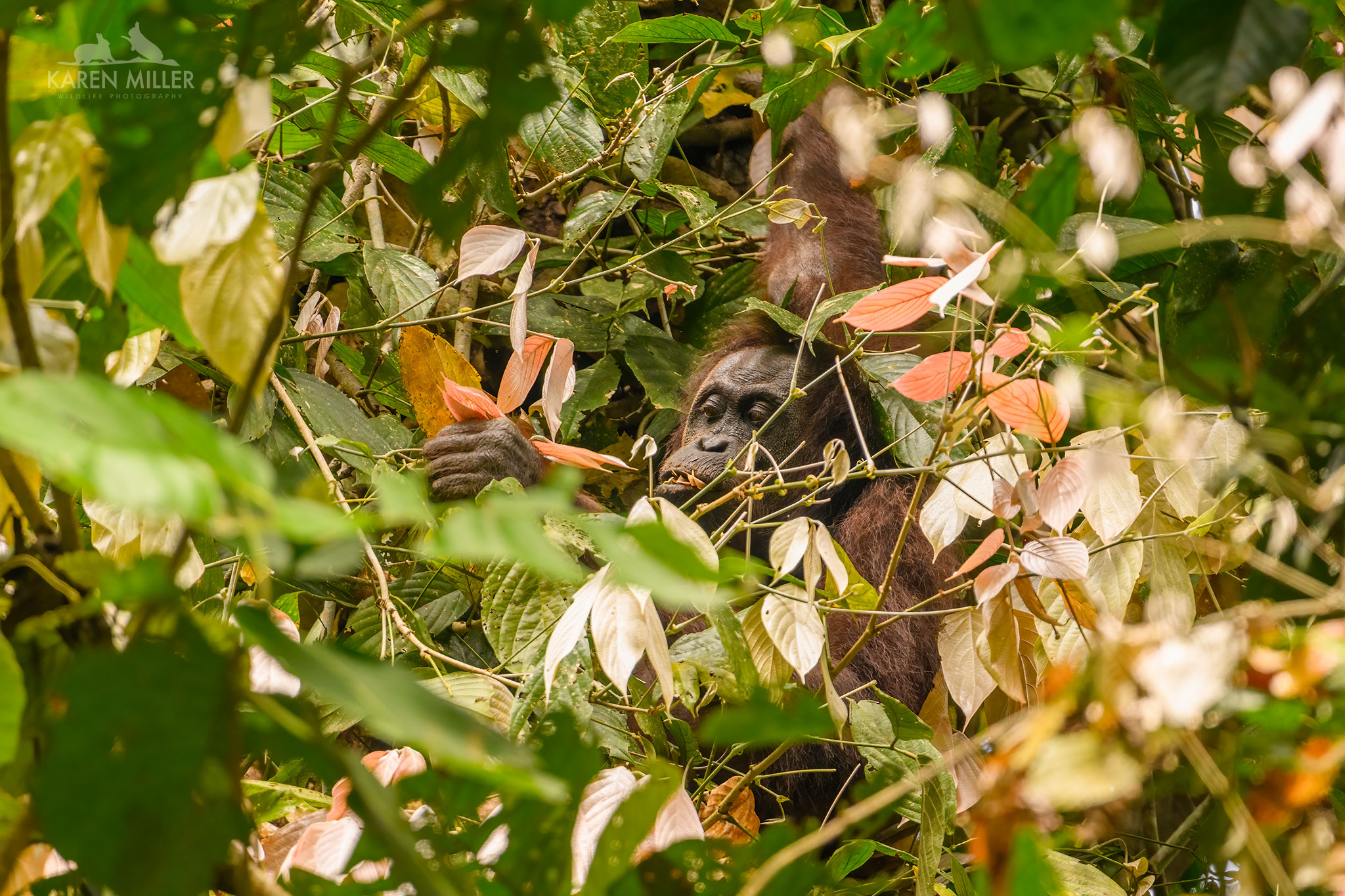
The most exciting find though was a wild orangutan. We’d stopped the vehicle to watch a bird flitting through the trees when I spotted movement in the leaves higher up. I expected it to be a macaque, but no! It was a female orangutan with an infant. A real surprise! The orangutans here are a mixture of truly wild and those released from Sepilok. This one, based on behaviour, was the former. It was hard to get good views of the pair and I don’t have any of the infant, but fantastic to see and watch.
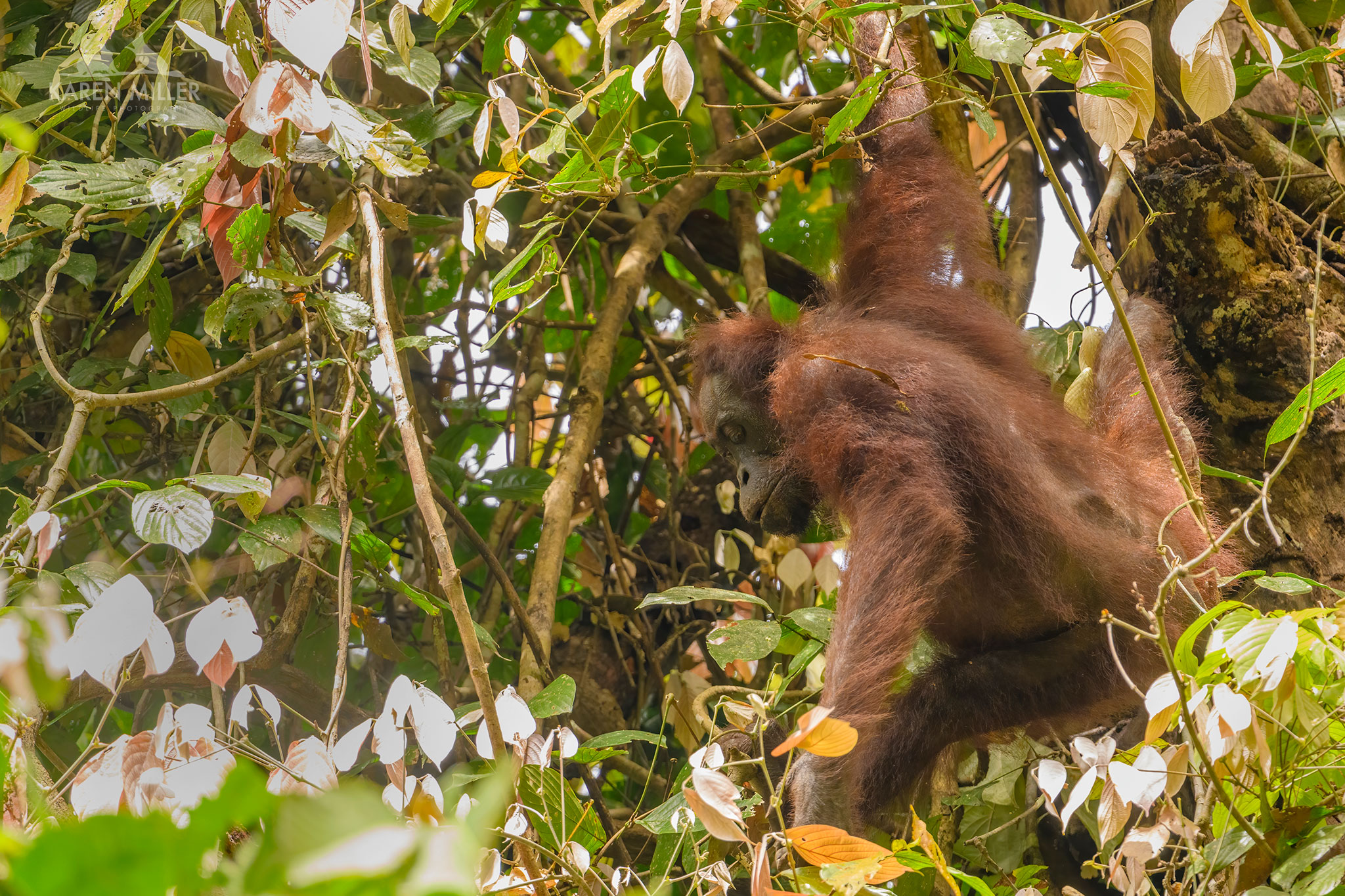
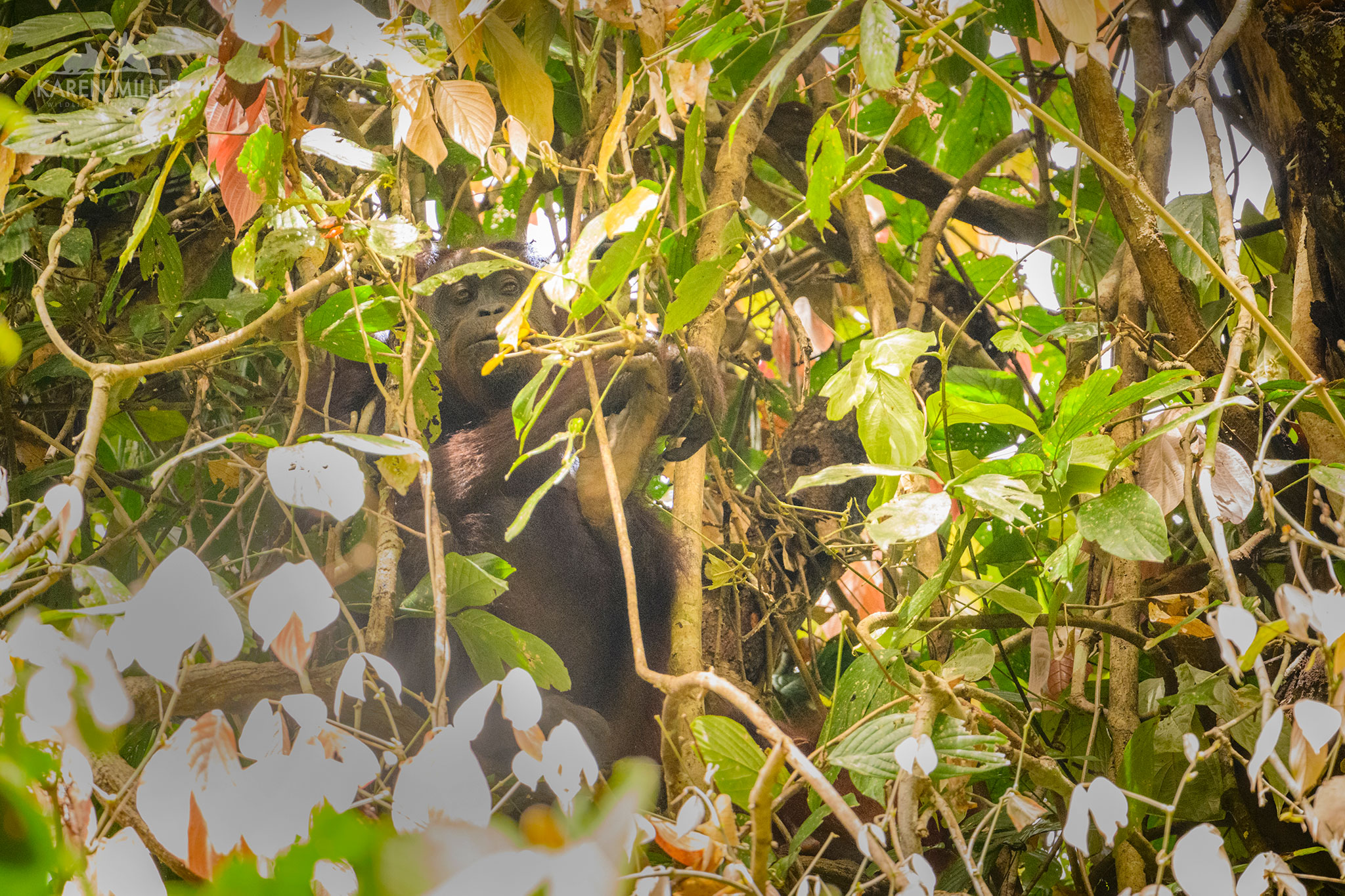
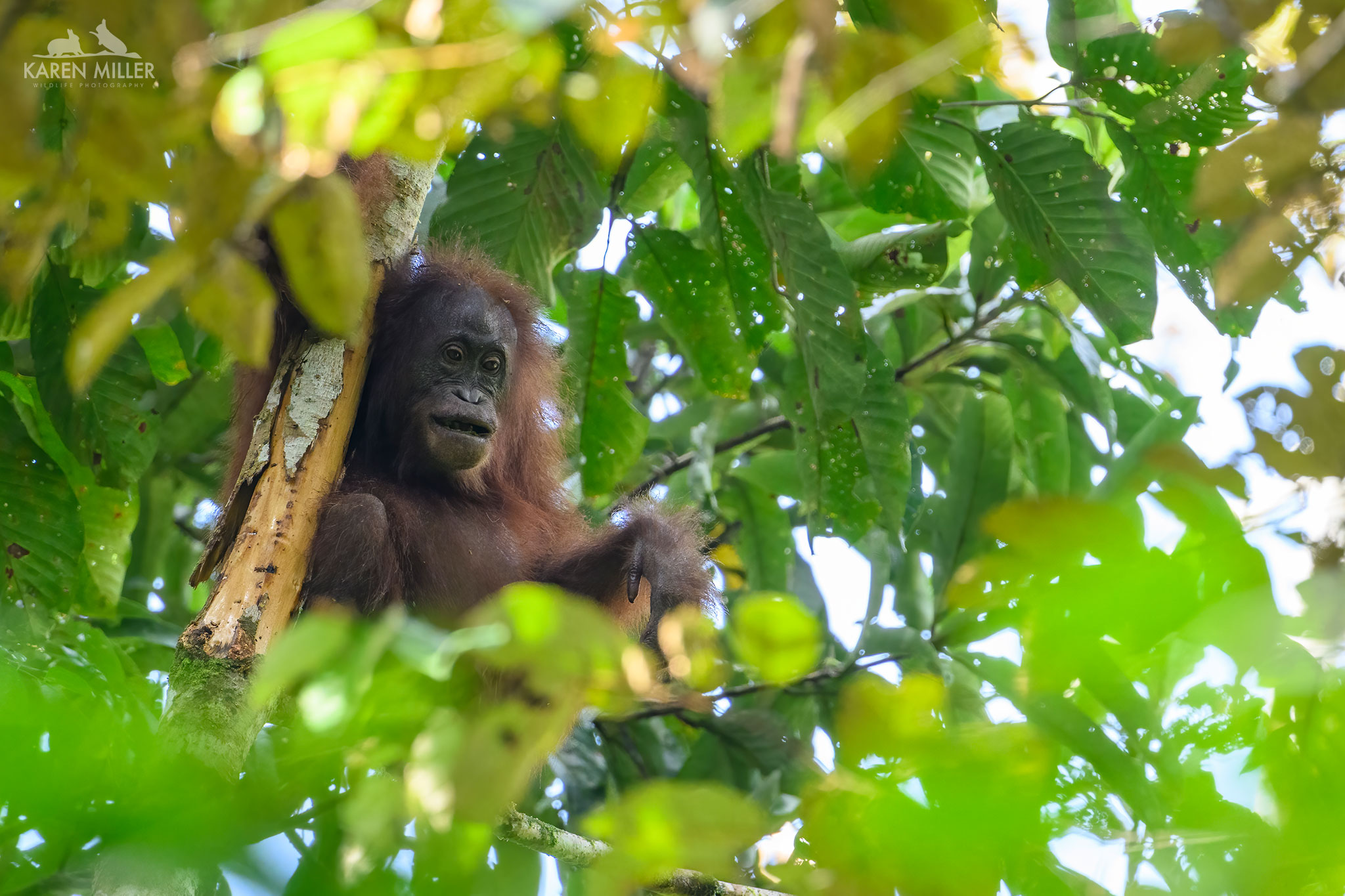
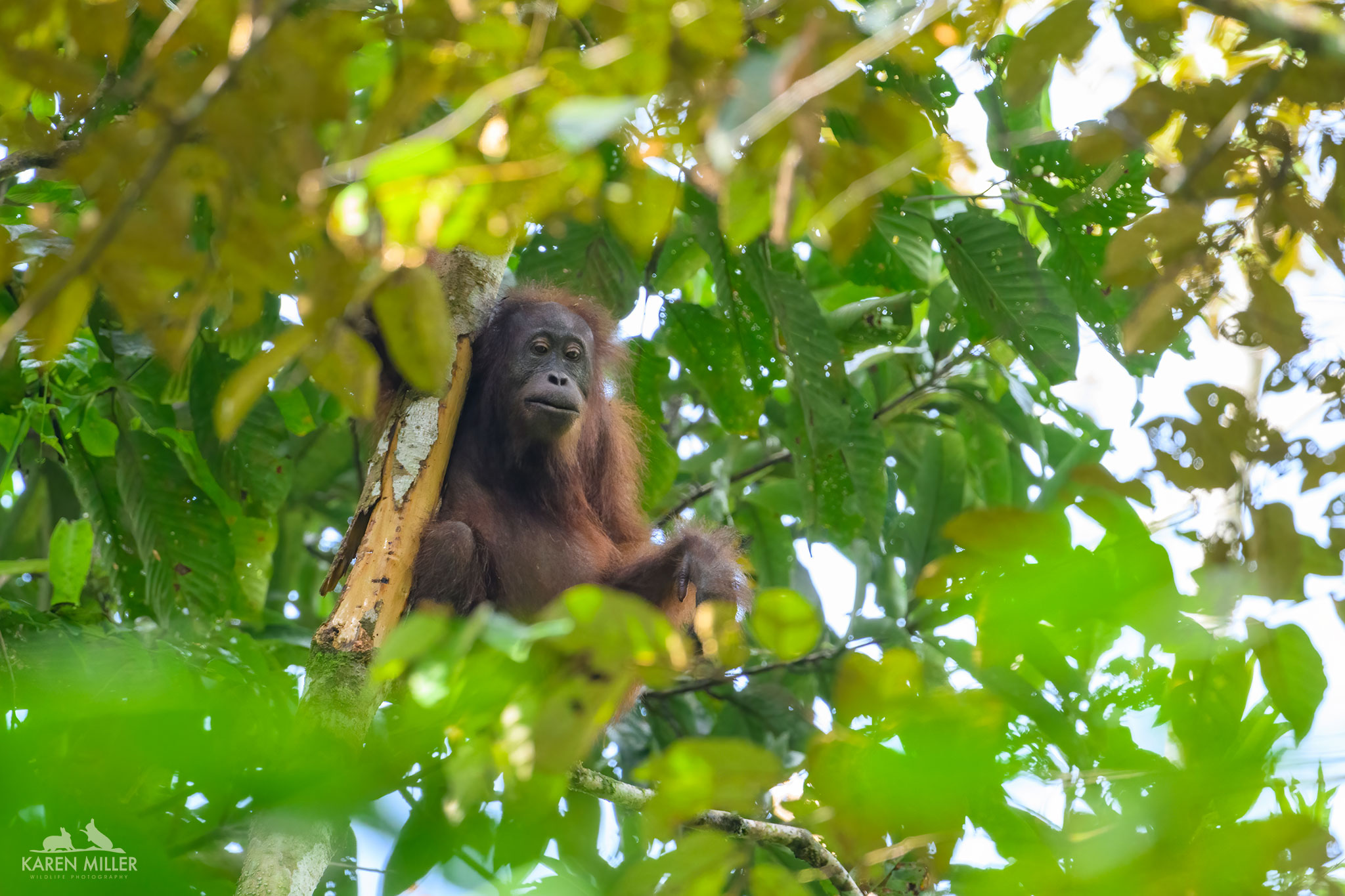
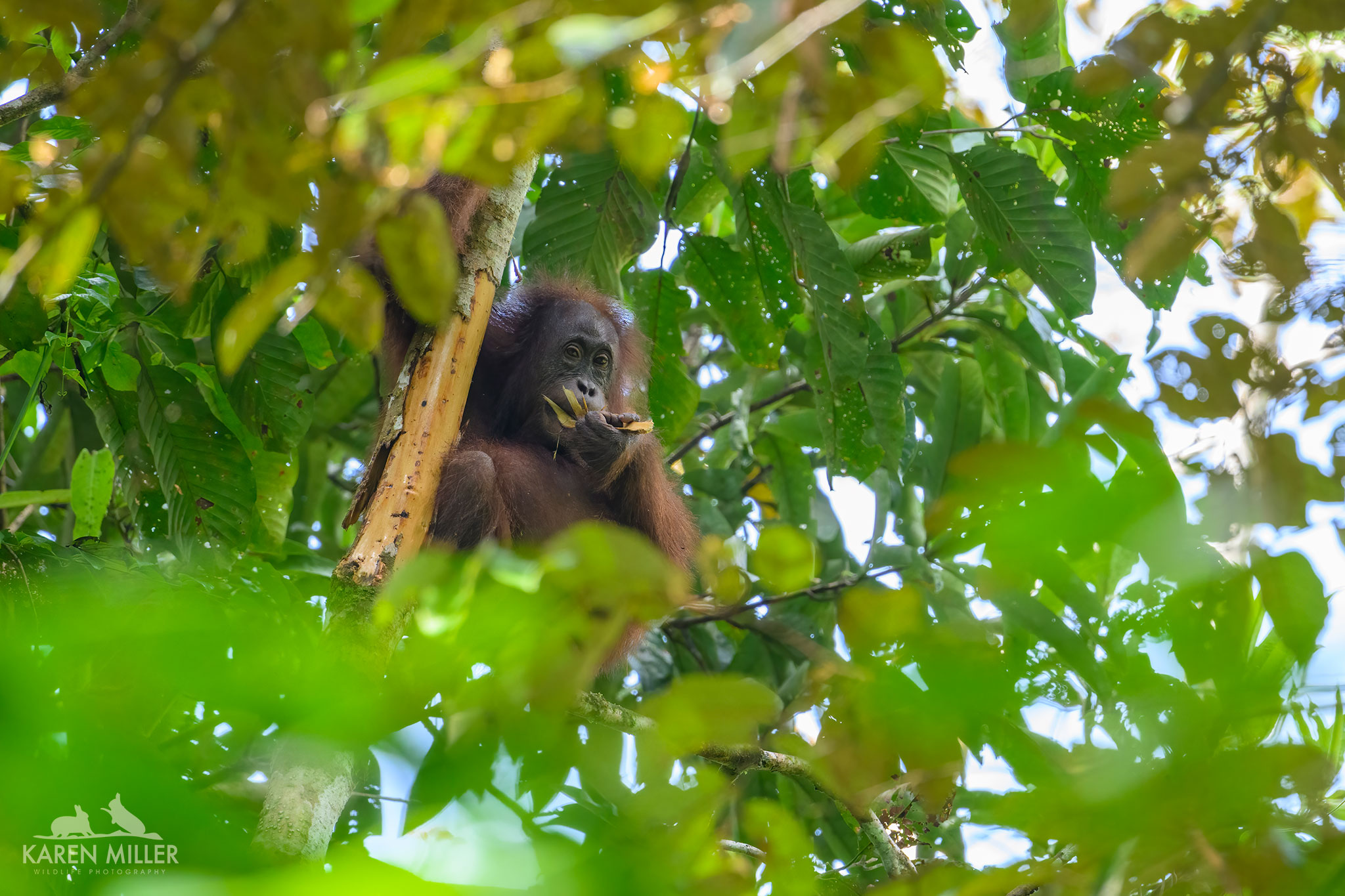
We had another orangutan sighting in the same area the following day although the guide had to get back to his new clients so frustratingly we didn’t stay with it for long. We had the best views of this one.
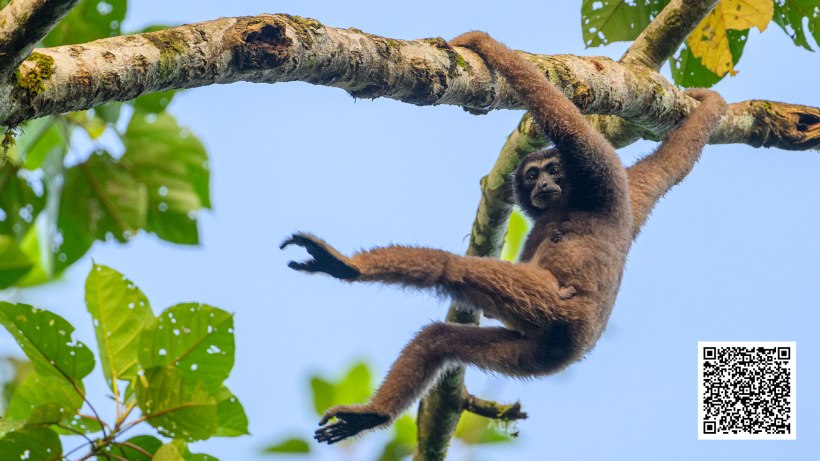
In the morning we went on dawn walks. The primary reason for these was to hopefully catch sight of the Northern Gibbon families that live close to the resort. On the first morning there were none to be seen or heard, but on the second we had the most wonderful views of one of the families – two adults, two older children and a tiny baby clinging to mum. We heard them calling first and then they came into sight, flying through the canopy using their exceptionally long limbs. I didn’t expect close sightings, but one of the youngsters descended from the treetops and actually sat in a tree very close to us. Thrilling. This was one of my favourite Borneon experiences.
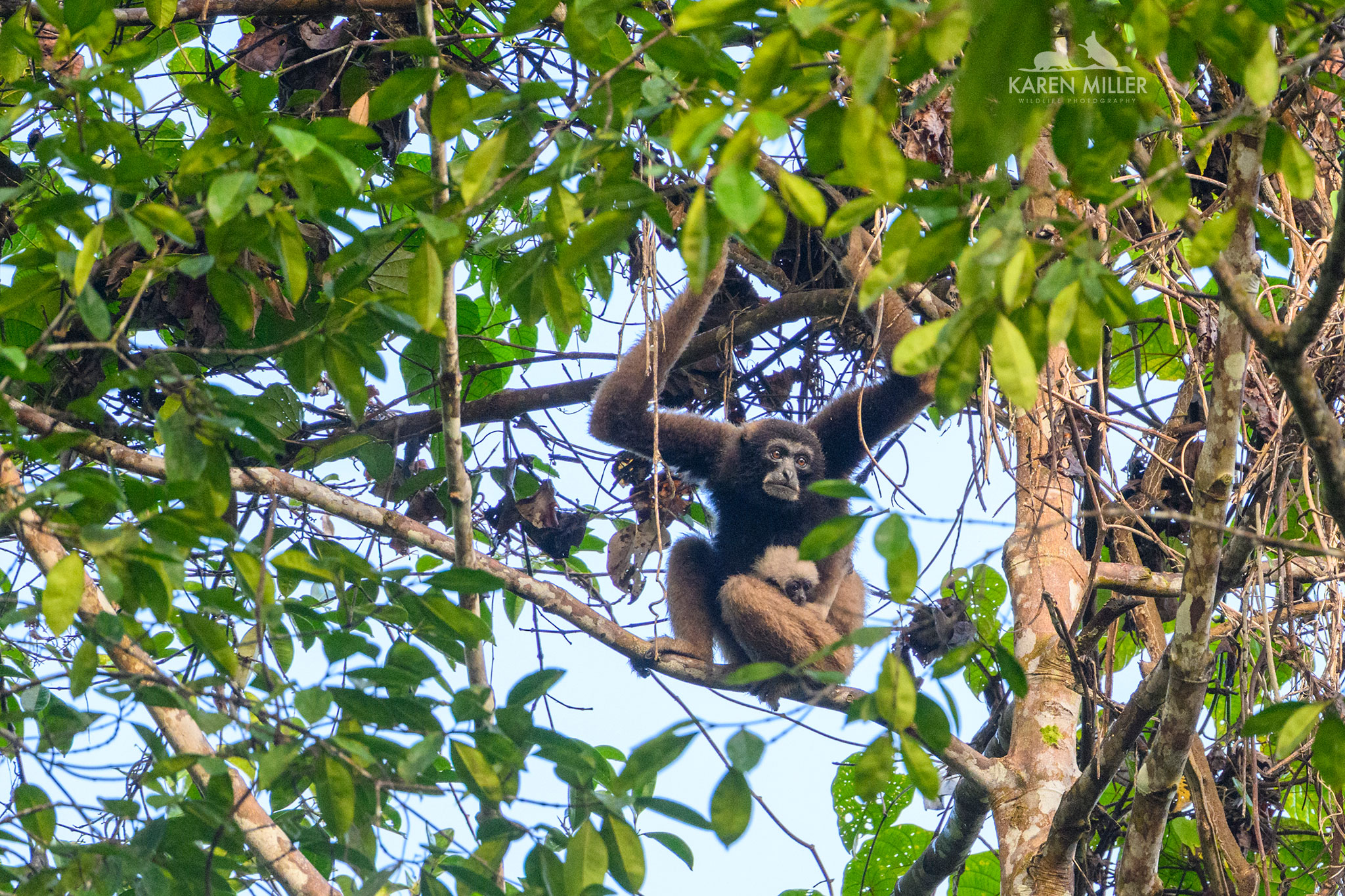
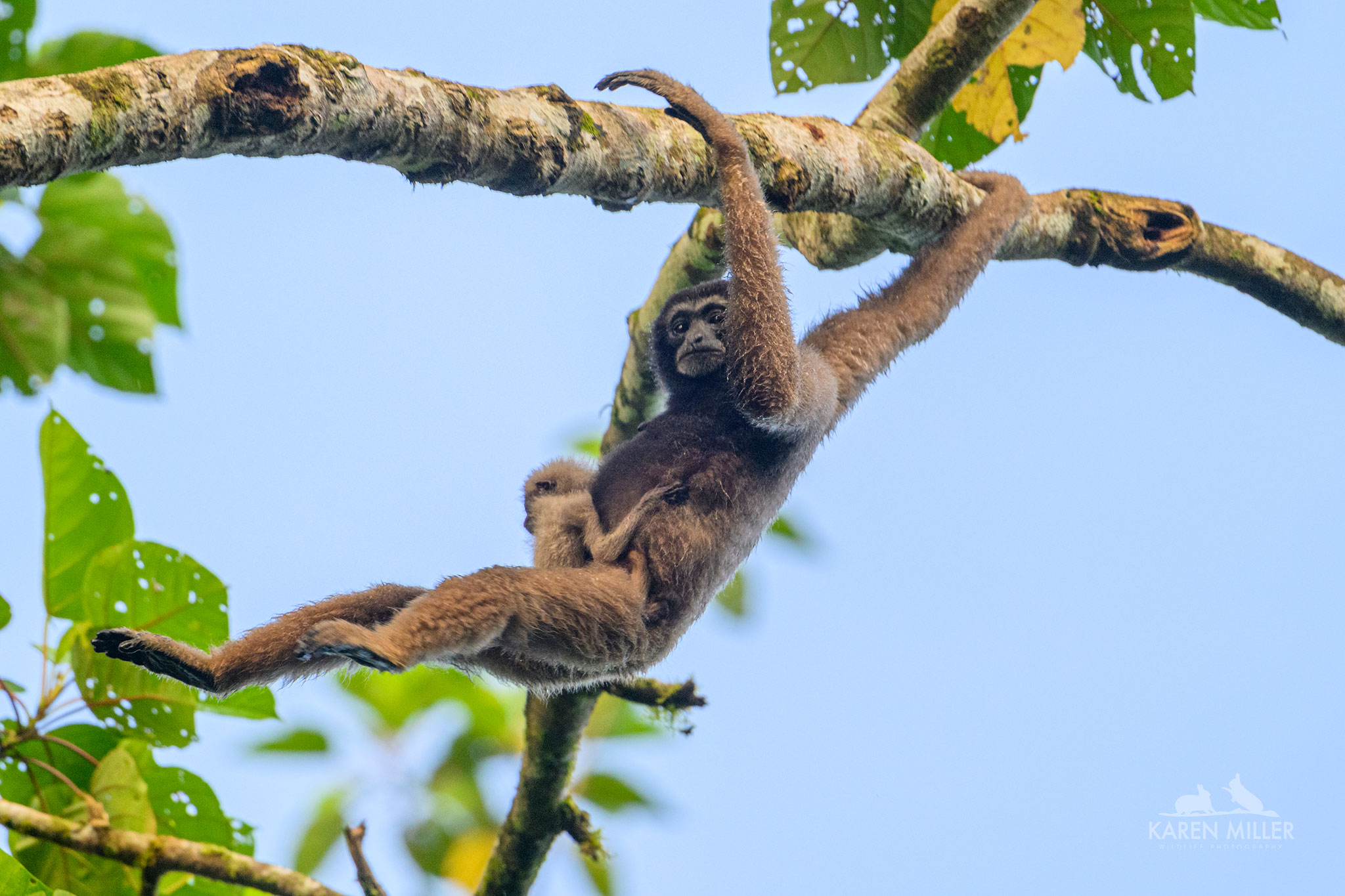
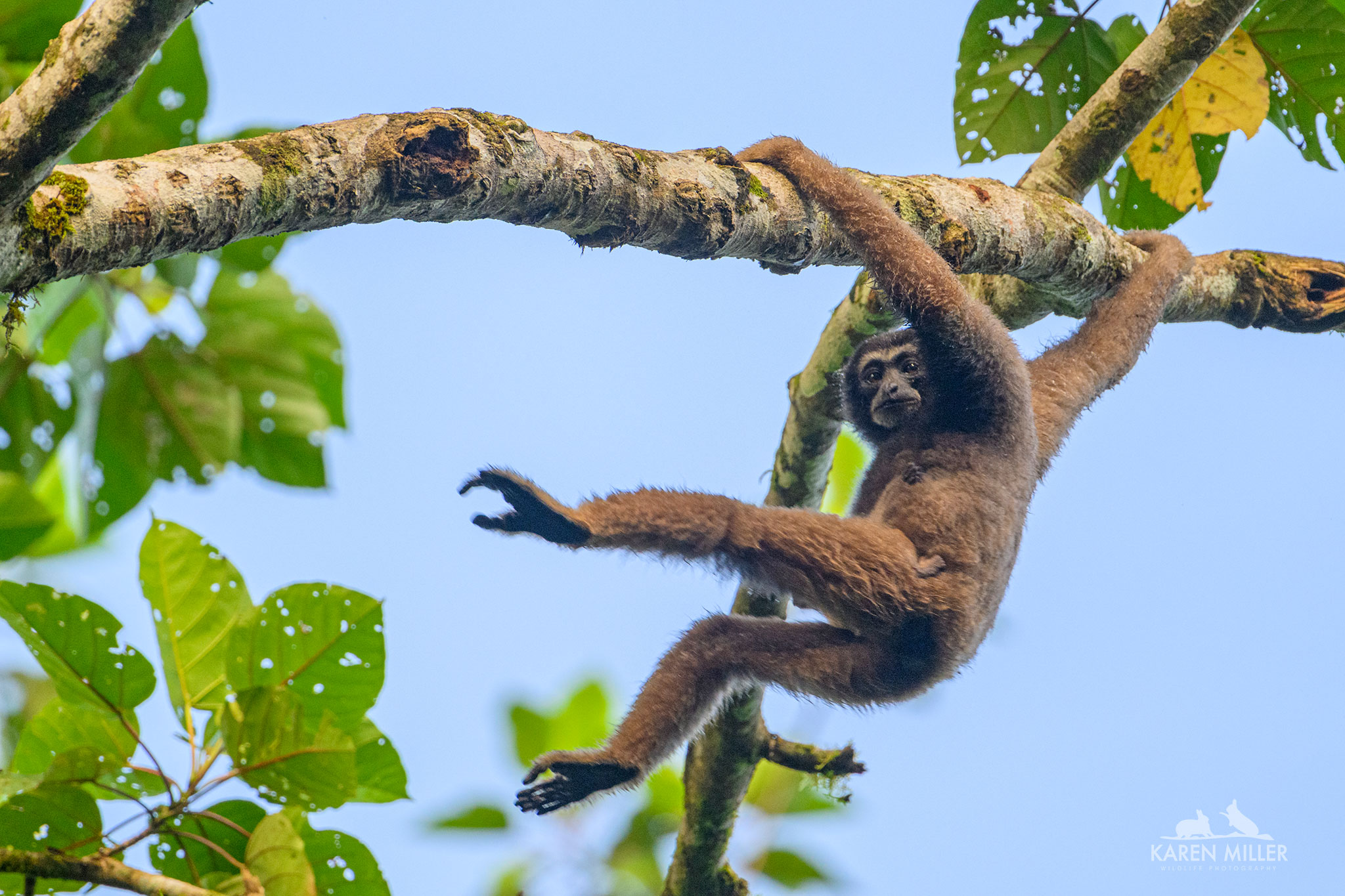
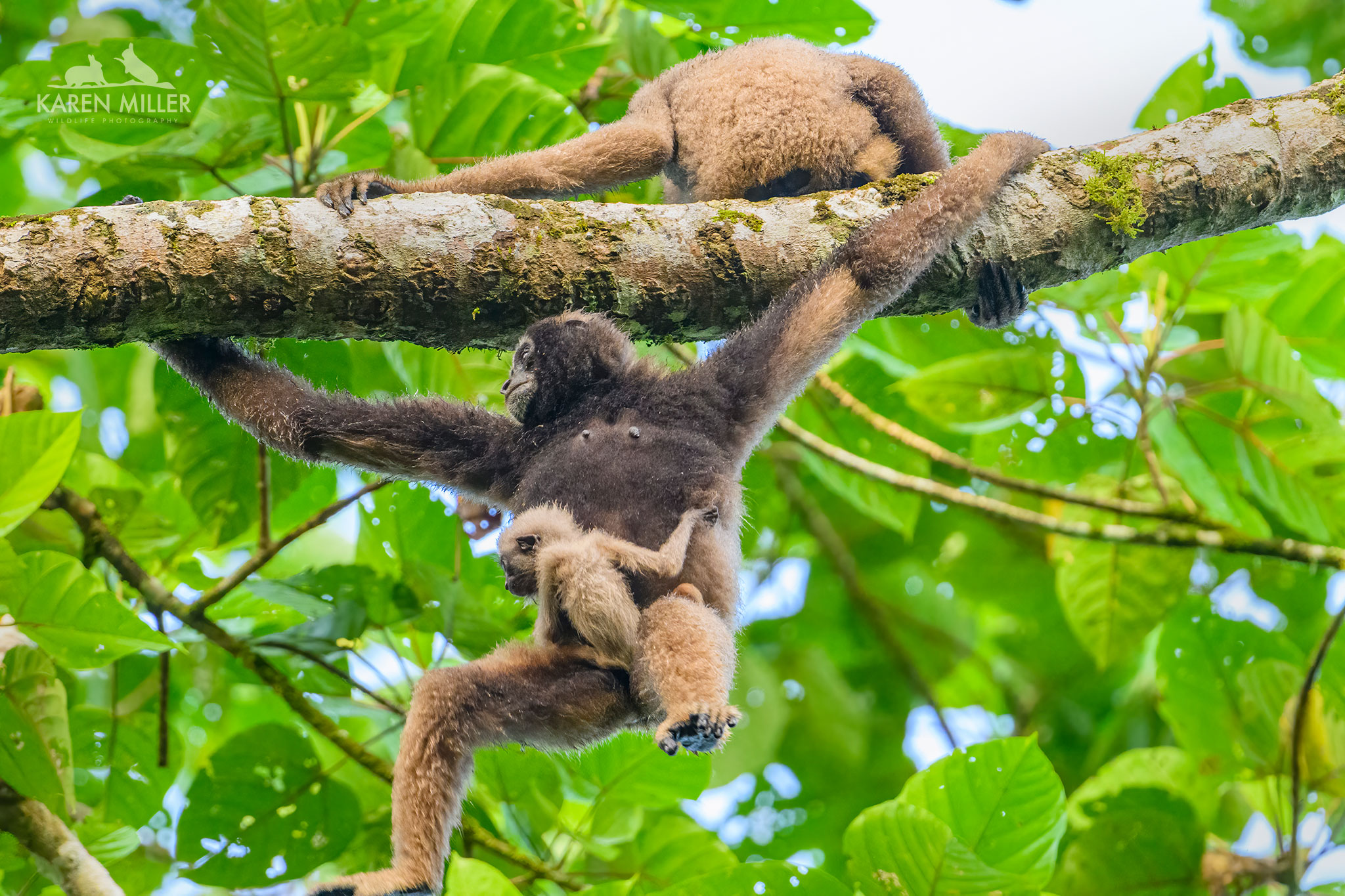
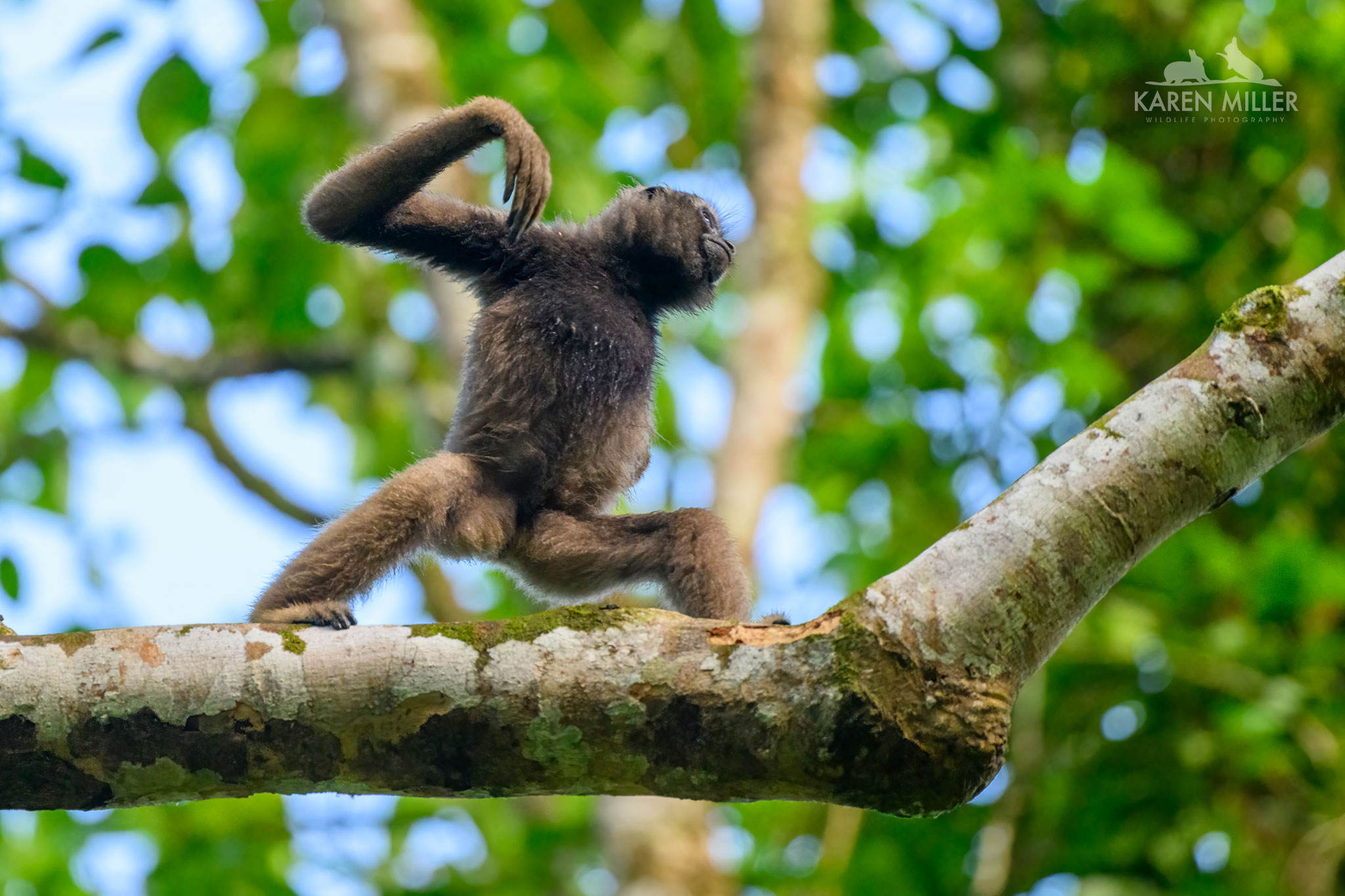
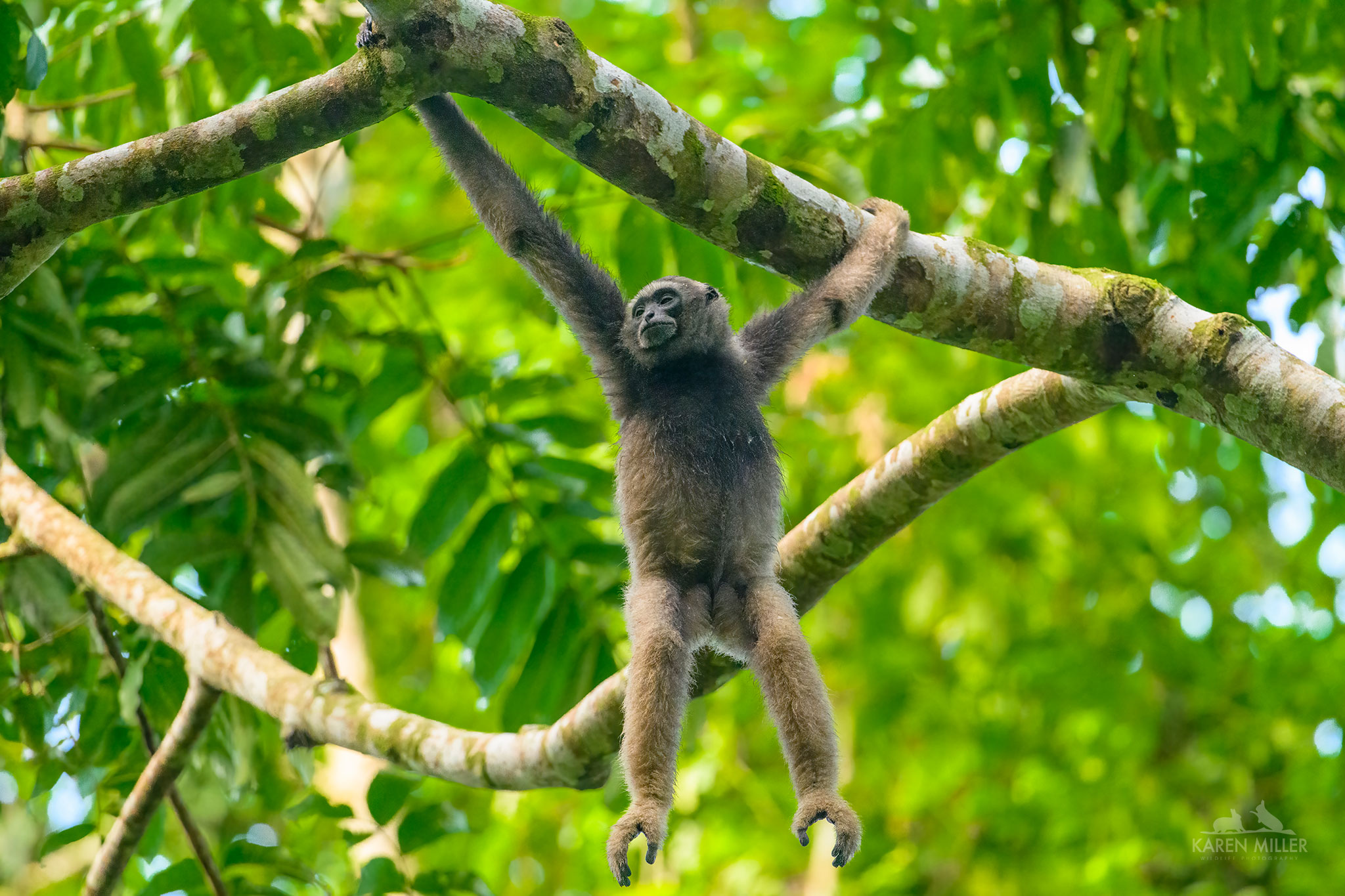
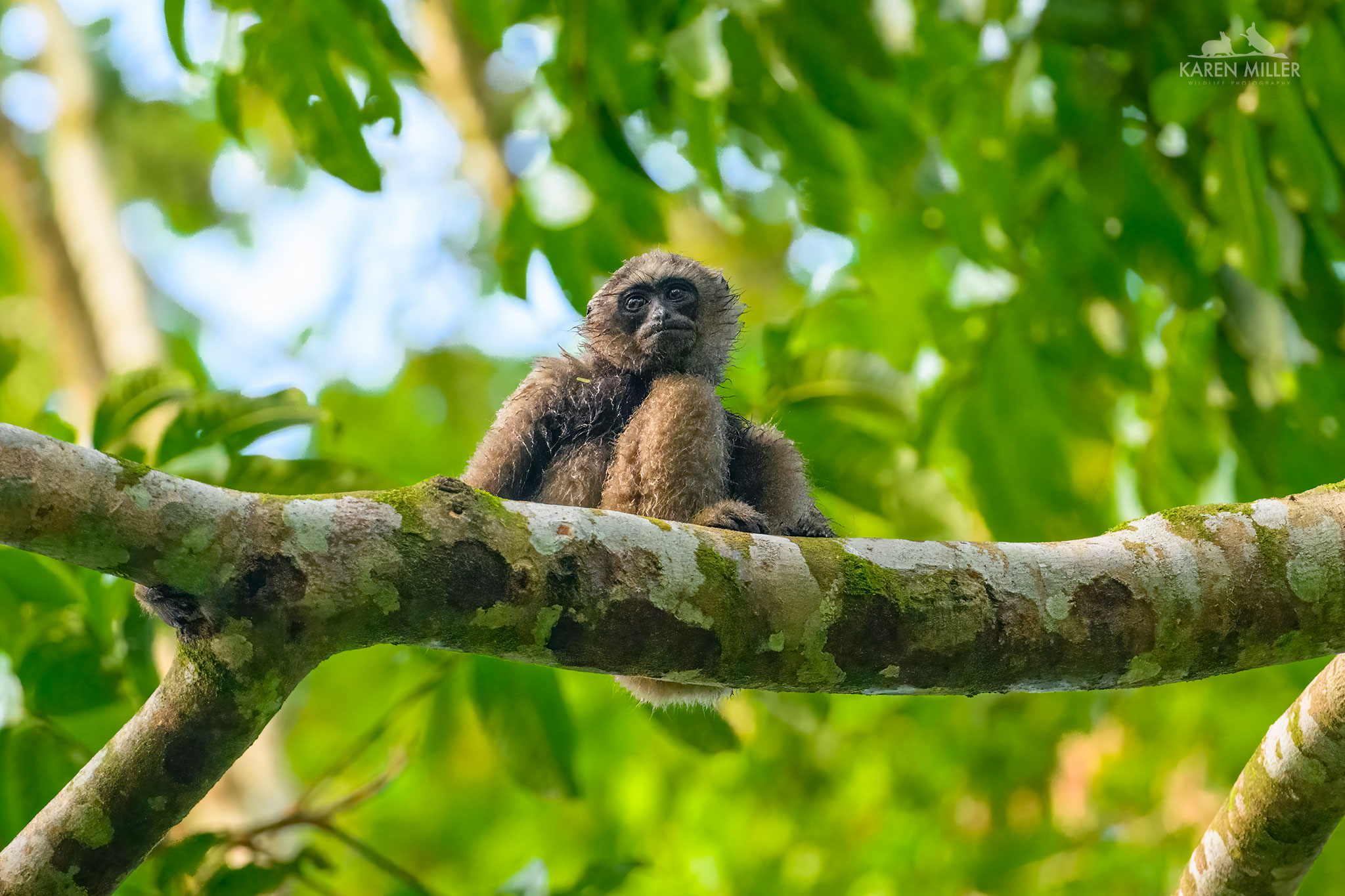
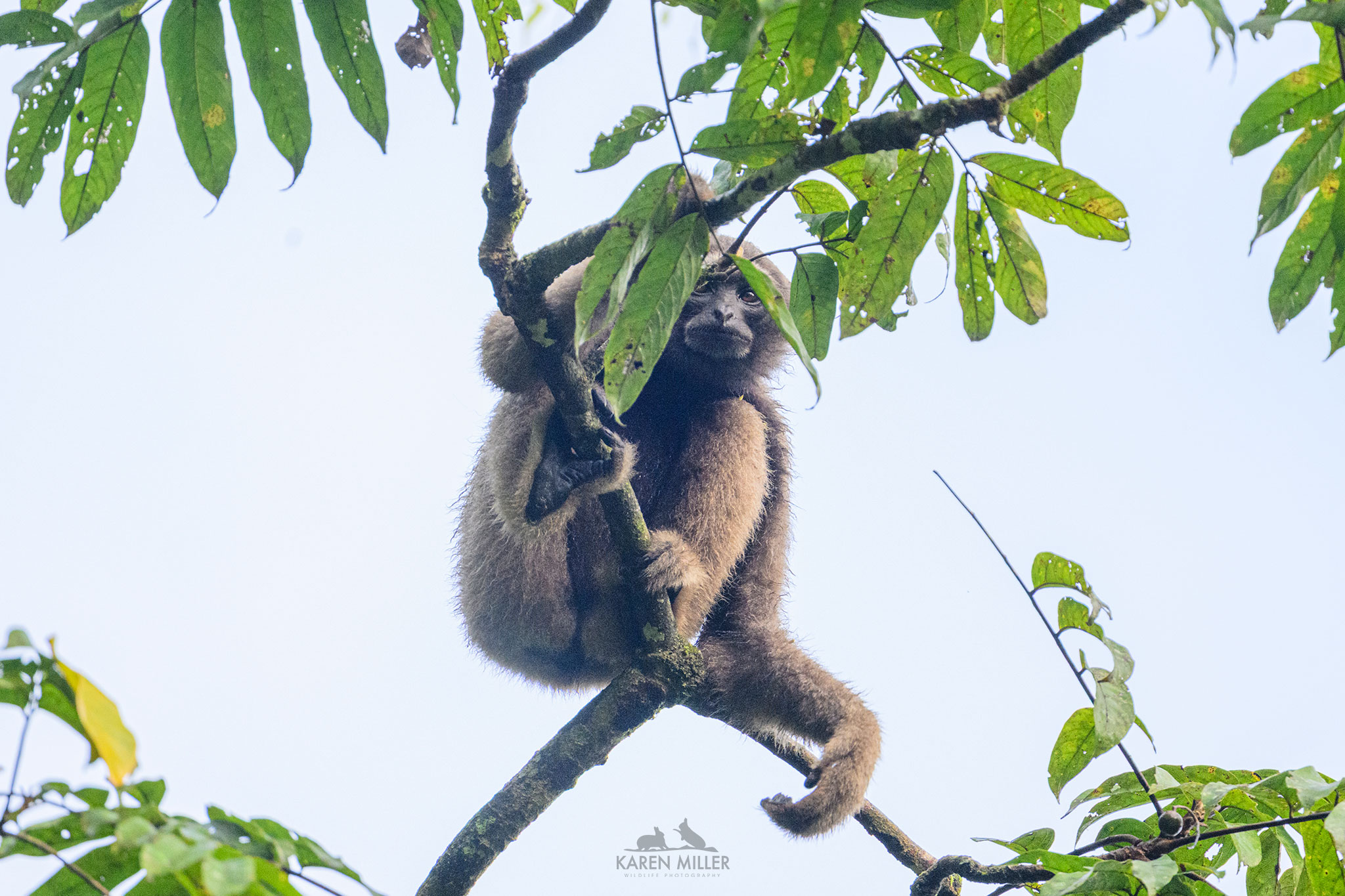
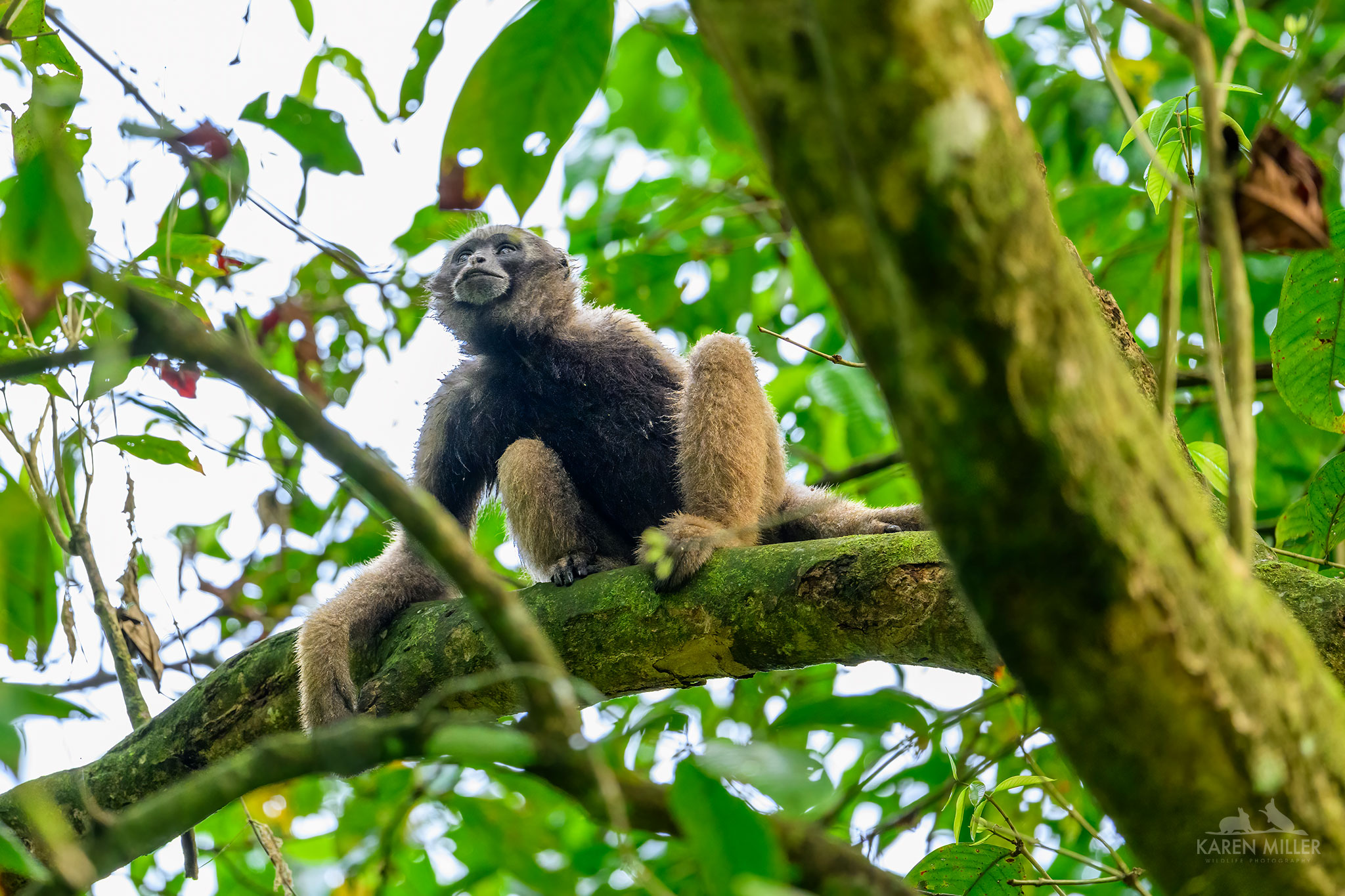
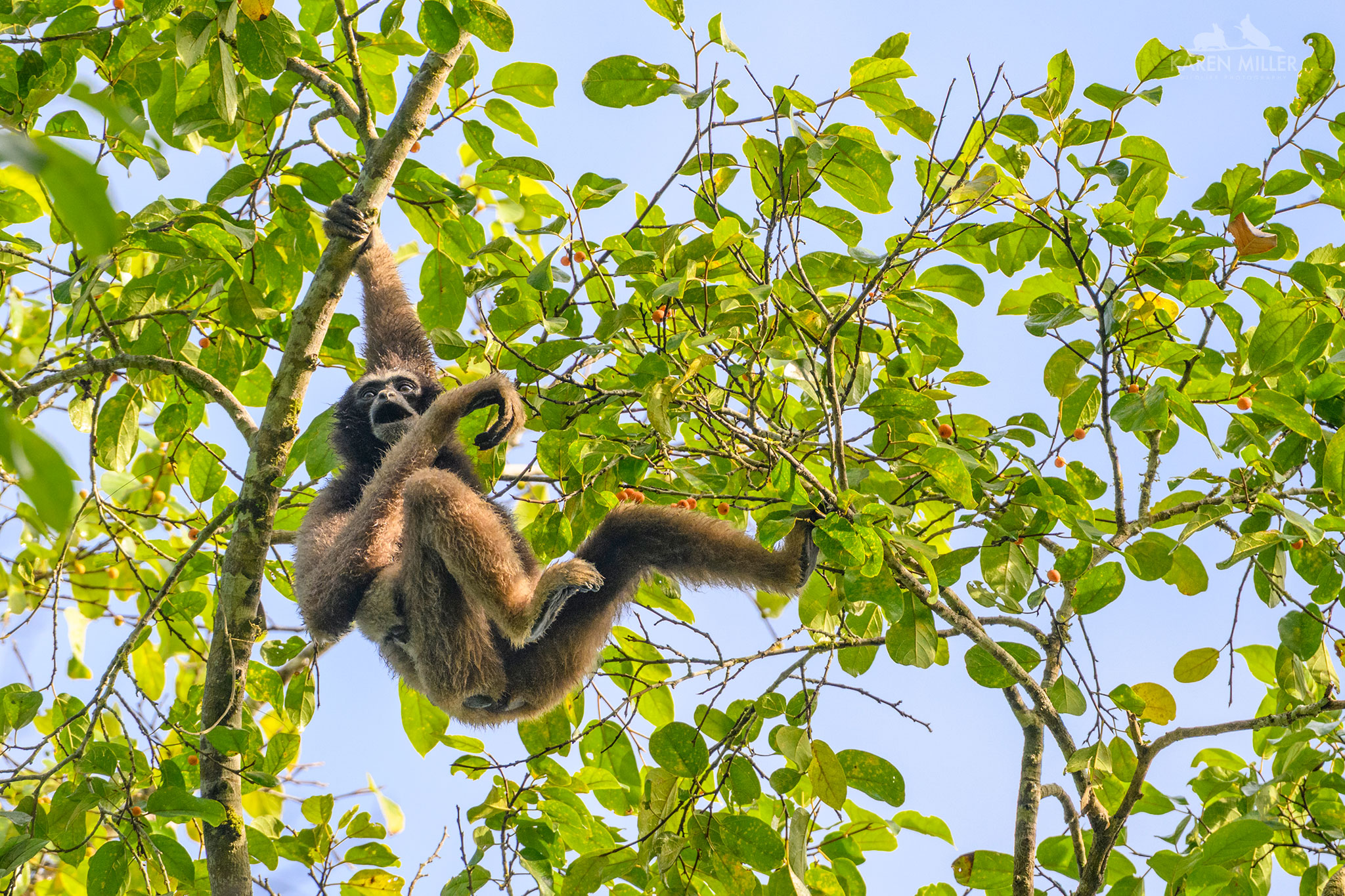
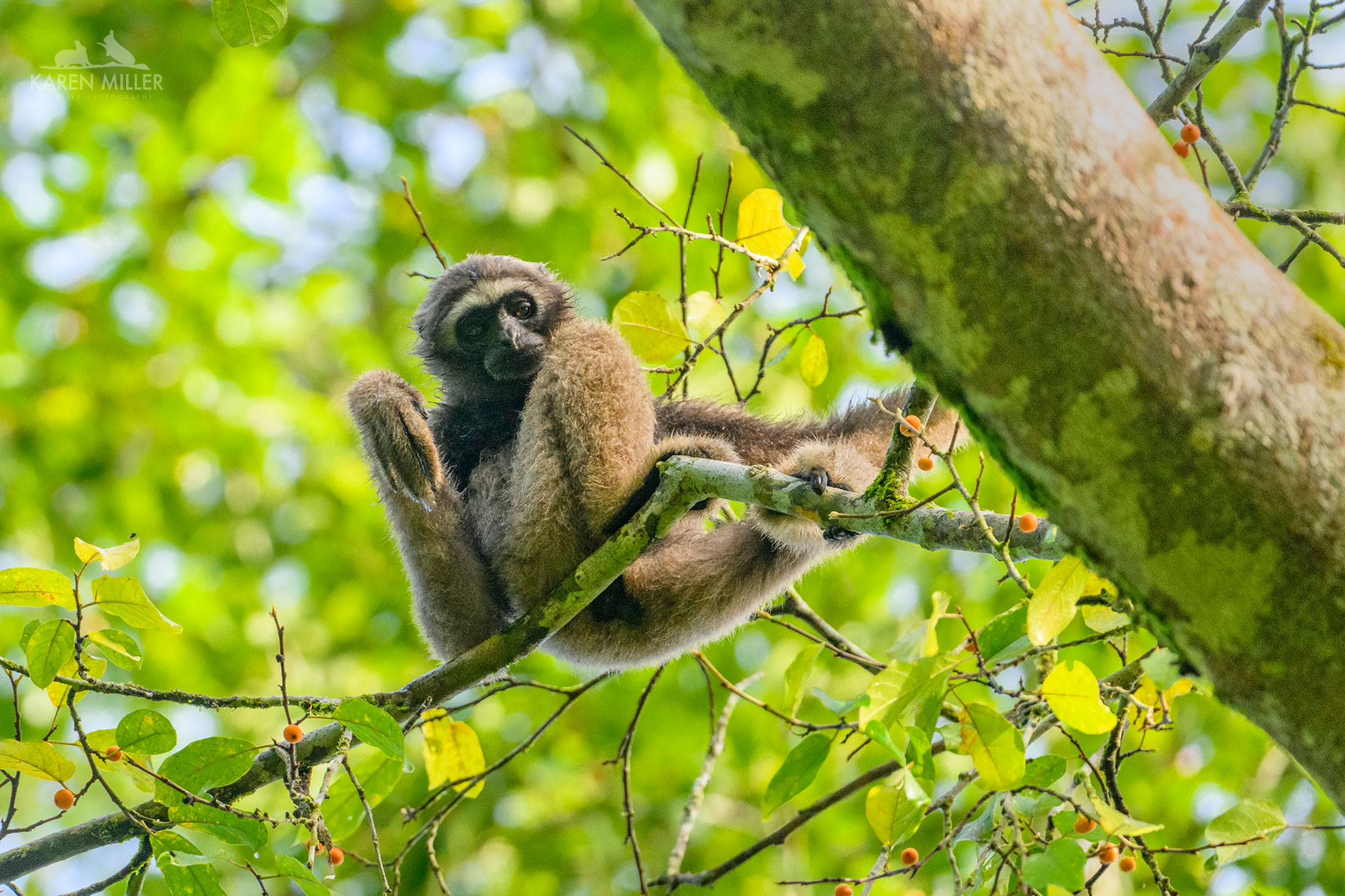
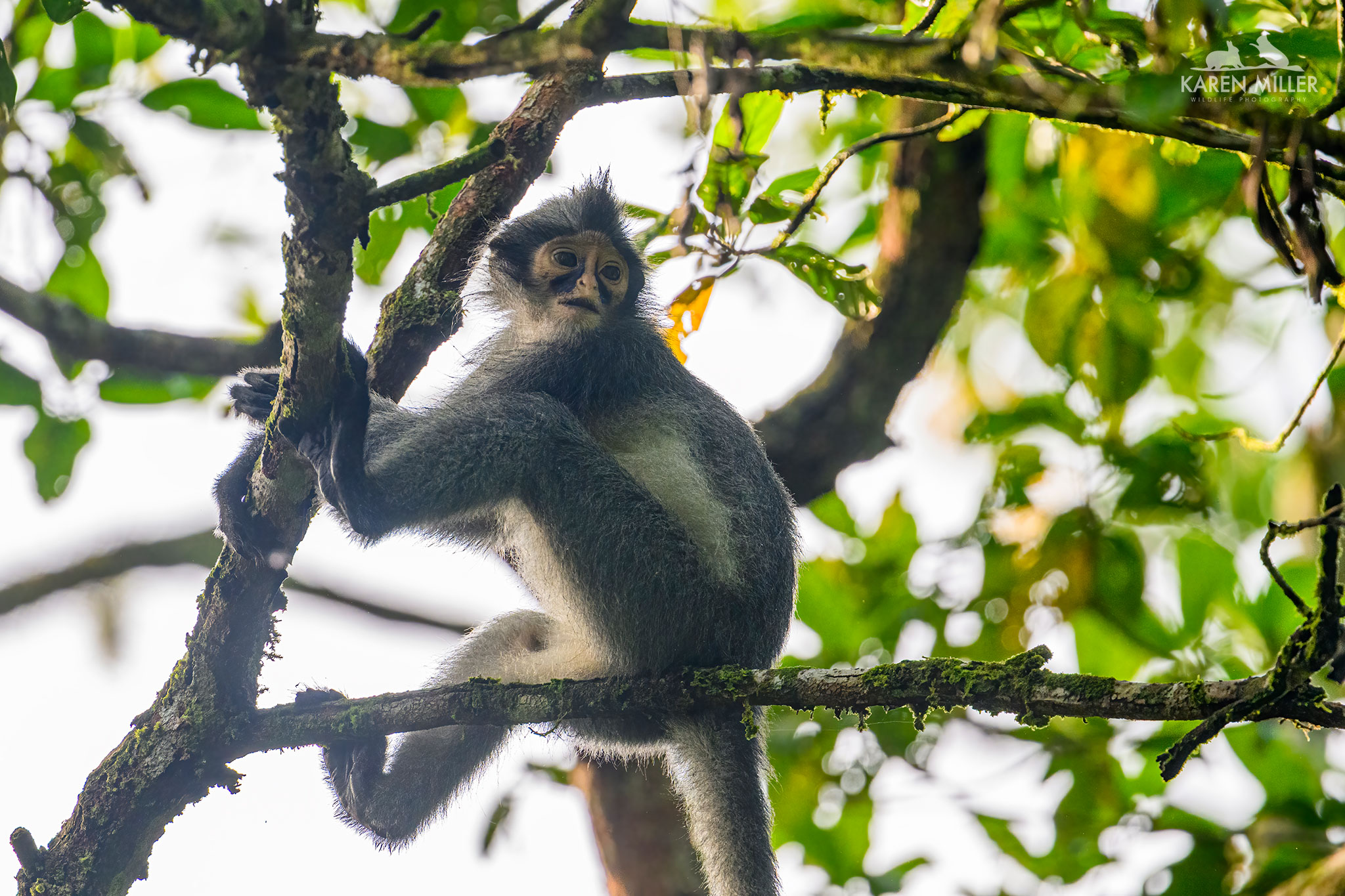
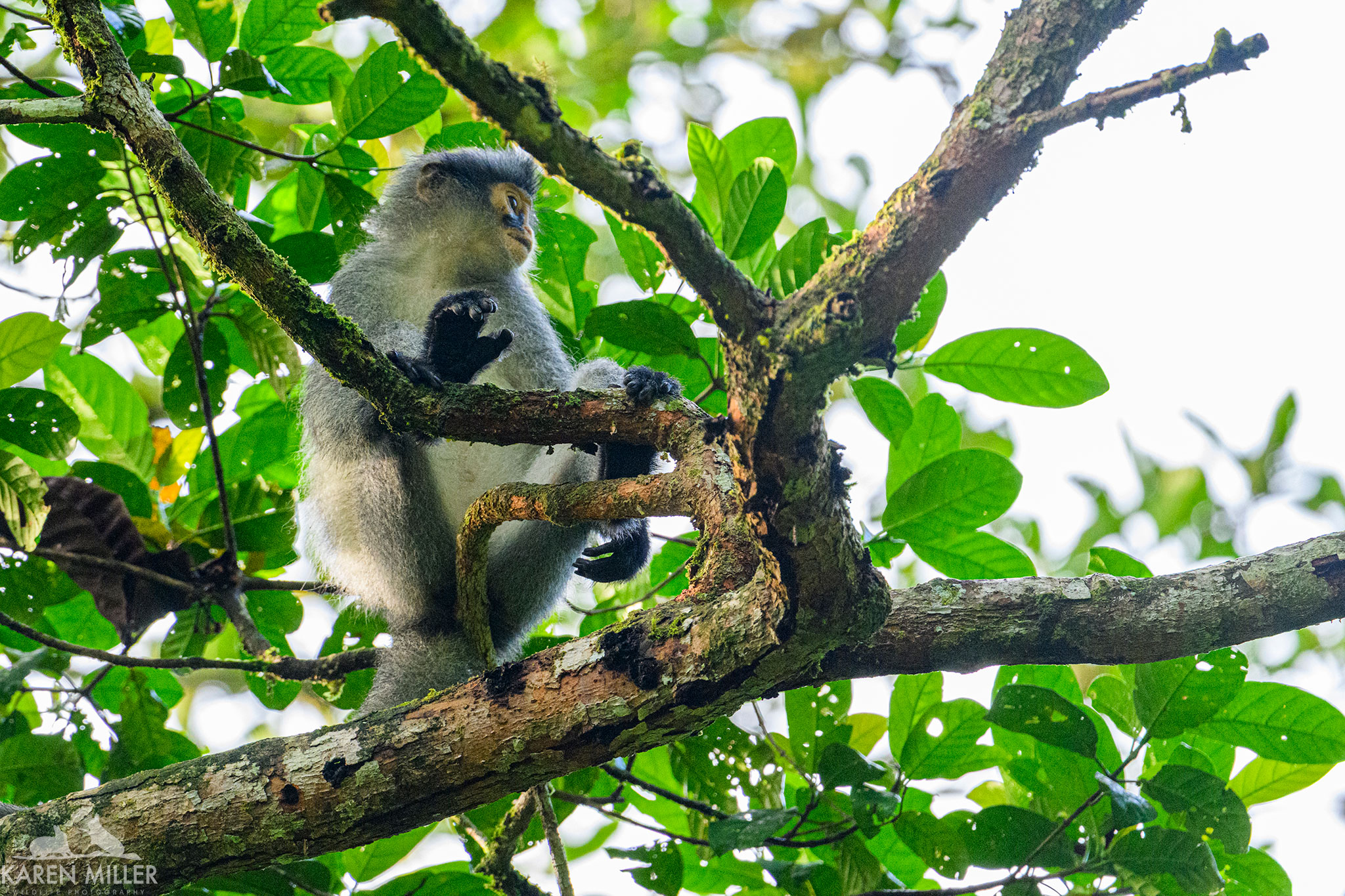
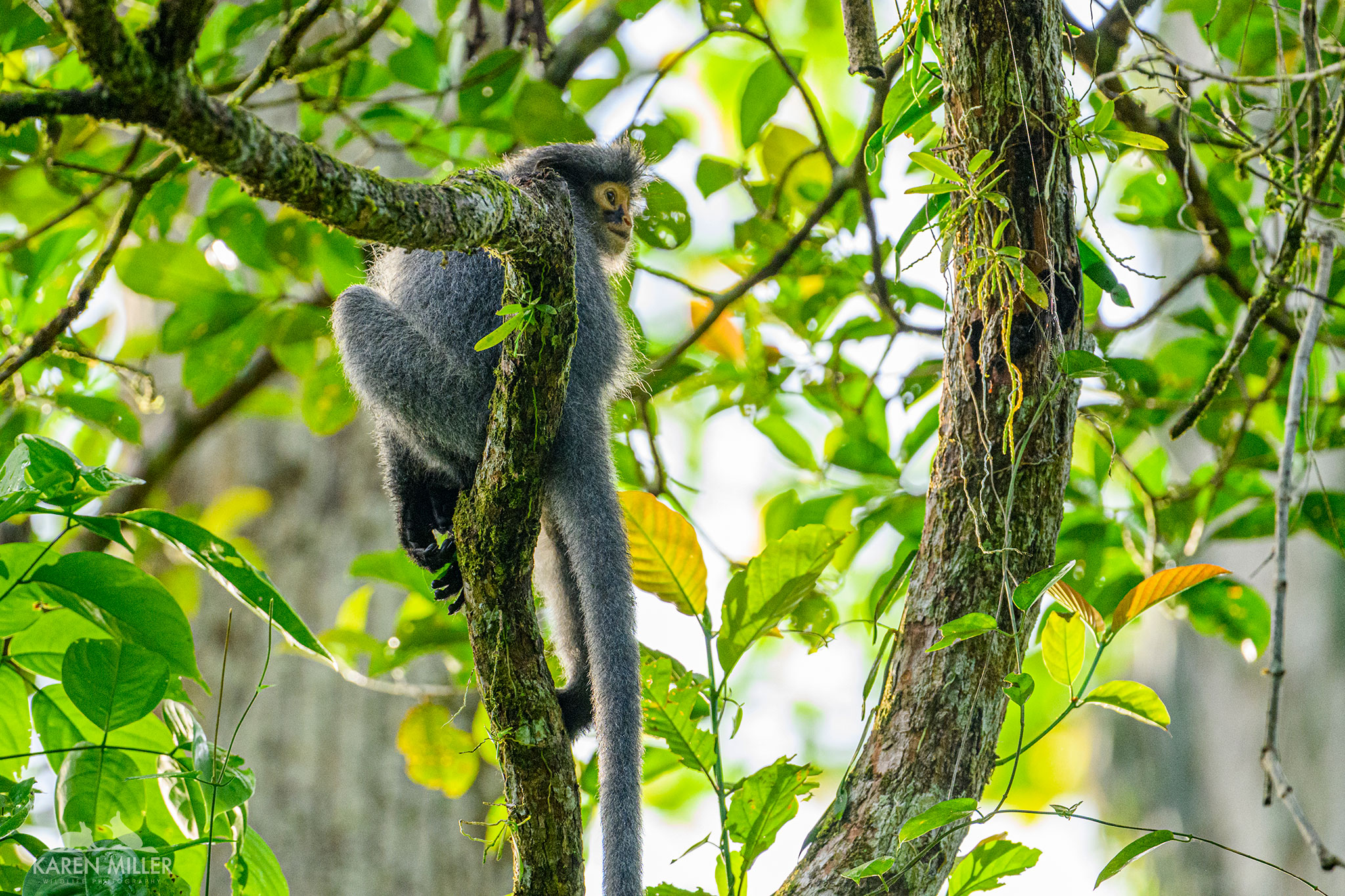
The icing on the cake was the appearance of grey-leafed monkeys (aka Hose’s Langur) who also live in the area but are seen less frequently. They too came pretty close to us. Awesome!
There were vehicle based excursions before and after dinner. Some guests (like those for whom we were dumped) did an extended excursion, but we were never given that option. For these we drove up and down part of the track that leads back to town. The best sightings were on the evening safaris in the dark. The guide(s) had strong torches with which they scanned the forest as we drove slowly along. On one side of the track was jungle and the other plantation (of which there is a huge amount). The first of the two evening excursions was the best as we had 2 guides with torches so they had more chance of spotting creatures. Interestingly we did see a number of species on the plantation side including leopard cats, mouse deer (both very hard to photograph), civets and hornbills. Wildlife does apparently use it too, so it’s not a no-go area which I hadn’t realised.
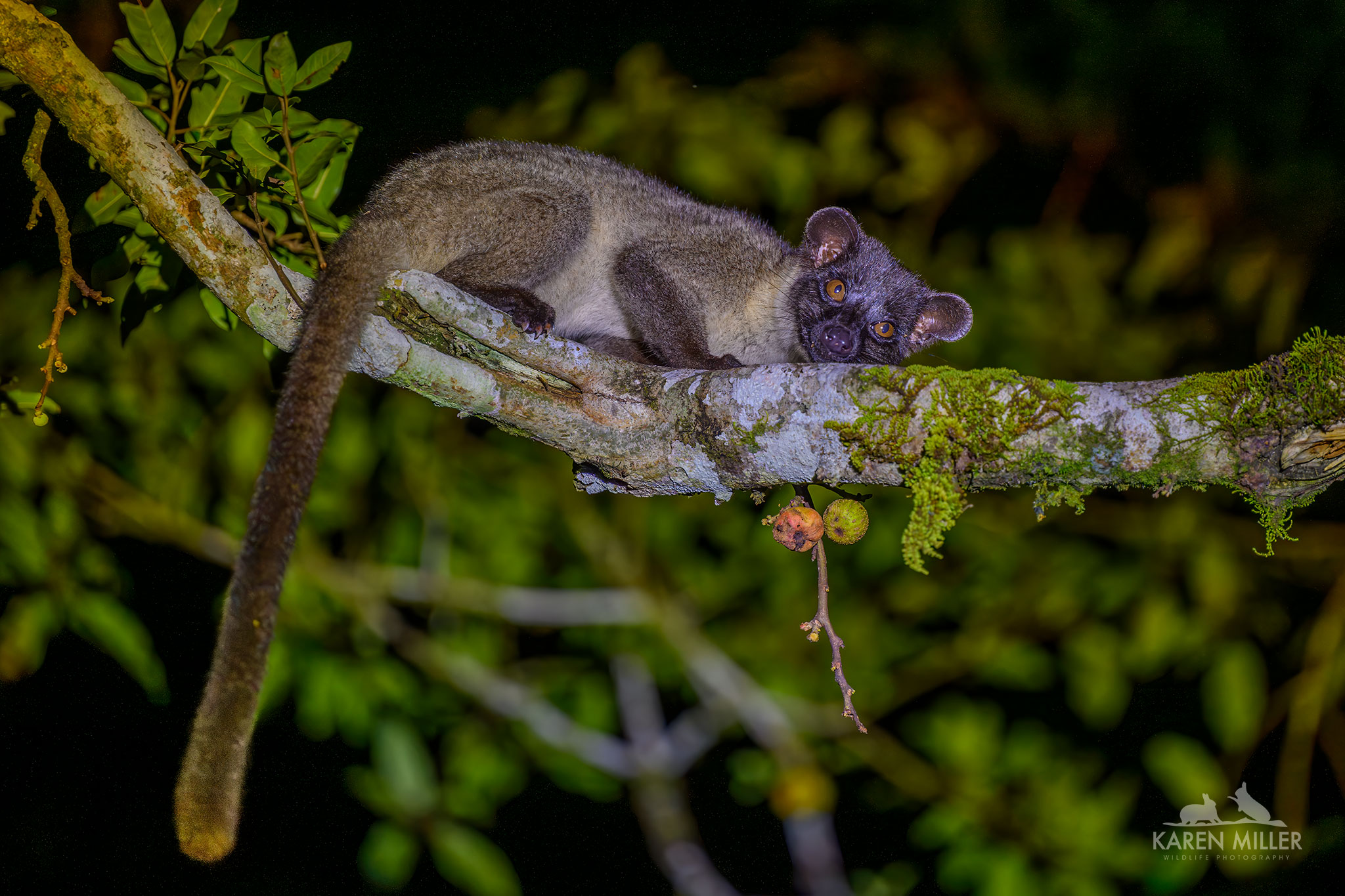
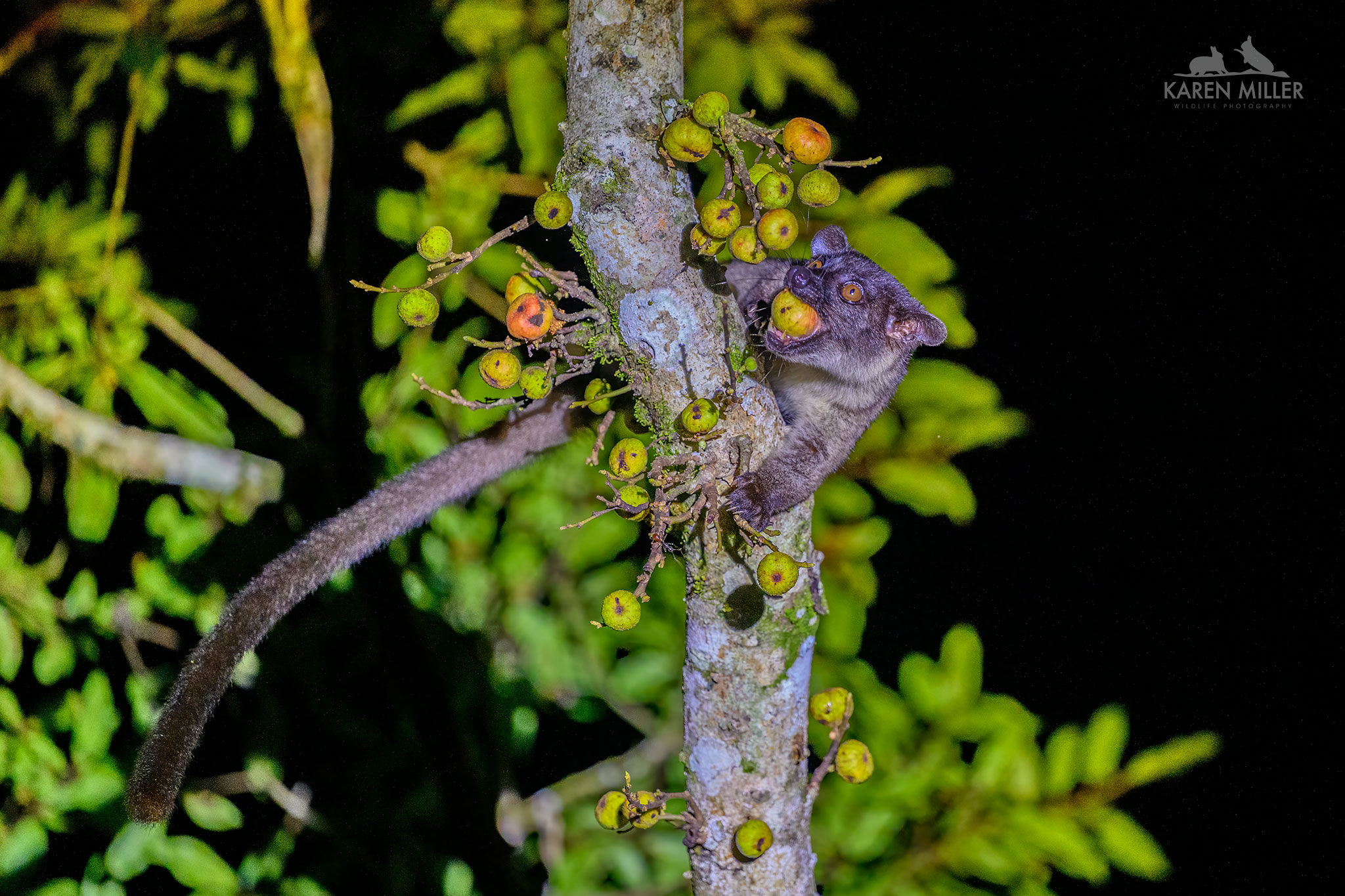
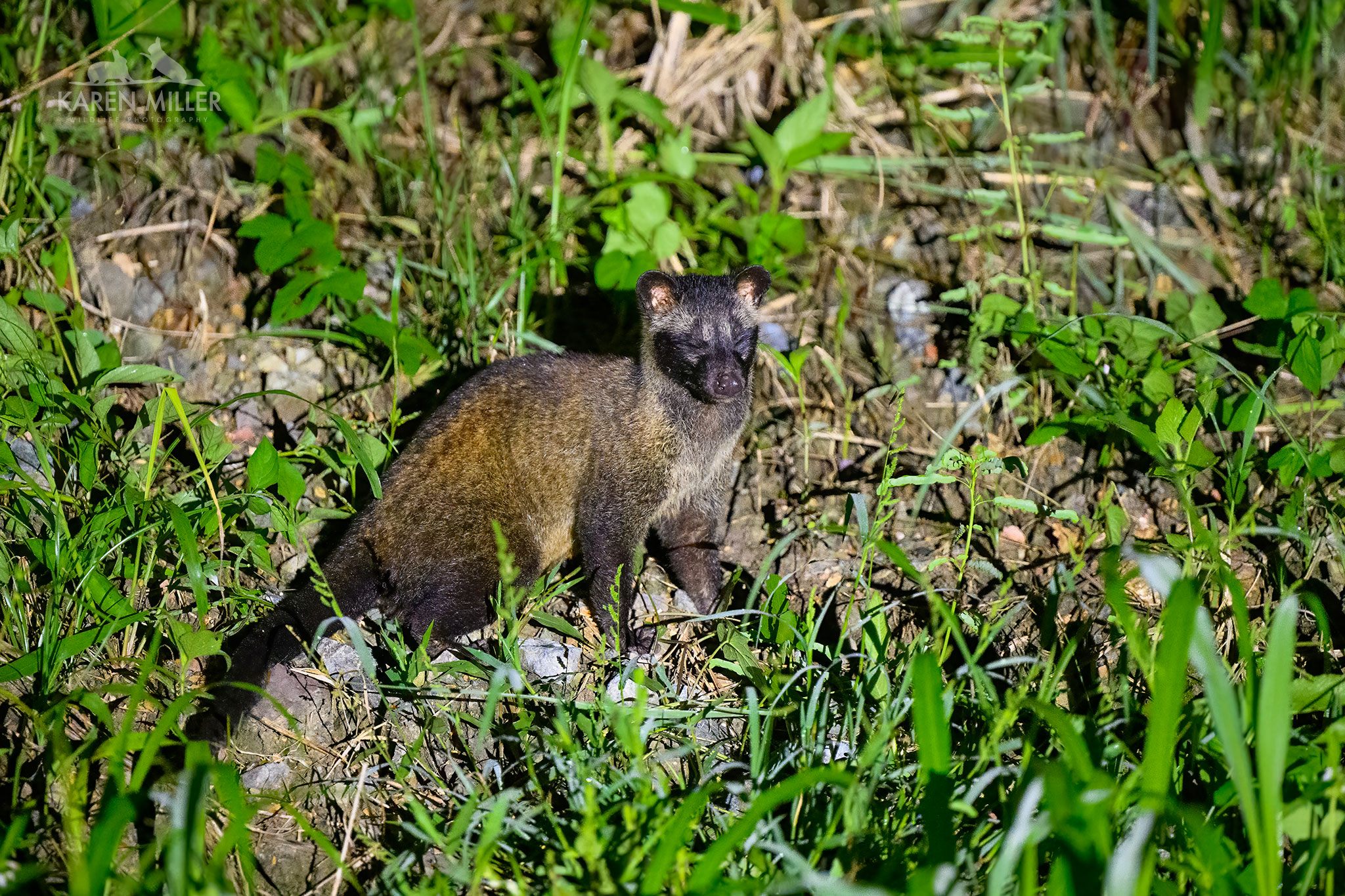
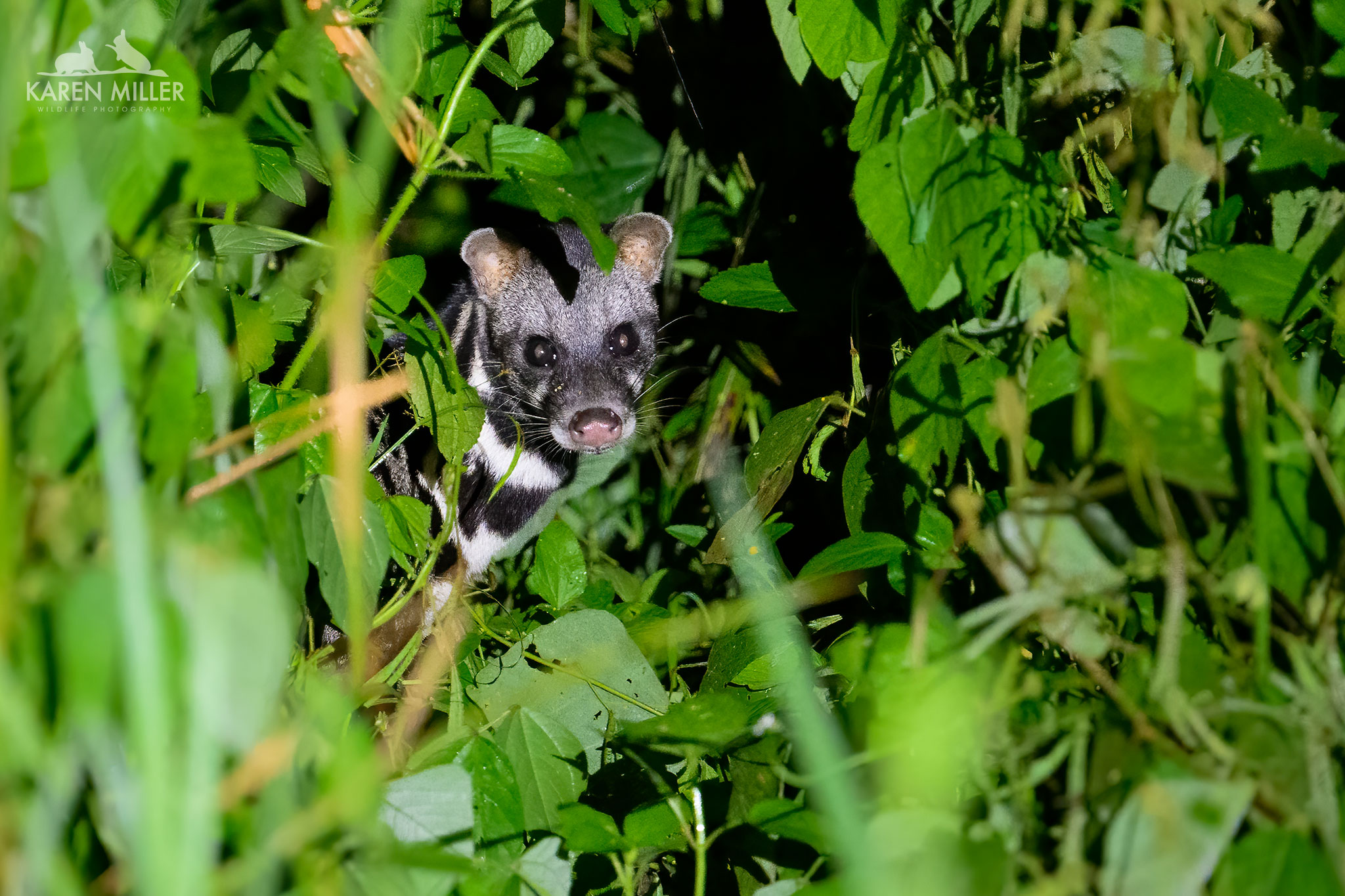
The species we saw the most of were the civets. I admit I’d never heard of these before I started researching Borneo’s mammals. They look a bit like mustelids such as pine martens but are unrelated. They are primarily omnivores and we saw them enjoying the ripe figs. You may have heard of civet coffee. This is very expensive coffee which is produced through the digestive enzymes of the civet. This is an interesting article about it. The article mentions that at one point it cost $300 per cup!!
We weren’t drinking the coffee but did enjoy our sightings of a few species of Civet. The common palm civet was the one we saw the most of. There was one pretty much camped out in a fig tree we passed every evening.
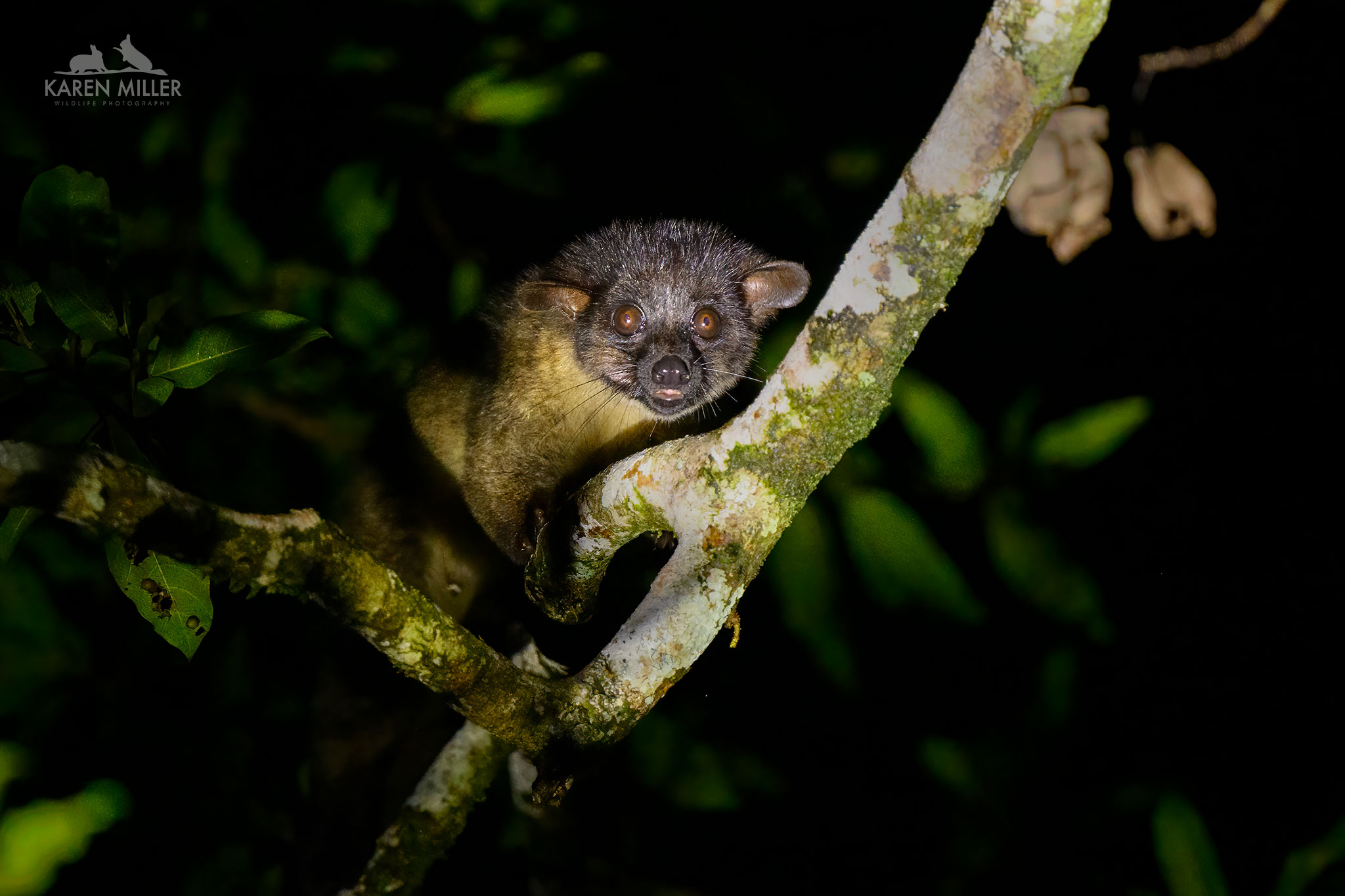
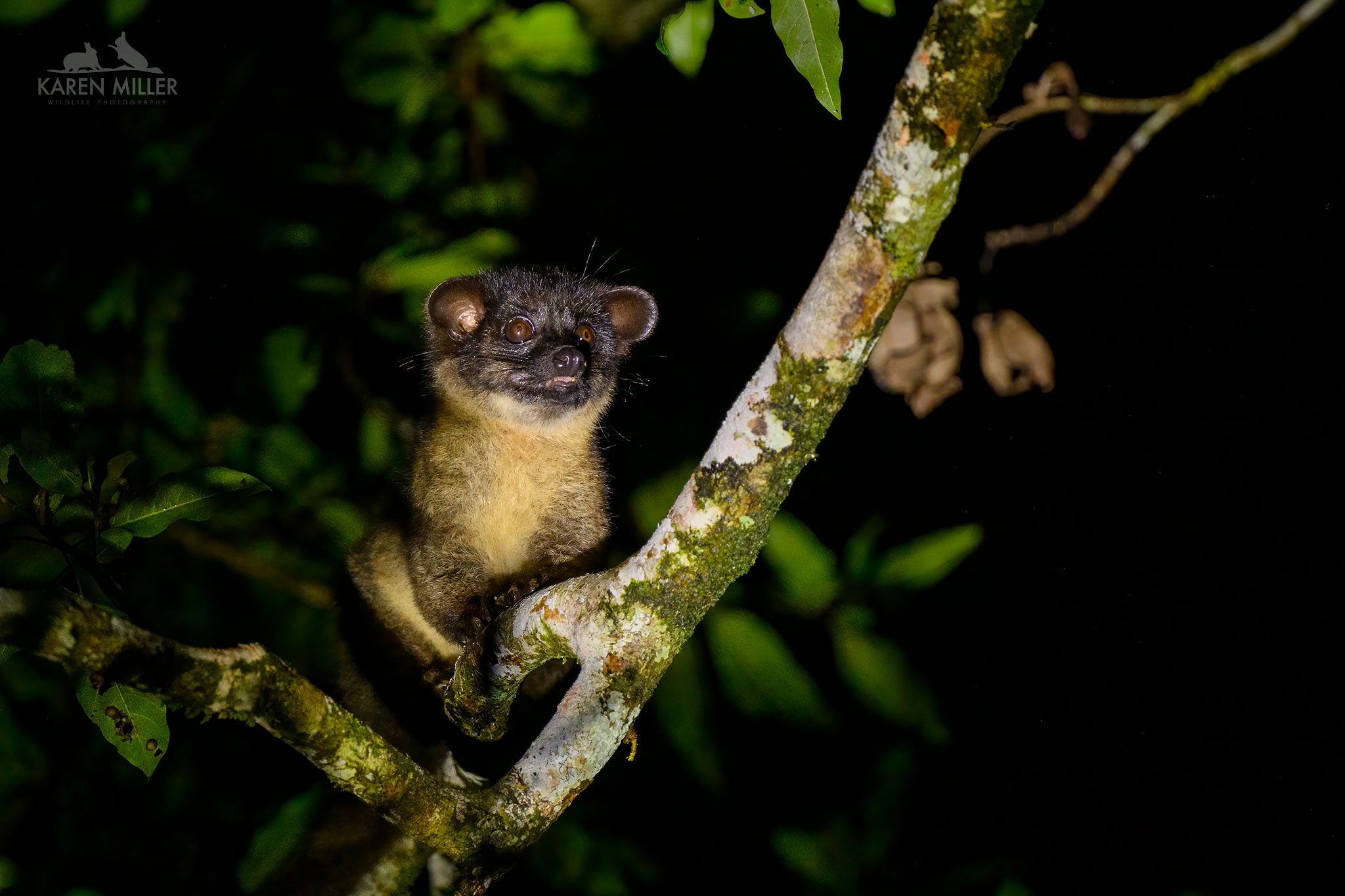
We saw these too.
Another exciting find on the night safaris was this beautiful buffy fish owl.
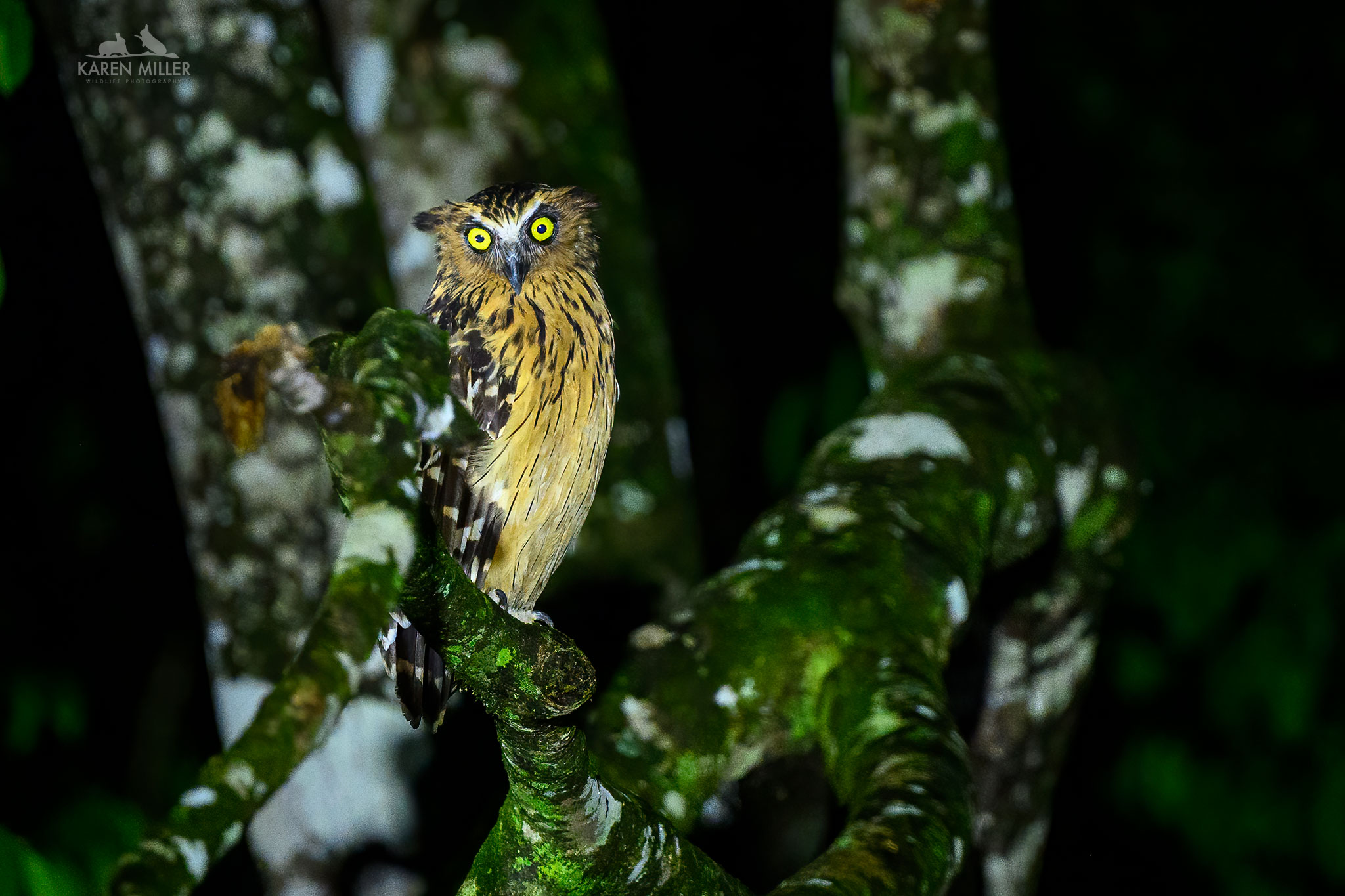
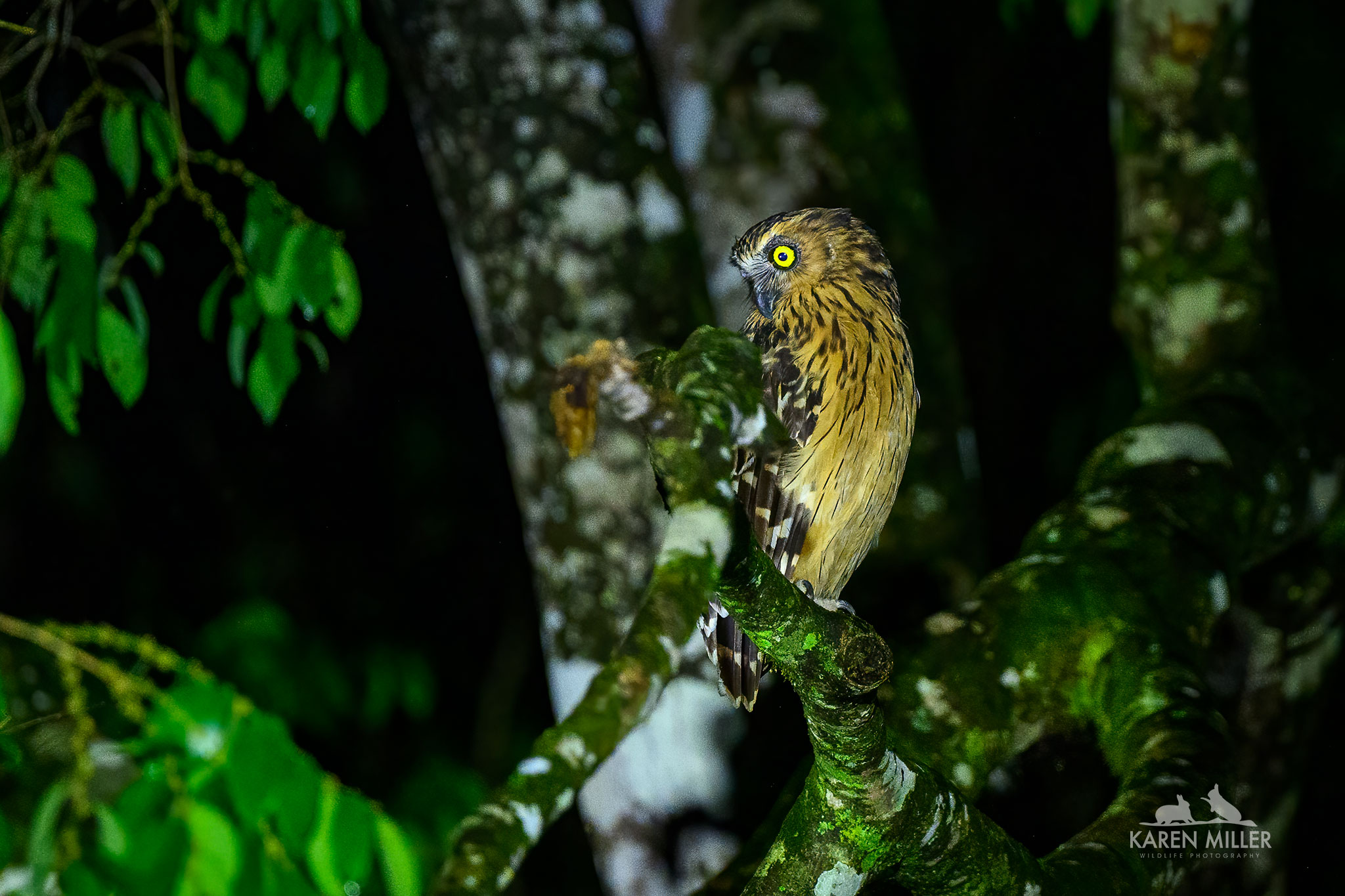
We had a brief sighting of a couple of red muntjac before the slinked off into the plantation. There was a fence in the way!

Another elusive animal was the leopard cat. Quite a small cat, but as soon as the torch light hit it it was off or hid in the tall grass.
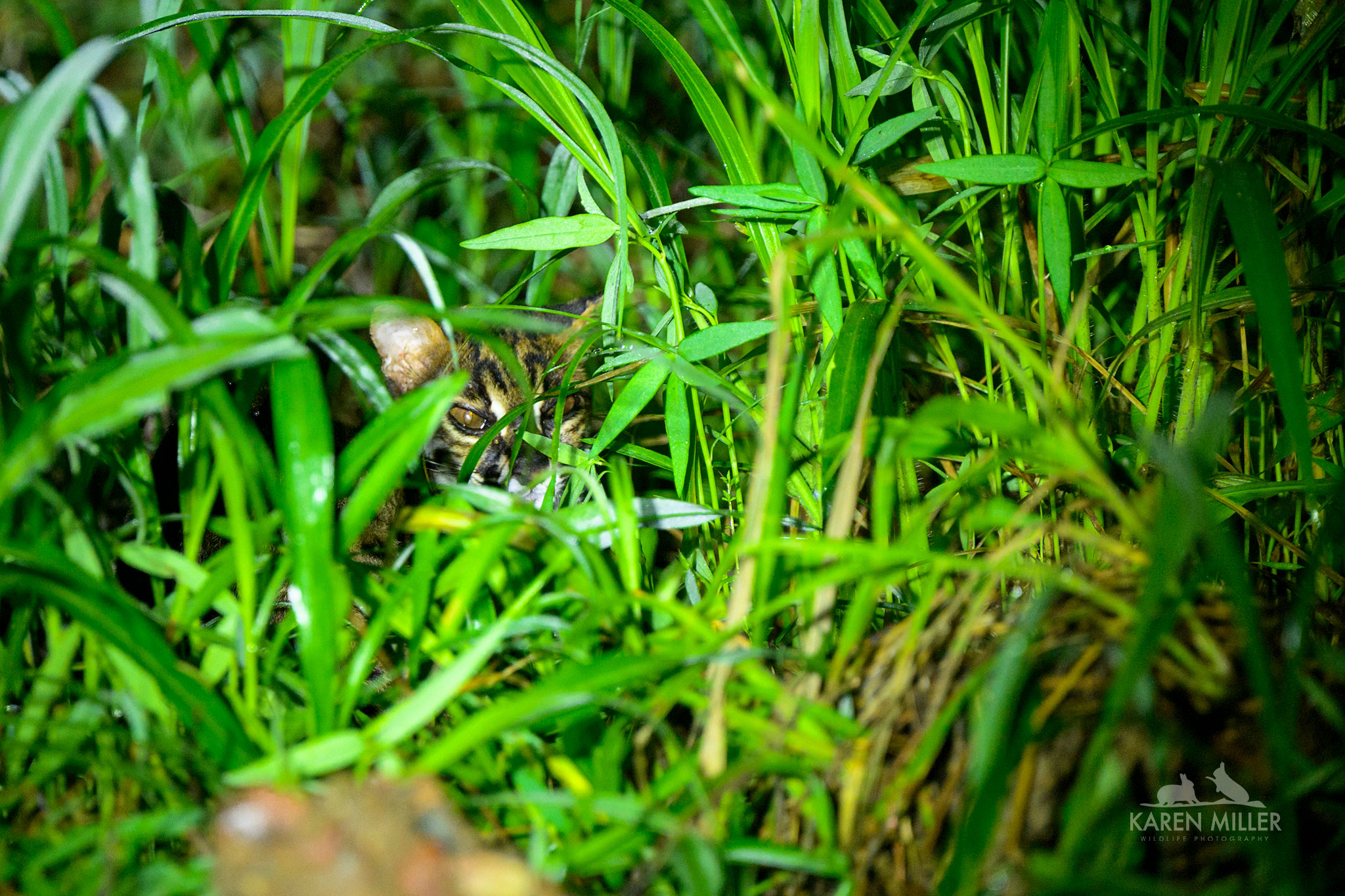
I did manage a short video though, this also features the owl and a civet.
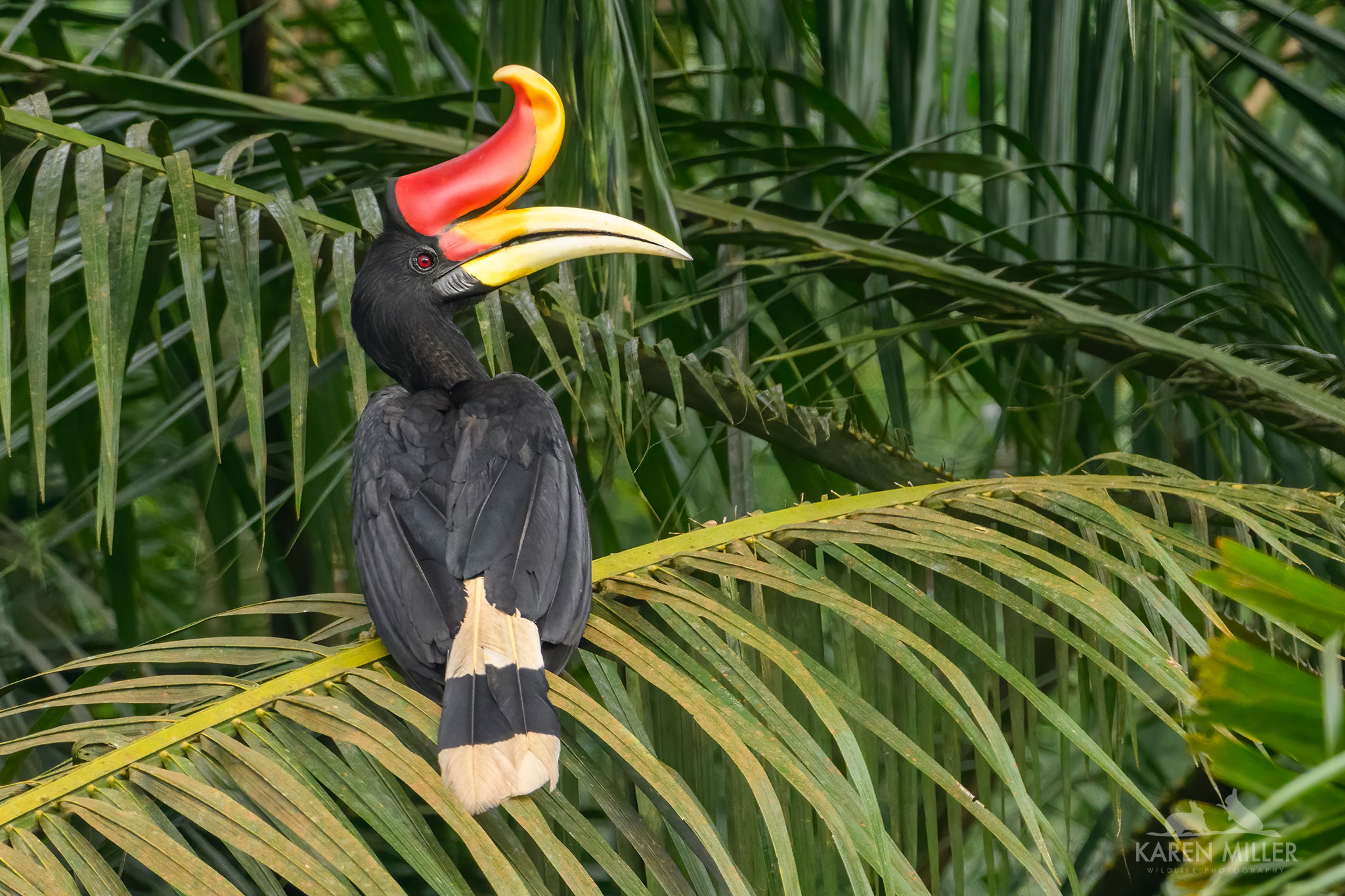
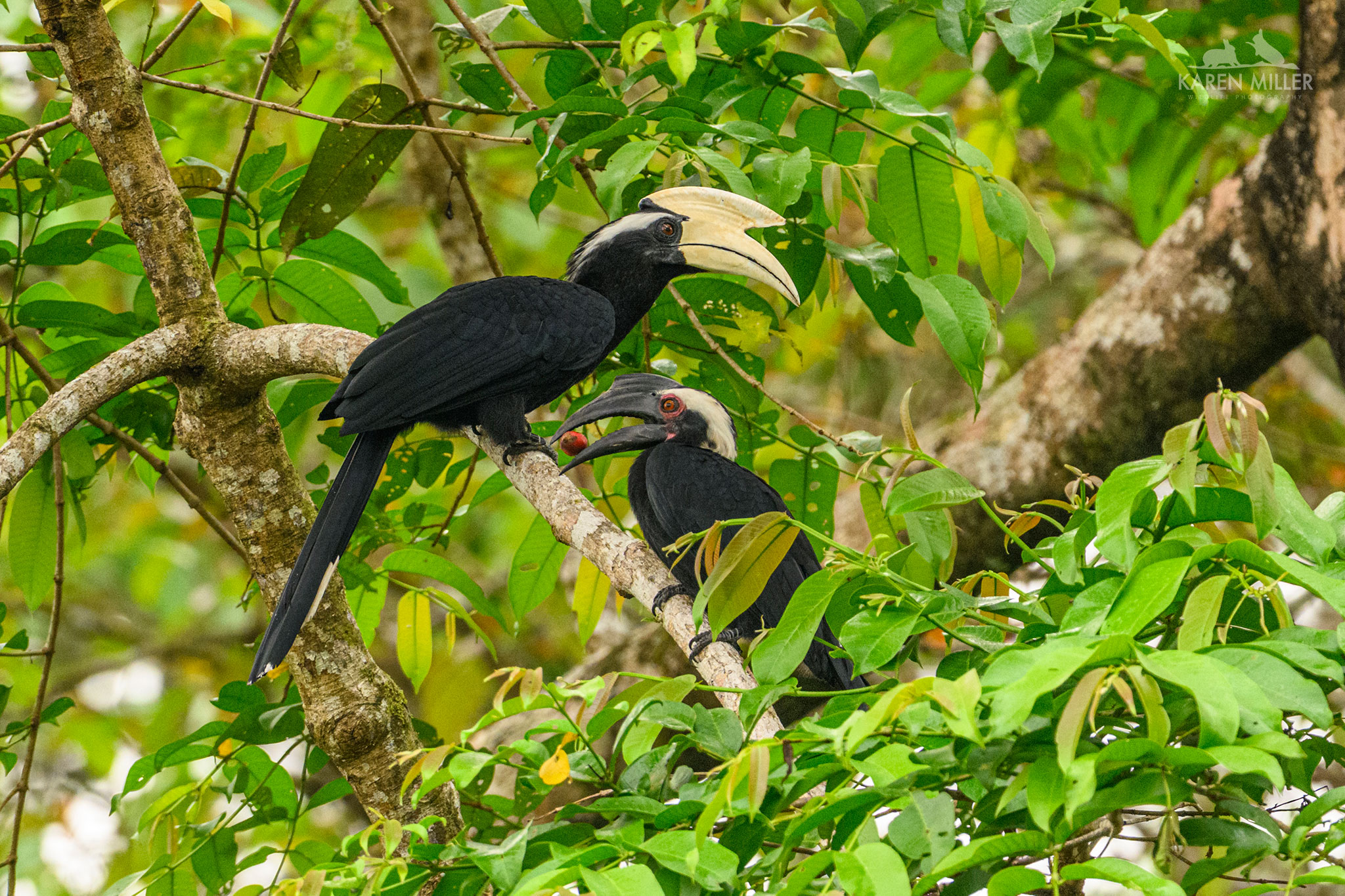
Hornbills were a common sight again, especially the rhinoceros. I missed one of the afternoon drives because I just couldn’t face 3 in one day, but Gemma saw a few new to us species. Shown here rhinoceros and asian black hornbills.
The most random thing we did in Tabin was enjoy a footsoak and volcanic mud facial. This was actually quite well timed (and very relaxing) as we’d had to walk barefoot across the river earlier when we visited a waterfall. It was all stones and really painful on the soles of the feet although the falls were pretty.

Our time in Malaysian Borneo came to an end when we departed Tabin and endured one final journey down the track from hell. It was raining heavily all the way to Lahad Datu Airport where we would board our first of four flights to get us back to Scotland. This is a tiny airport with no facilities to speak of, but it was where I had my final holiday highlight. The plane was small so we had to walk to it, and due to the heavy downpour each of us were given our own umbrella to keep us dry on the short walk. Once we reached the plane, the umbrella was taken from us and held over our head as we entered the plane – wonderful! A level of customer service I can’t imagine ever experiencing in the UK!!

So that was Tabin. We had some fantastic wildlife encounters, especially the orangutan, gibbons and grey leafed monkeys, but it’s not a resort I would rush back to. After our three days there I was ready to go home.
Now that I’ve completed writing about my time in Borneo, I thought I’d list the things I enjoyed most and least and give a few tips for those visiting.
Favourite things
- The wildlife obviously, especially the orangutans, gibbons and monkeys.
- The sound of the jungle at night
- The people. All so friendly and helpful.
- The umbrellas at the airport – loved that!
- The fresh fruit. The honeydew melon especially was the nicest I’ve ever tasted
- Hilton breakfasts (not the curry options though!)
- River cruises at Kinabatangan
- Meeting so many other friendly travellers and sharing tips and recommendations
- Geckos everywhere
- The organisational skills of SI Tours.
Least favourite things
- The humidity. Sweat running down my back within about two minutes of leaving the cabin. So unpleasant
- Biting beasties. Not mosquitoes, but little black flies that didn’t seem at all bothered by 100% deet!
- The coffee beans. Horrible, bitter. The traditional coffee on the other hand was so very sweet.
- The tea. Tasteless, light brown coloured water.
- The mud and vehicle tracks (and vehicles) at Tabin. Bone rattling and headache inducing.
- Having ants in my bed
- Spider eyes shining in night time torch light
- The palm plantations, so many of them.
- Tabin
- The flights. Long and uncomfortable.
Tips for visitors (general)
- Bring quick-drying, moisture wicking clothing. You’ll be wanting to rinse it out regularly.
- Bring a travel washing line. I picked one up in Go Outdoors which has suction cups on either end. Was good for hanging in shower to dry clothing if no balcony.
- A fan. My travel companion Gemma had a rechargeable, round the neck, fan of which I was very envious.
- A proper sun hat with flap at back. Yes, they look ridiculous, but are essential in baking sunshine
- Factor 50 sun cream, UV 50 clothing.
- Strong insect repellent. You cannot buy deet in Malaysia but can bring with you. Malaysian Borneo is low-risk for Malaria, and in fact, we saw few mosquitoes. If they’d been there they’d have found me! Little black flies bit me, didn’t even see them and they ignored the deet.
- Long-sleeved tops and trousers into which socks can be tucked to avoid bites.
- A Malaysian Sim/ESim. Many resorts only have wi-fi in the dining area. You can purchase an esim in advance.
- Swimming costume. Most resorts have a pool and there are some wild areas (croc free) that you can swim in.
- Leech socks aren’t necessary. At Tabin you could hire, but I wore leggings with socks over them.
- Hiking boots plus flip flops or sandals.
- Bring a water proof top, it rains a lot!
- Binoculars. Some resorts you can hire, but best to bring if you have room.
- If hiking on muddy trails a walking pole would be really helpful to prevent slipping.
- A small (microfibre) towel to wipe the sweat off your face.
- If you’re going to any built up area and need transport than use Grab. Very cheap and efficient, just download the app.
- in Sepilok do the Orangutans / sun bears without a guide, it’s cheaper and a guide really isn’t required. If you need transport the aforementioned grab cab is an option. Plus do the orangutan in the afternoon not morning as quieter and better light. Also, if you do go in the morning the ticket is valid for the afternoon session as well. Note: cannot take bags or water into the orangutan sanctuary, cameras ok, but there is a fee.
- Travel: you need to go through security and customs in mainland Malaysia, Sarawalk and Sabah. Each are considered separate. It’s a little confusing at times but essential you do so. You’ll scan your bags at least twice in every airport. Most do not ask for you to remove electronics nor did I have to take shoes off. But water isn’t permitted. Be careful with lithium batteries, regulations are changing. They must be individually protected and carried not just in hand luggage, but must be in your bag at your seat not in the overhead lockers.
Tips for Photographers
- Don’t be scared of the humidity, just come prepared. Bring a dry bag, silicon gel sachets (I bought 50g ones) and lens cloths. If possible put your camera and lens on the balcony at least 20 minutes before going out to let it acclimatise. If not, expect to have a period where you’ll have to clean the condensation off the camera and lens repeatedly. Don’t change lenses if possible as you may then get condensation at the camera end of the lens. When you return to accommodation put camera in the dry bag with silicon gel and seal. Leave in the bag for at least an hour.
- I took a 400mm f4.5 and a 70-200mm f2.8 lens with me plus a 1.4tc to use on a full frame camera (Nikon Z8). Low light capability is useful for jungles and night excursions. A longer telephoto would be more flexible but I went for quality and had no regrets. There’s little opportunity to use tripods, nor did I regret not bringing a monopod or bean bag. Macro lens if you’re into the insects.
- Pack a waterproof camera cover and ensure a cover for your bag too. When it rains, it really rains!
- Be aware that in some places there’s a fee to take a camera in. It’s not expensive though.
- Also be aware that crouching/lying down for eye level shots isn’t recommended when there are so many biting beasties around. There are so many kinds of ants and they are everywhere!
- Finally, put your camera down and soak up the experience at times. Memories can be as strong as photographs.
- Get up early! Even if you don’t have a dawn excursion it’s worth being out as, being slightly cooler, you have a great chance of seeing other wildlife.
That’s my Borneo blogs complete now, all 5 of them! I hope you enjoy the photographs, videos and info I’ve provided. If you are visiting and have any questions please don’t hesitate to ask, and if I’d made a glaring mistake in my wildlife IDs please let me know!
I’d like to end by thanking World Wildlife Travel, especially Emma, for the help in setting up the Sabah part of our trip, SI Tours for being the most orangised tour / excursion company I’ve ever dealt with, all the lovely fellow holiday makers we met and Gemma for inviting me to Borneo in the first place and being a great travel companion.

 Karen Miller's Wildlife photography blog
Very interesting indeed. Unfortunately my days of exploration tourism are over, so I thoroughly, vicariously enjoyed reading about your experiences. Loved the photos, envious of your wildlife encounters, not envious of your travels on muddy tracks (really hate trying to manoeuvre or walk in mud!). BTW does the Buffy Fish-Owl also slay vampires? 😁
LikeLike