
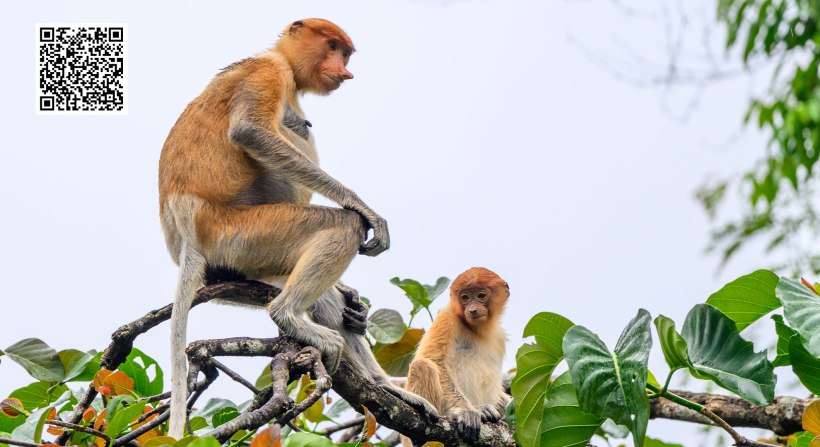
This is the fourth (of five) blogs I’ve written about my visit to Malaysian Borneo in May 2025. I have so far covered Kuching (part 1 and part 2) and Sepilok, part 5 will be Tabin.
The Sabah part of our tour was organised by Wildlife World Travel and both Sepilok and Kinabatangan accommodation and excursions were through SI Tours Borneo.
The second stop on our stay in Sabah (Malaysian Borneo) was on the banks of the Kinabatangan River. This is the second longest river in Malaysia (the longest is the Rajang) and is both fresh water and, closer to the coast, salt water allowing for mangrove swamps. Much of it and the flora and fauna that lives along the shores in the jungle and mangrove is now protected and is a sanctuary for a wide variety of wildlife. It is used by the local population for fishing too and there were a number of fishing villages along the banks.
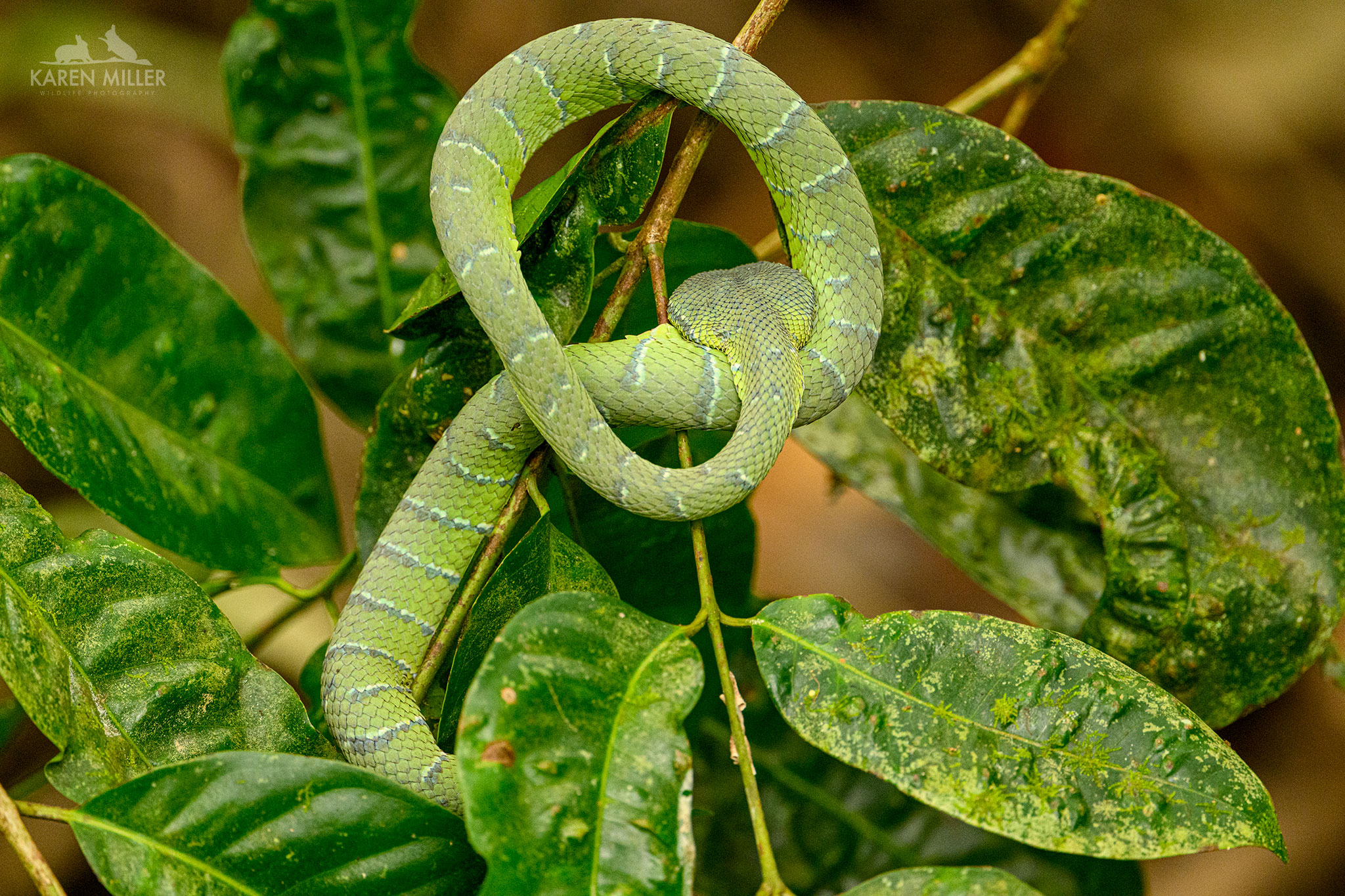
Before we left Sepilok we were introduced to Sonny who was to be our guide for the duration of our stay in Kinabatangan. Rather than travel by car we went by boat, stopping for lunch at another SI Tours resort, the Abai Jungle Lodge. Sonny took us along one of the boardwalks to show us a keeled pit viper asleep in a tree. This was the same species of snake we saw at the Sun Bear Sanctuary in Sepilok, but this one more visible and larger!
After lunch and once a torrential rain shower had passed…
…we boarded a different boat and headed for Kinabatangan and the Riverside Lodge. On arrival we were given our induction by Sonny and show to our cabin. This resort isn’t as picturesque as Sepilok. The cabin was a bit dated, but more than adequate. Little in the way of a view and no balcony this time, but we didn’t have far to go to look out over the river.
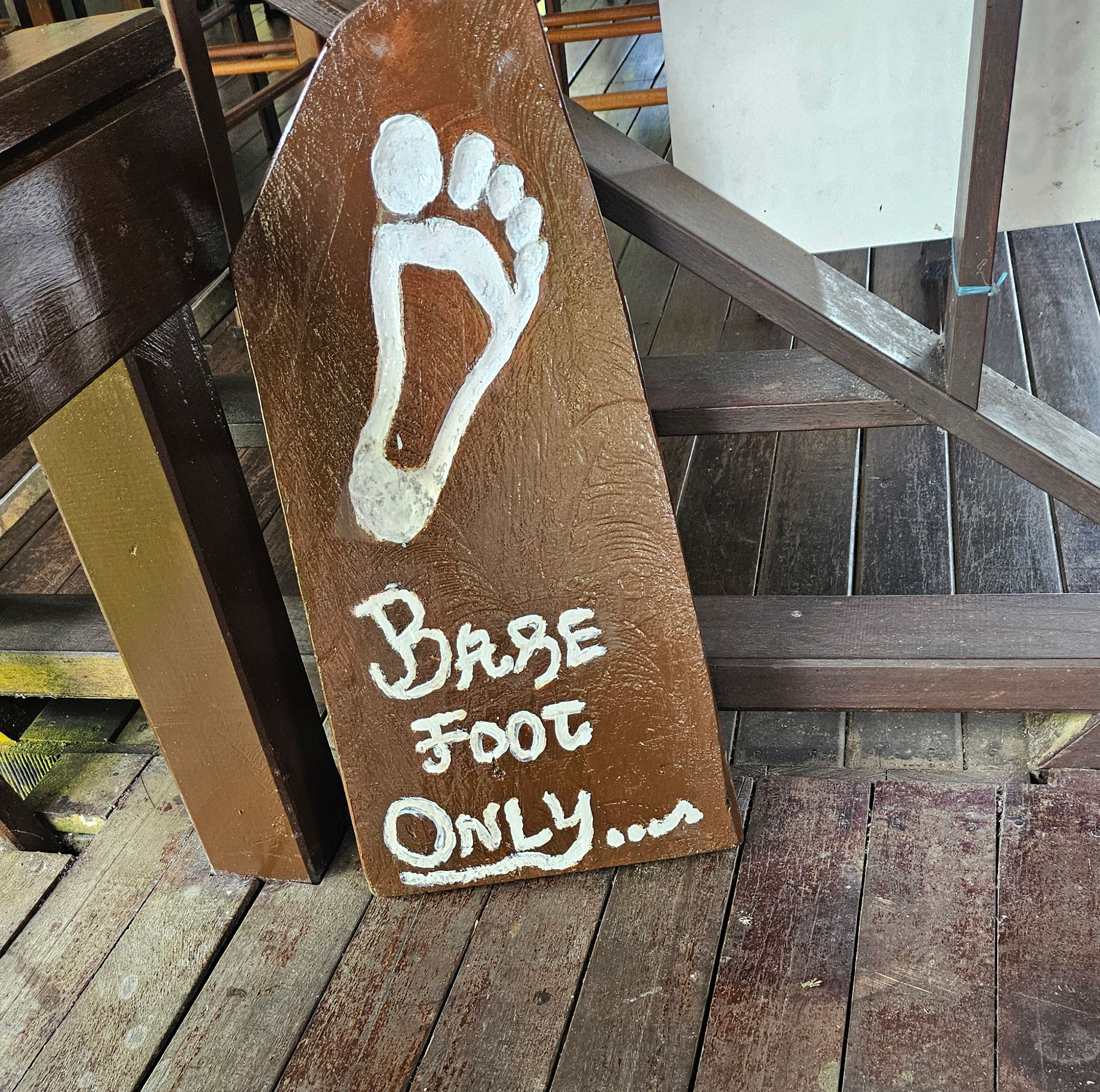
Meals here were similar to Sepilok food-wise. All very tasty. Here though we had to remove our shoes before entering the dining area.
We were also given sarongs to wear at dinner. It wasn’t compulsory, but almost everyone did. Trying to educate us about local customs and people was very much part of our stay here, and we appreciated it. We were taken to the local village for lunch one day and met some of the residents in an attempt to integrate the community with the resort. Many of the staff live here. The children were lovely and very friendly.
All our trips here, except to the caves (see below) were boat-based. My friend and travel companion Gemma and I were grouped together with another four visitors from the UK, all of whom were lovely and we got along great. We were to spend the next two days together both on the boats and for meals. We had dawn and late afternoon cruises.
Here’s some phone footage taken from the boat
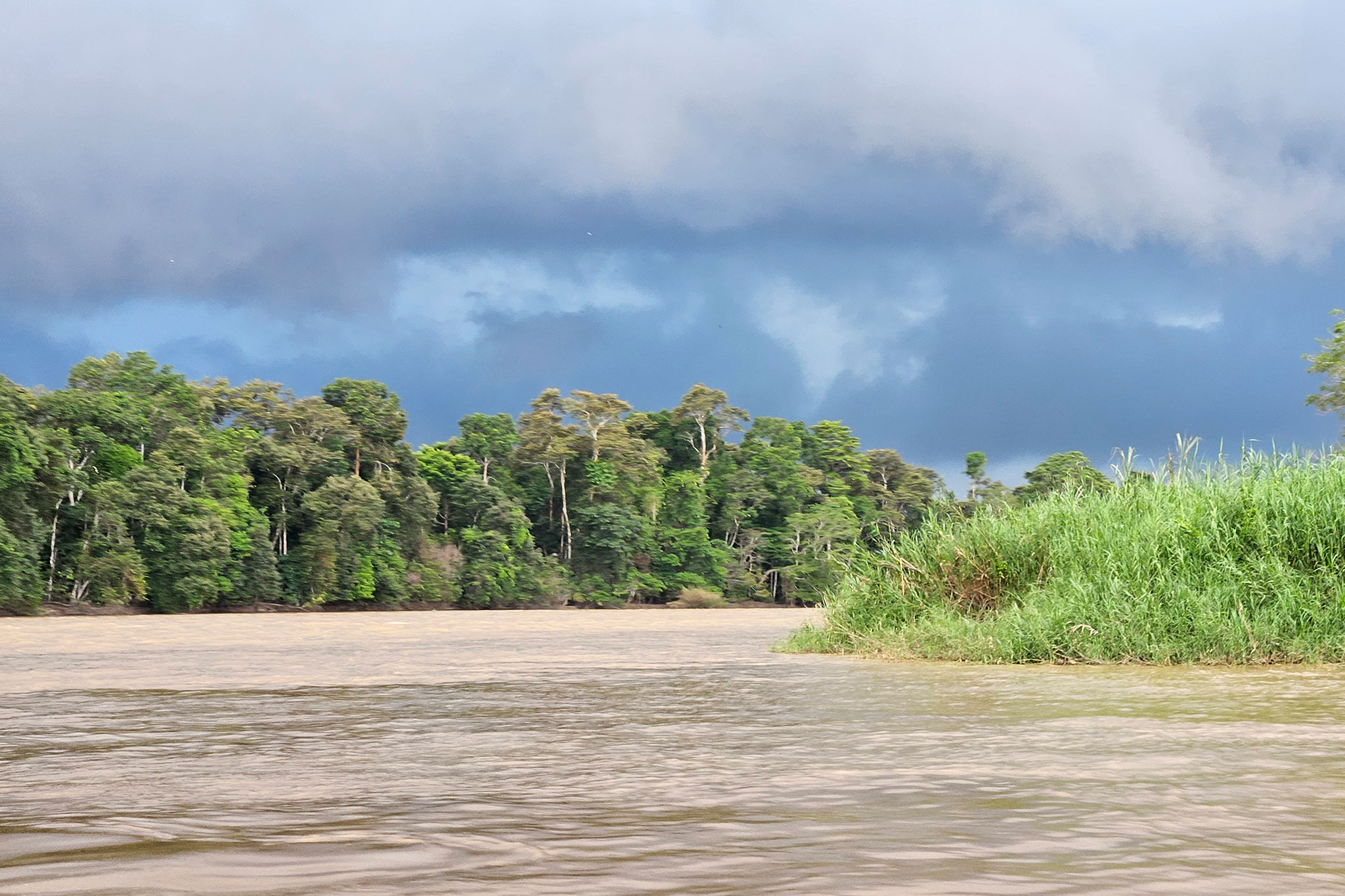
These were great because it was a chance to escape from the humidity of the mainland and enjoy some fresher air. It was also wonderful to now be seeing truly wild animals and birds. Sepilok and the close encounters with the orangutans, proboscis monkeys and sun bears was fantastic, but actually observing the animals in a truly wild setting was what I came here for. At this time of year the resorts are still relatively quiet, peak time is July/August. In May it’s at the very start of the dry season, and it wasn’t exactly dry! We had heavy rain every day mostly at around 3ish. This meant two things. Firstly, the 4pm boat trip meant we saw more wildlife as it was appearing after the rain showers, but secondly, due to the high water levels we didn’t get good views of crocodiles nor did we see any pygmy elephants, both of which was a bit disappointing.
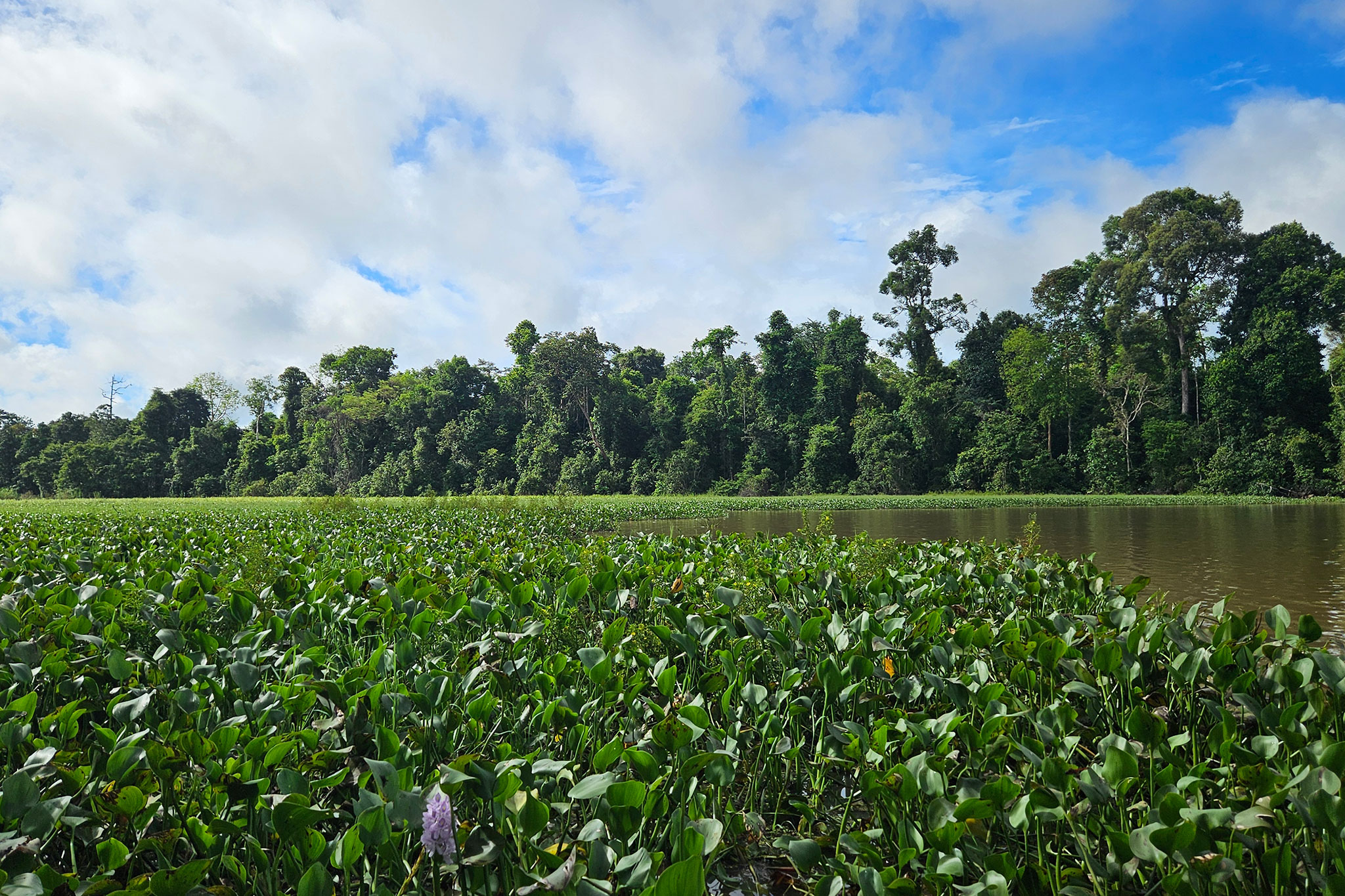
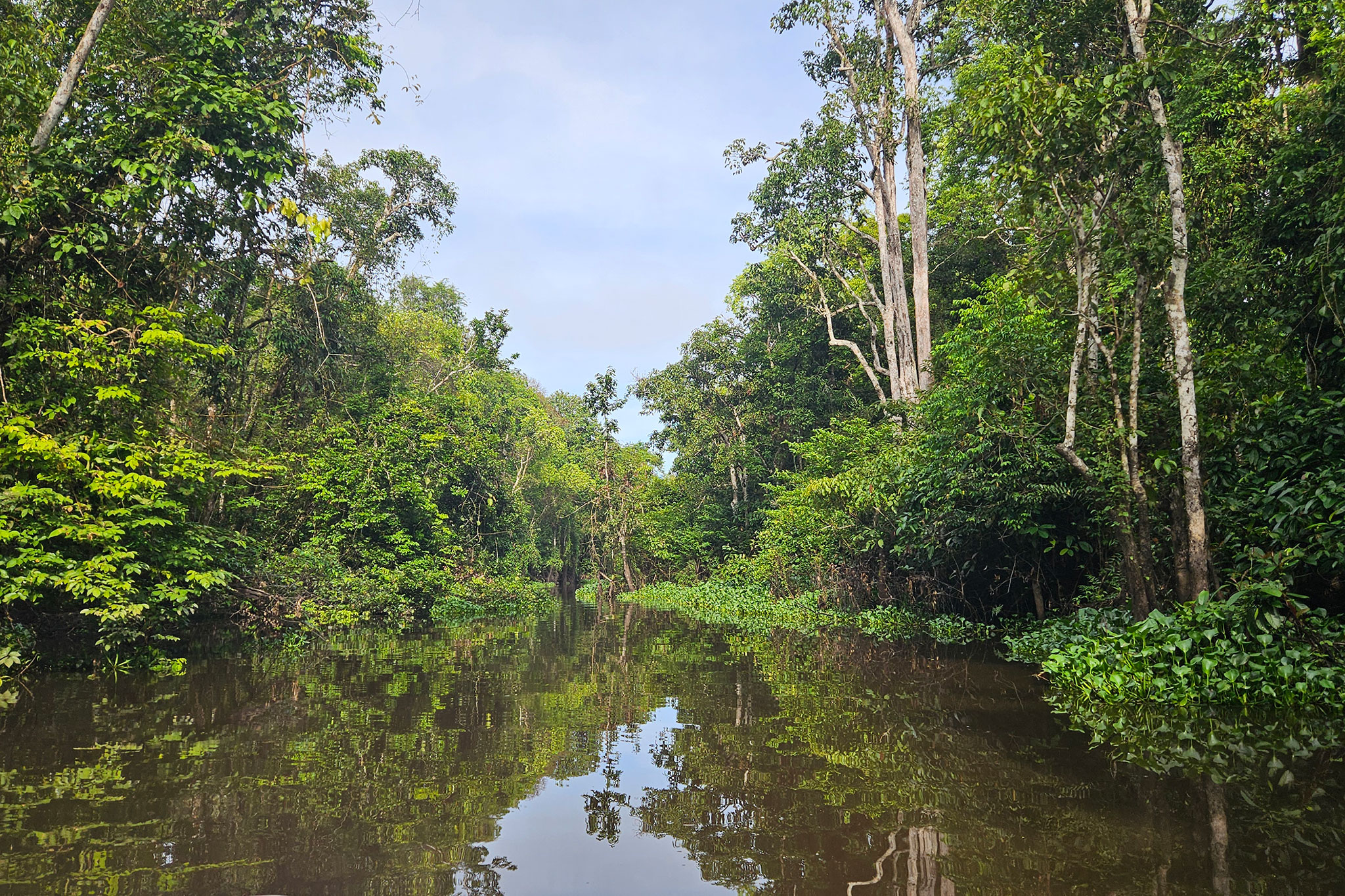
Here are a few phone photos of the river from the boat.
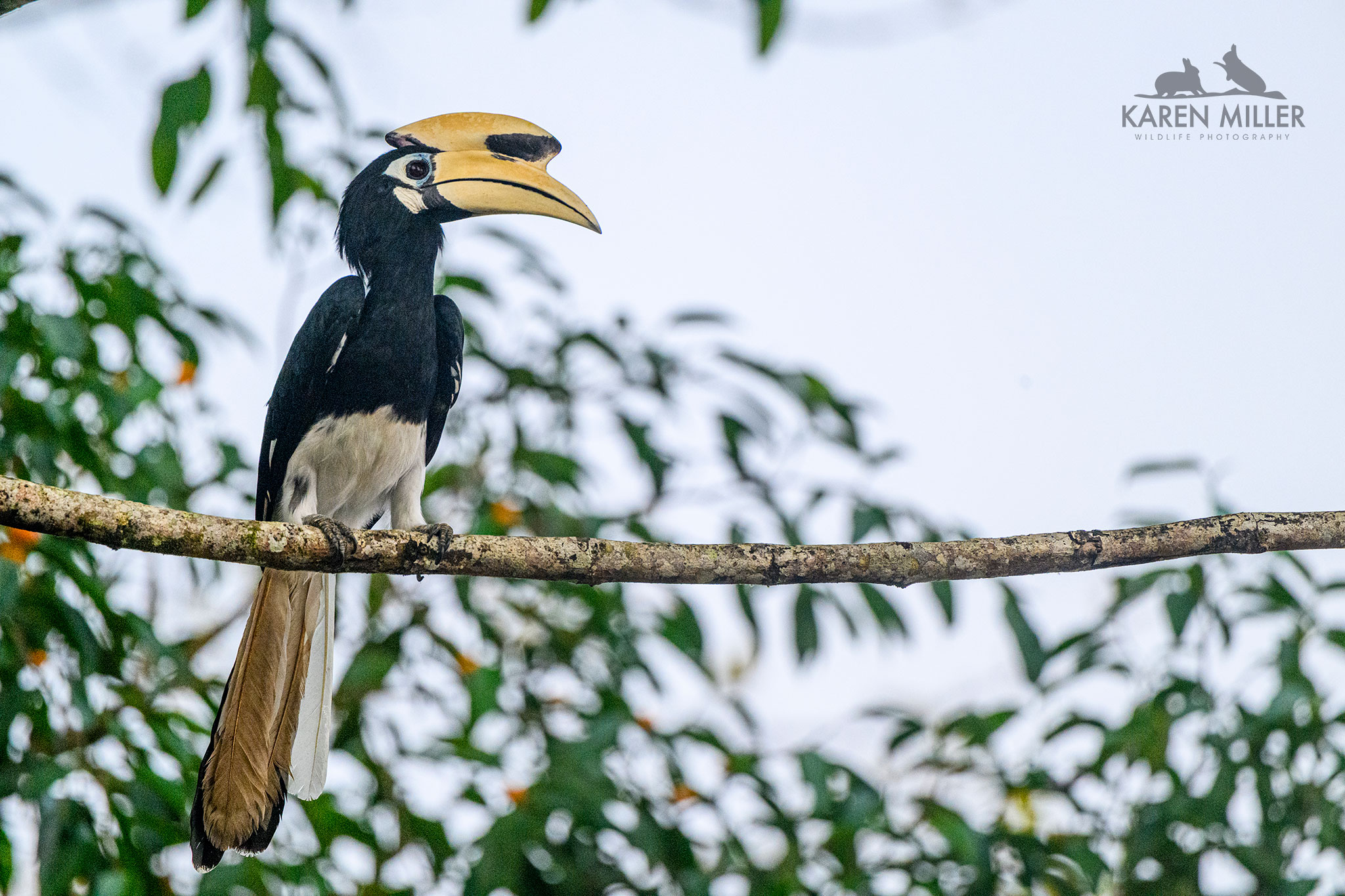
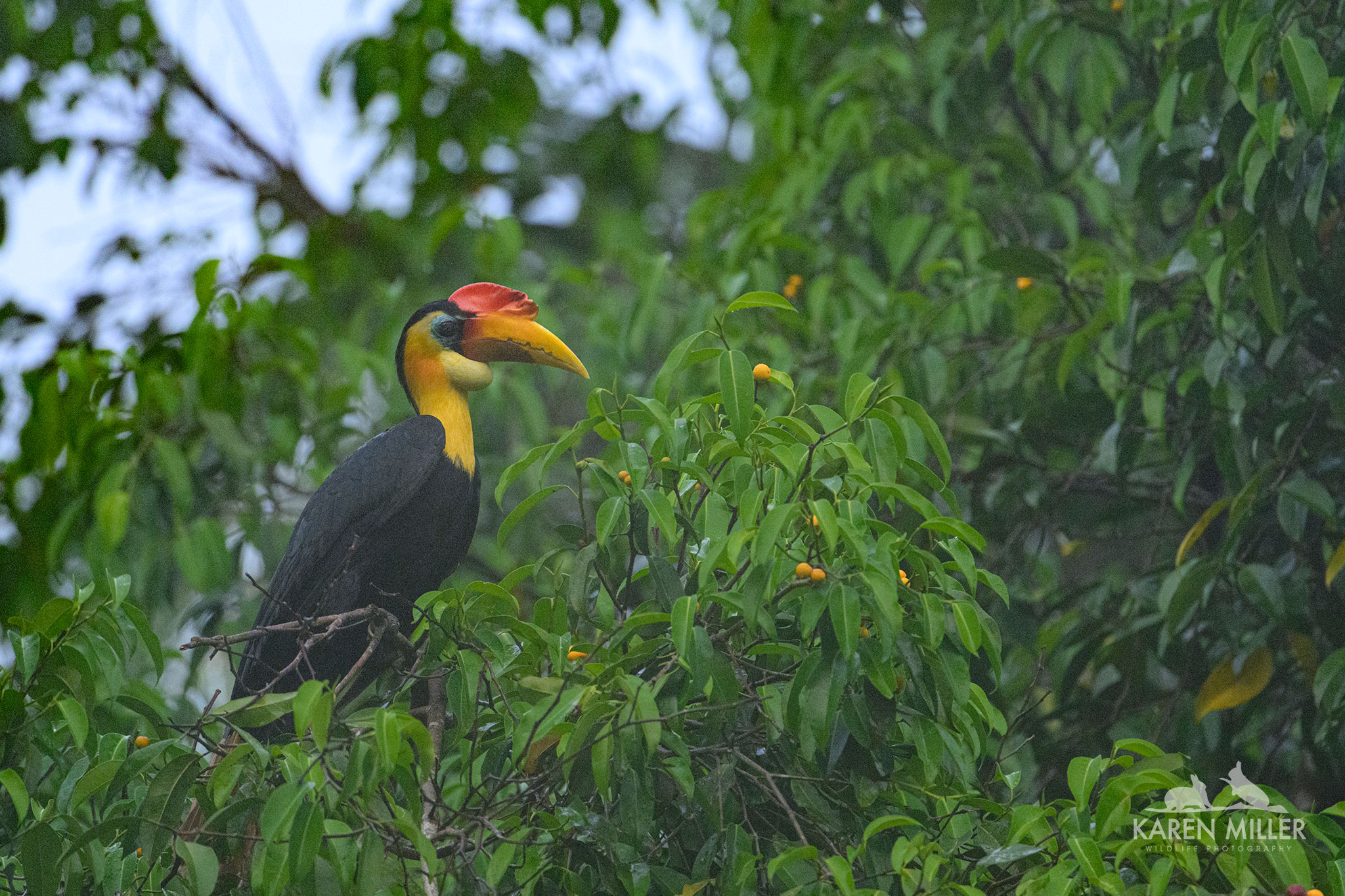
We were up at 5.30am every day to prepare for our early boat trip. We were given a head’s up that hornbills were visiting the fig trees at the resort first thing to enjoy the ripe figs. It was fantastic to see them up close after more distant sightings from the lodge in Sepilok, however, it was always really misty which made clear images challenging. These are oriental-pied and a rhinoceros hornbill.

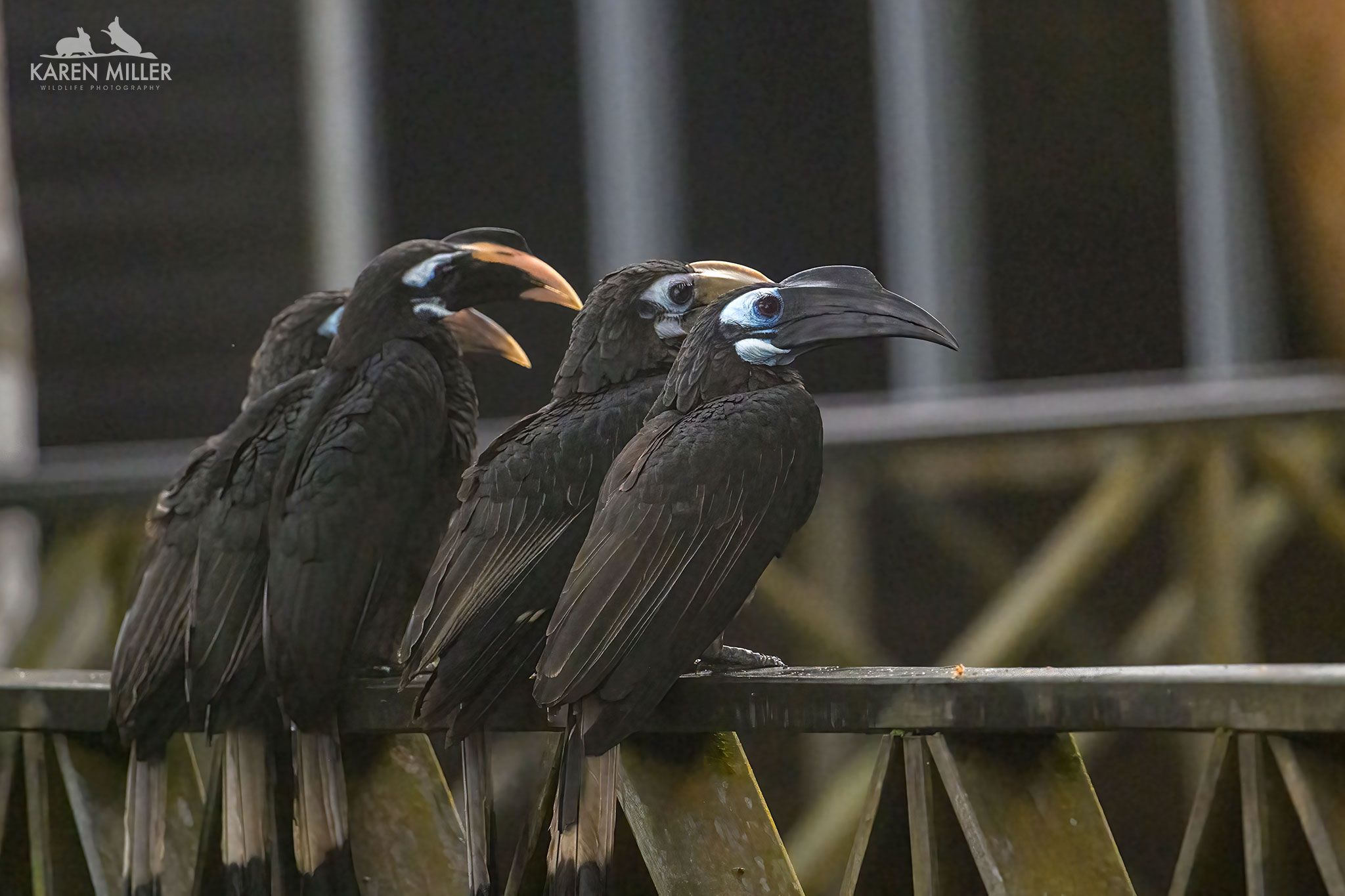
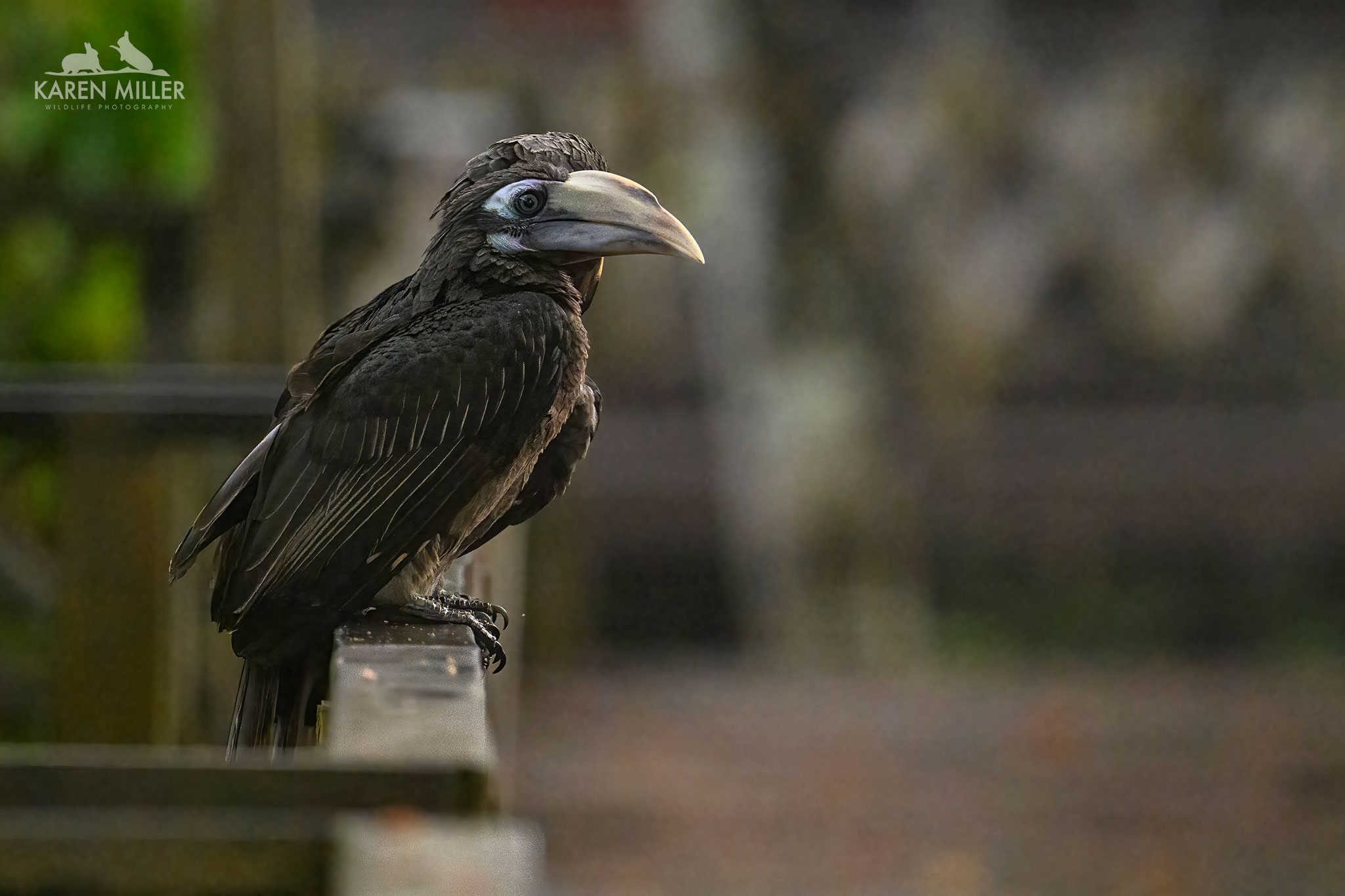
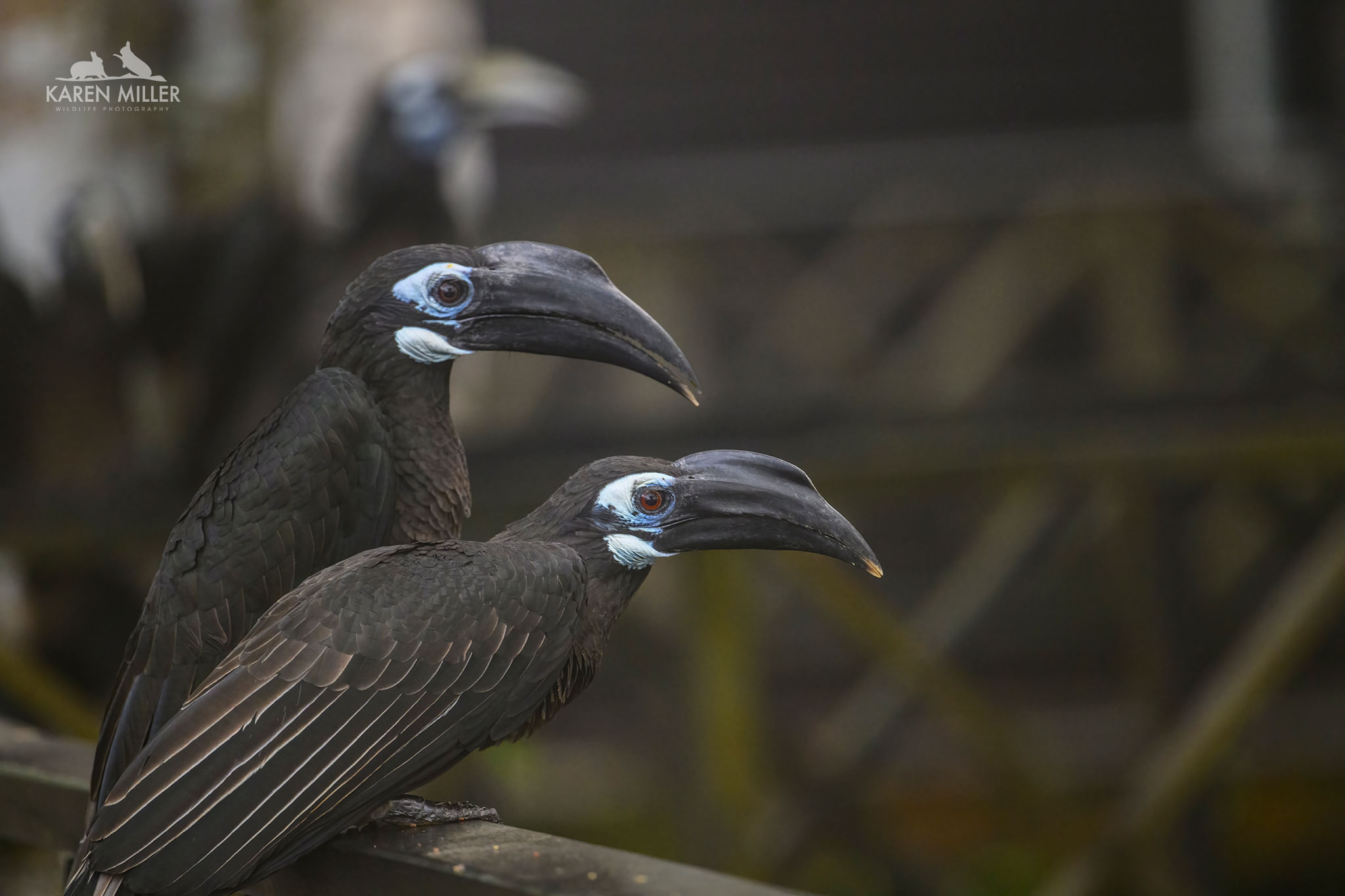
On our last full day, a group of asian black hornbills decided to come and perch on the wooden railings outside our lodge!
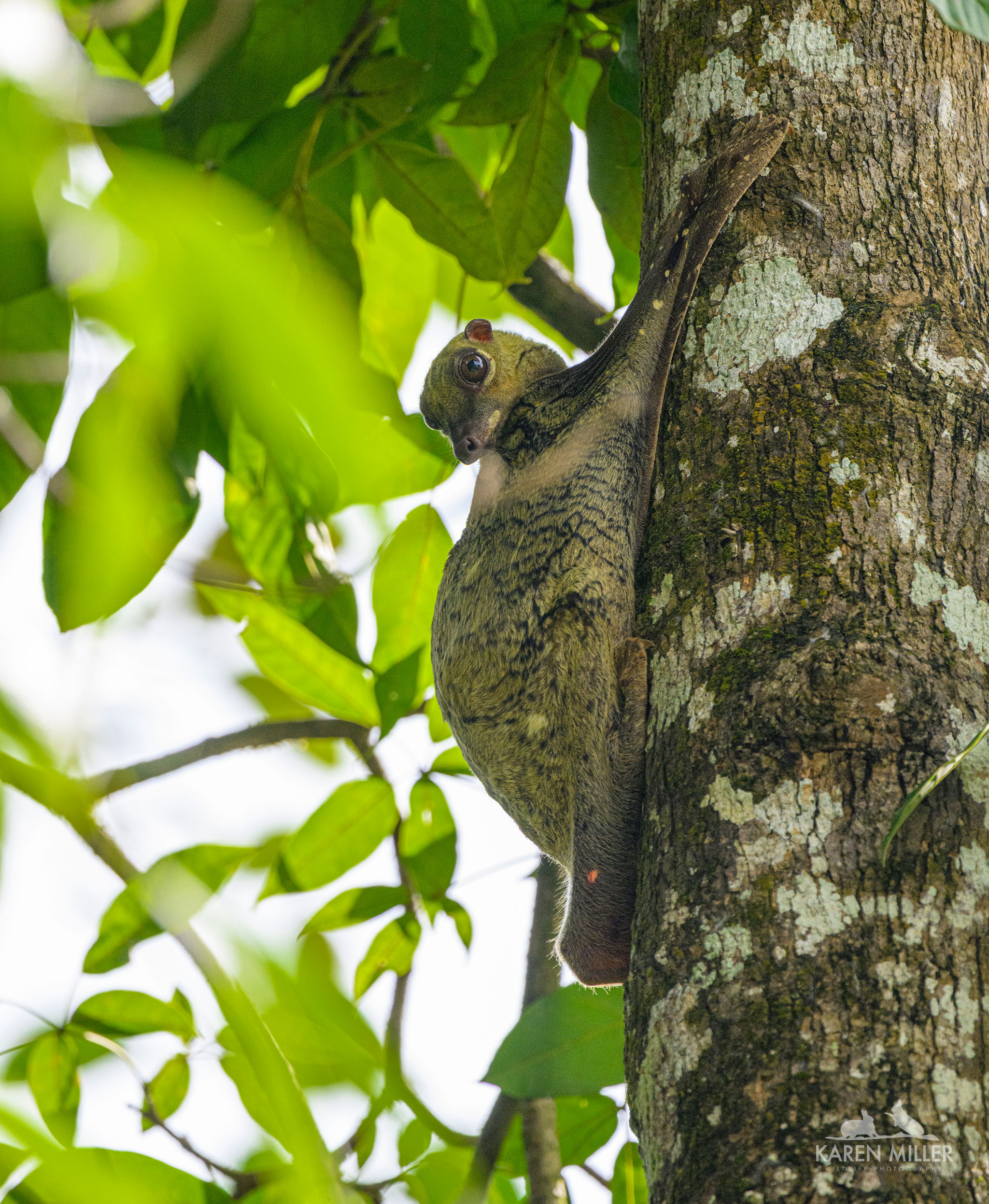
Sonny also showed us a flying lemur (in fact there were two at one point) clinging onto one of the trees at the resort. Again, like the one we saw in Kuching, very hard to spot, it was so well camouflaged.
Rather than talk through every boat trip I’ll group together the images and memories by species / type. It’s not always easy to take photographs when on a boat and looking up into jungle in mist / overcast/ over-bright / fading light / heavy rain conditions but I managed a few decent ones!
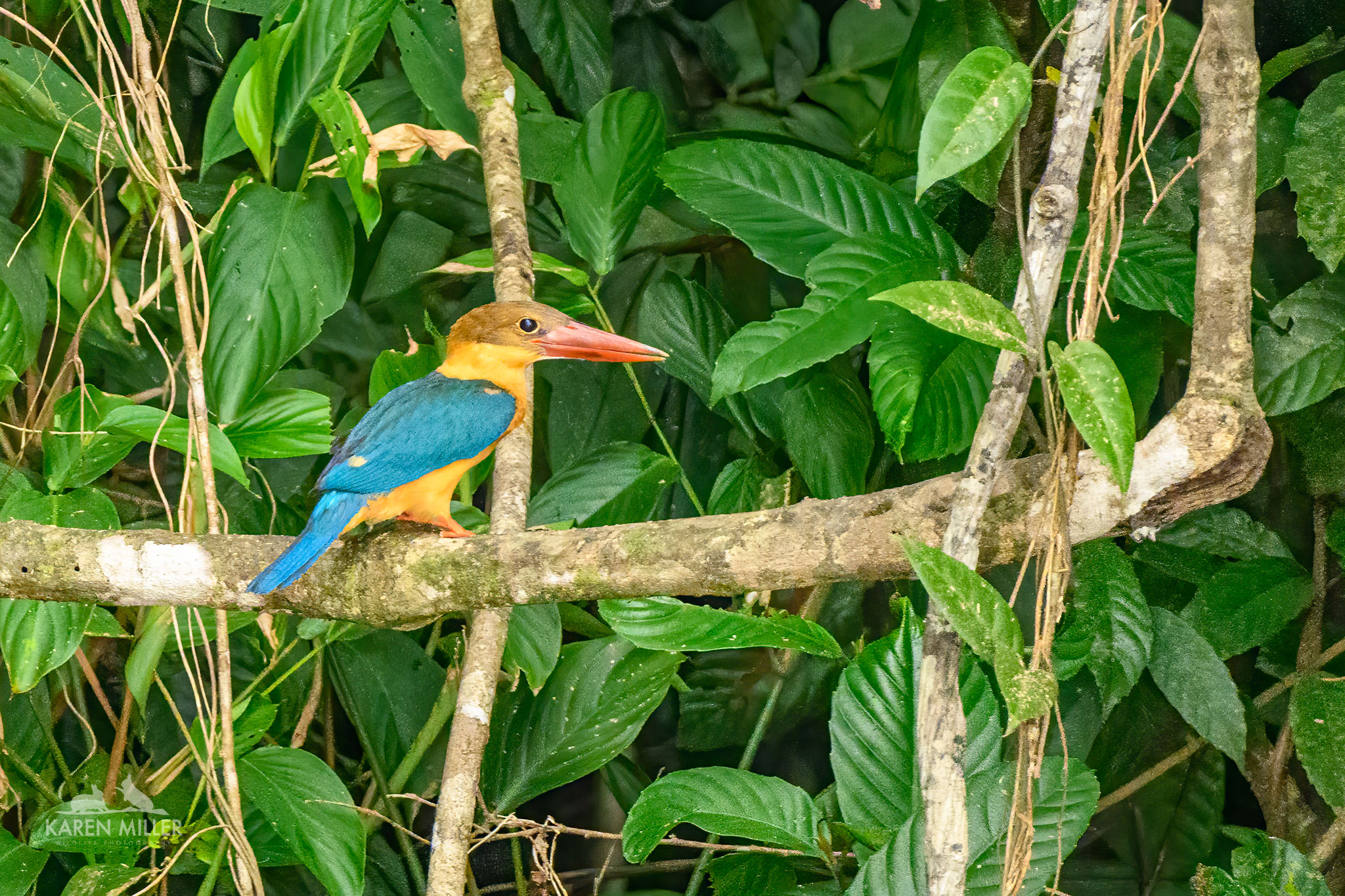
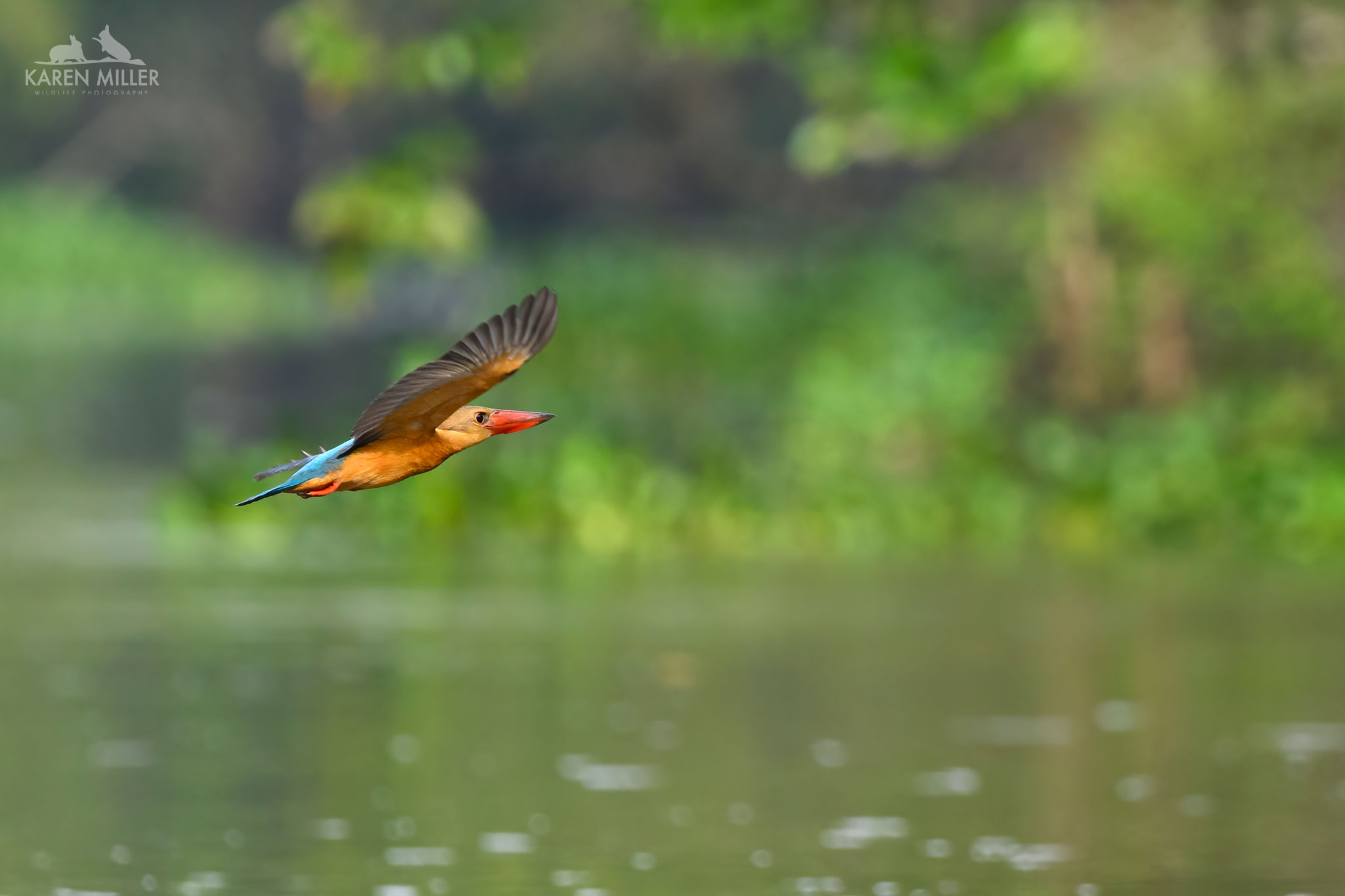
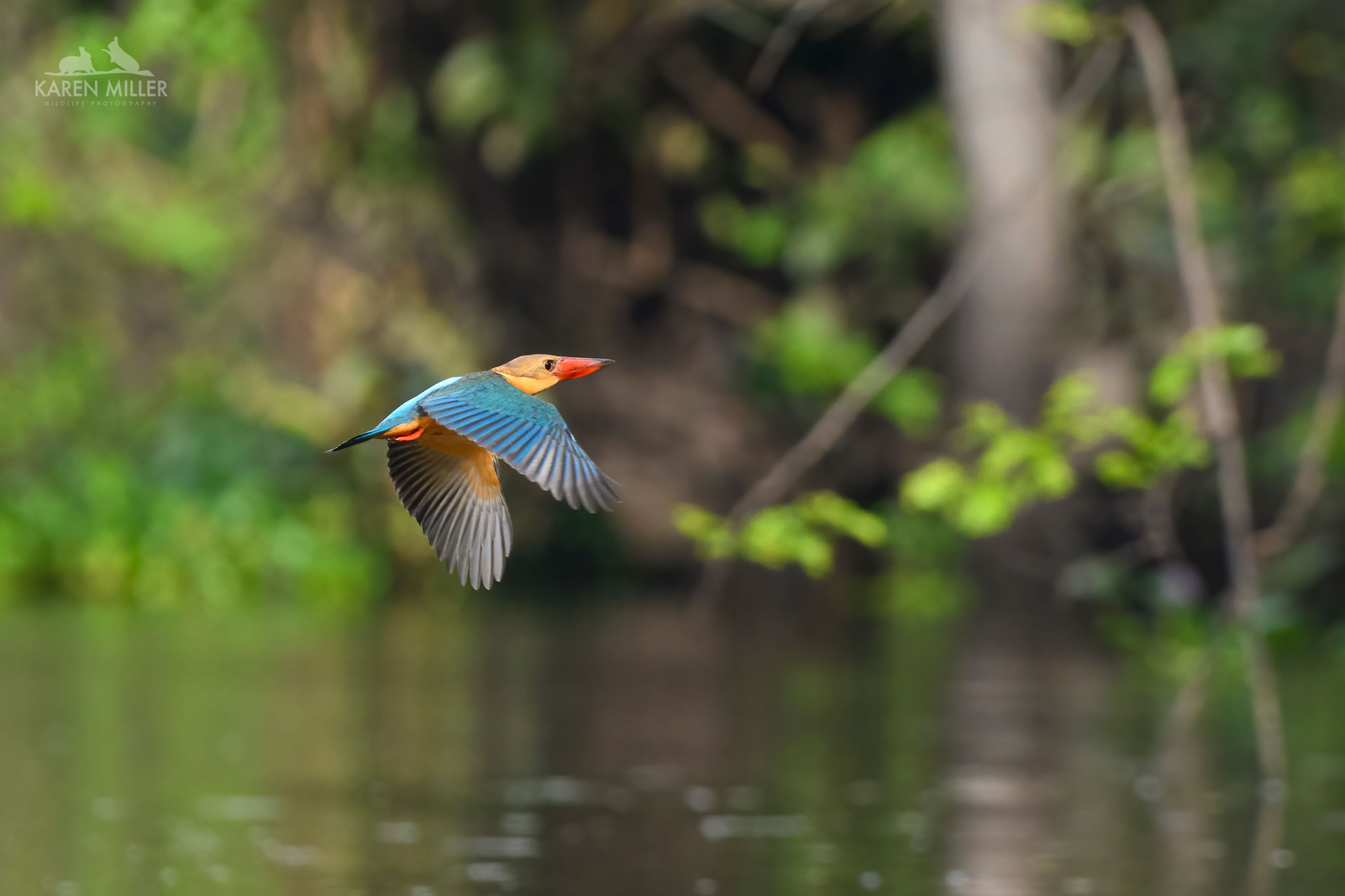
I’ll continue with the birds first. We saw two species of kingfisher. The largest and one of the smallest. The largest is the stork-billed kingfisher. We’d seen some of these in Kuching when on a boat trip in Santubong. Not the prettiest bird, but very distinctive and colourful! Mostly they sat obscured by branches, but on one occasion I managed to capture a bird in flight – thanks to eye tracking on the Nikon Z8.
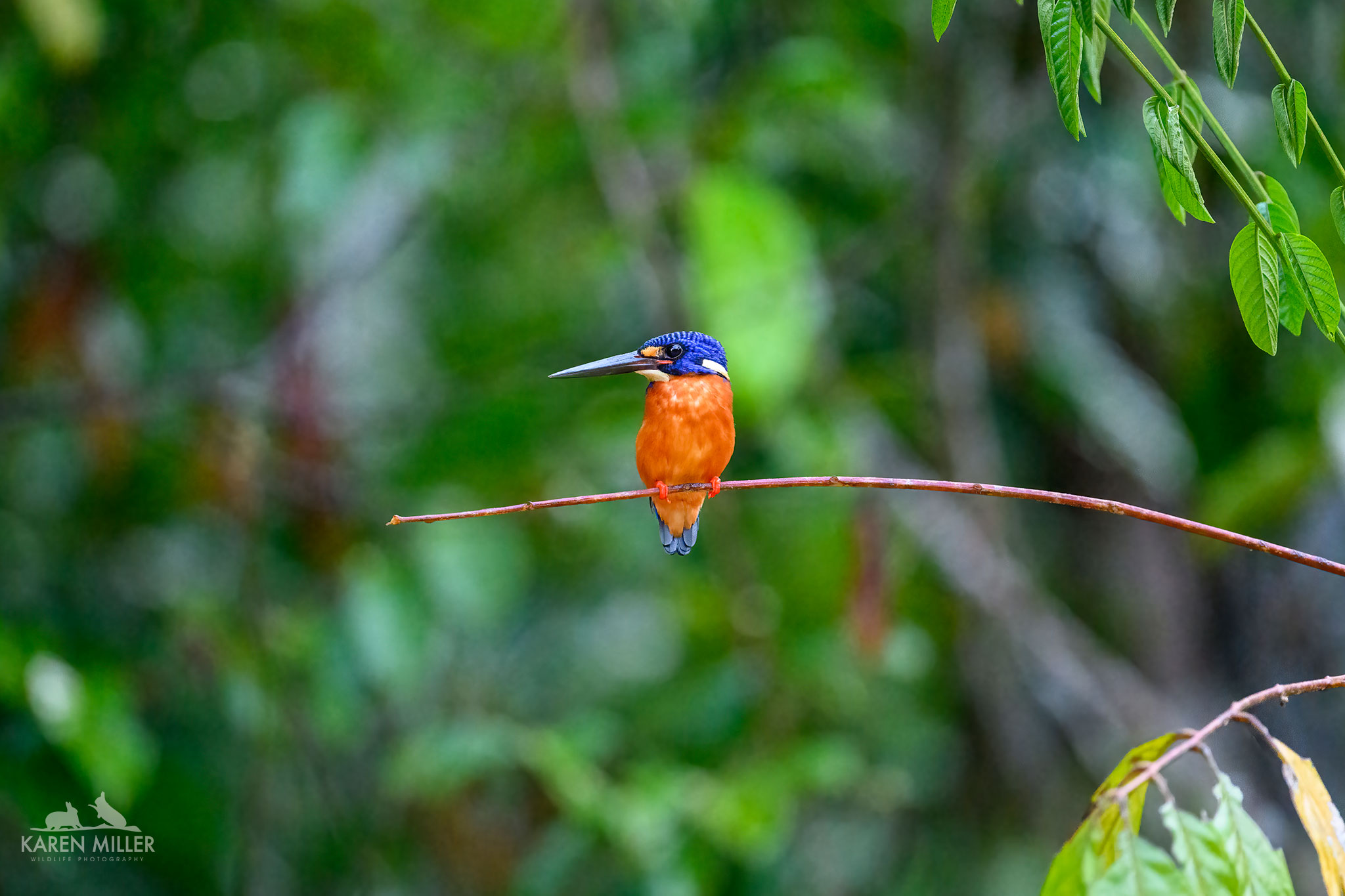
We had lovely views of the 2nd species. A much smaller one that is similar, but different, from our UK kingfisher. This is the blue eared kingfisher. It posed beautifully for us in rapidly fading light one evening.
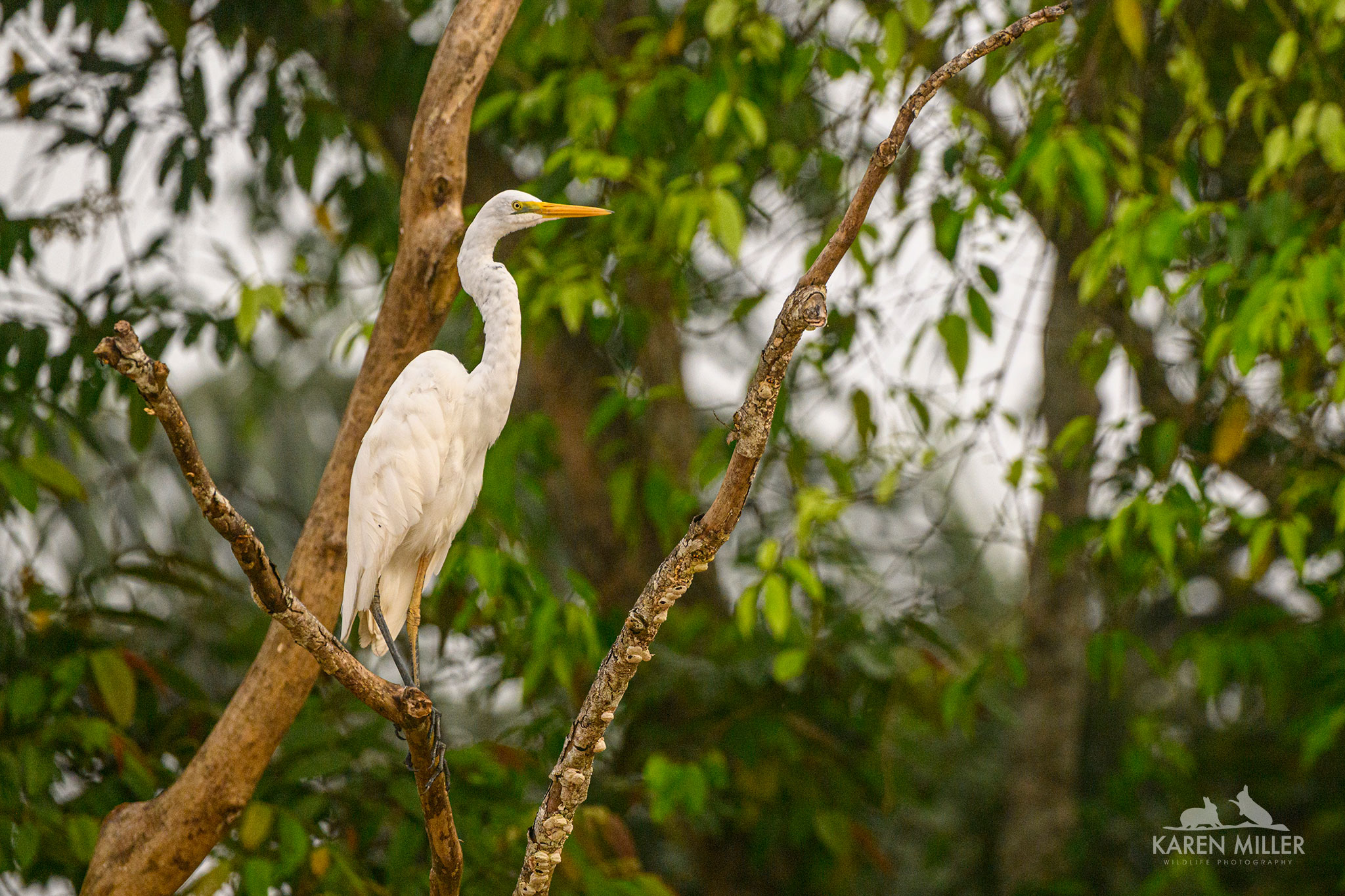
Egrets were a common sight along the river. We saw them everywhere – just as common as our grey herons.
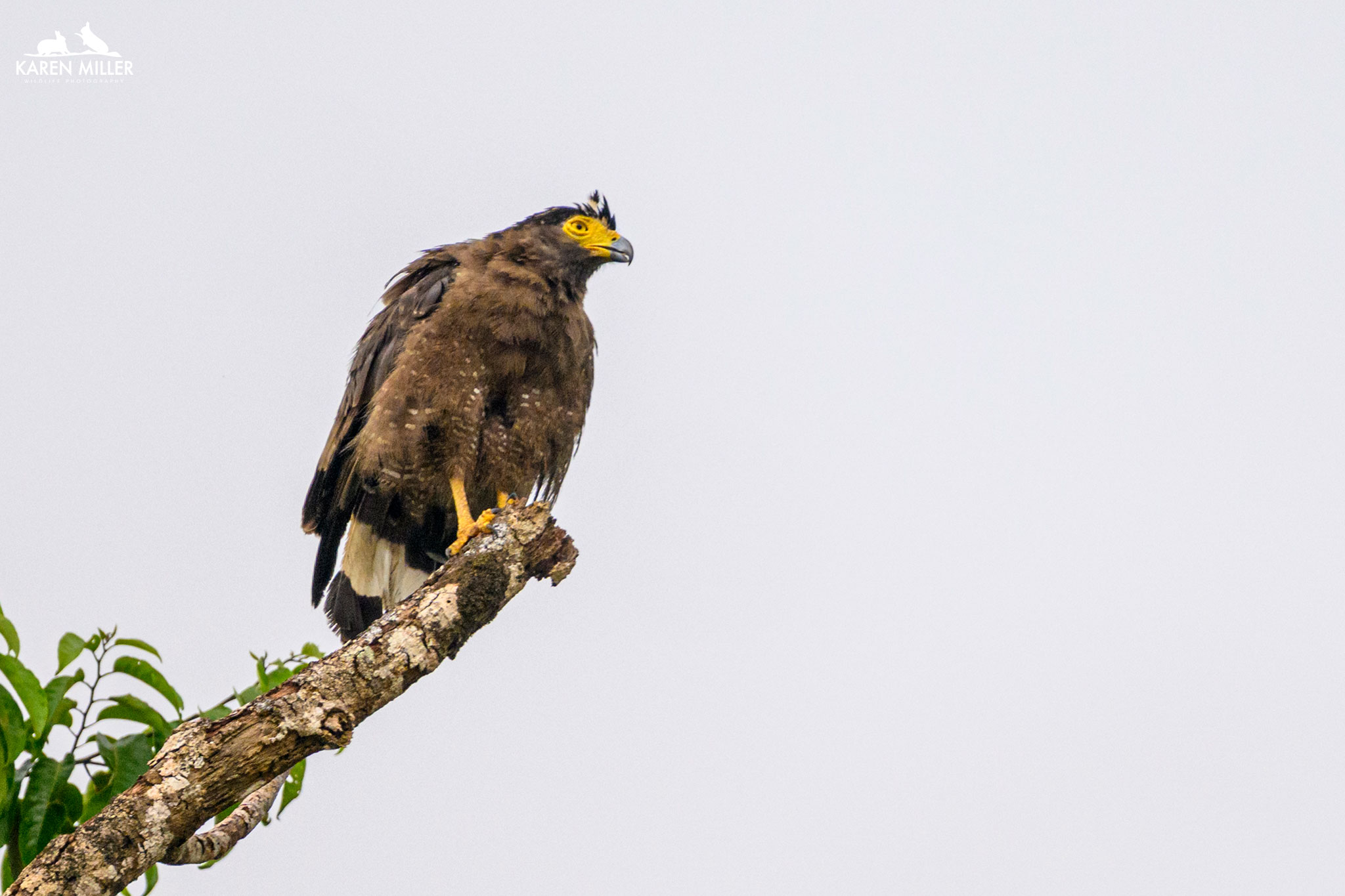
The serpent eagle was the Sabah equivalent of our common buzzard. We saw these everywhere too both here and in Tabin.
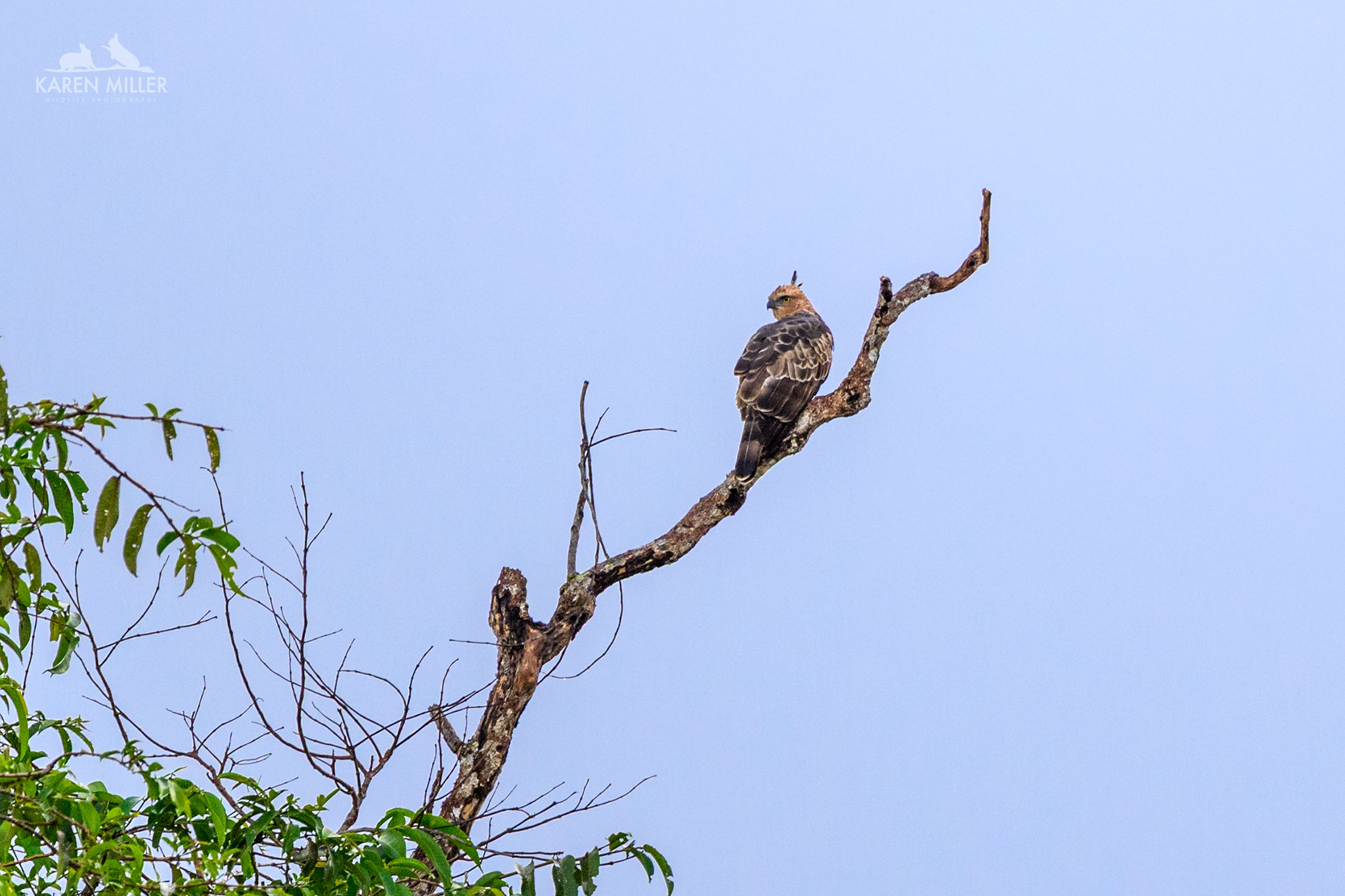
We did see a buzzard, a crested honey buzzard.
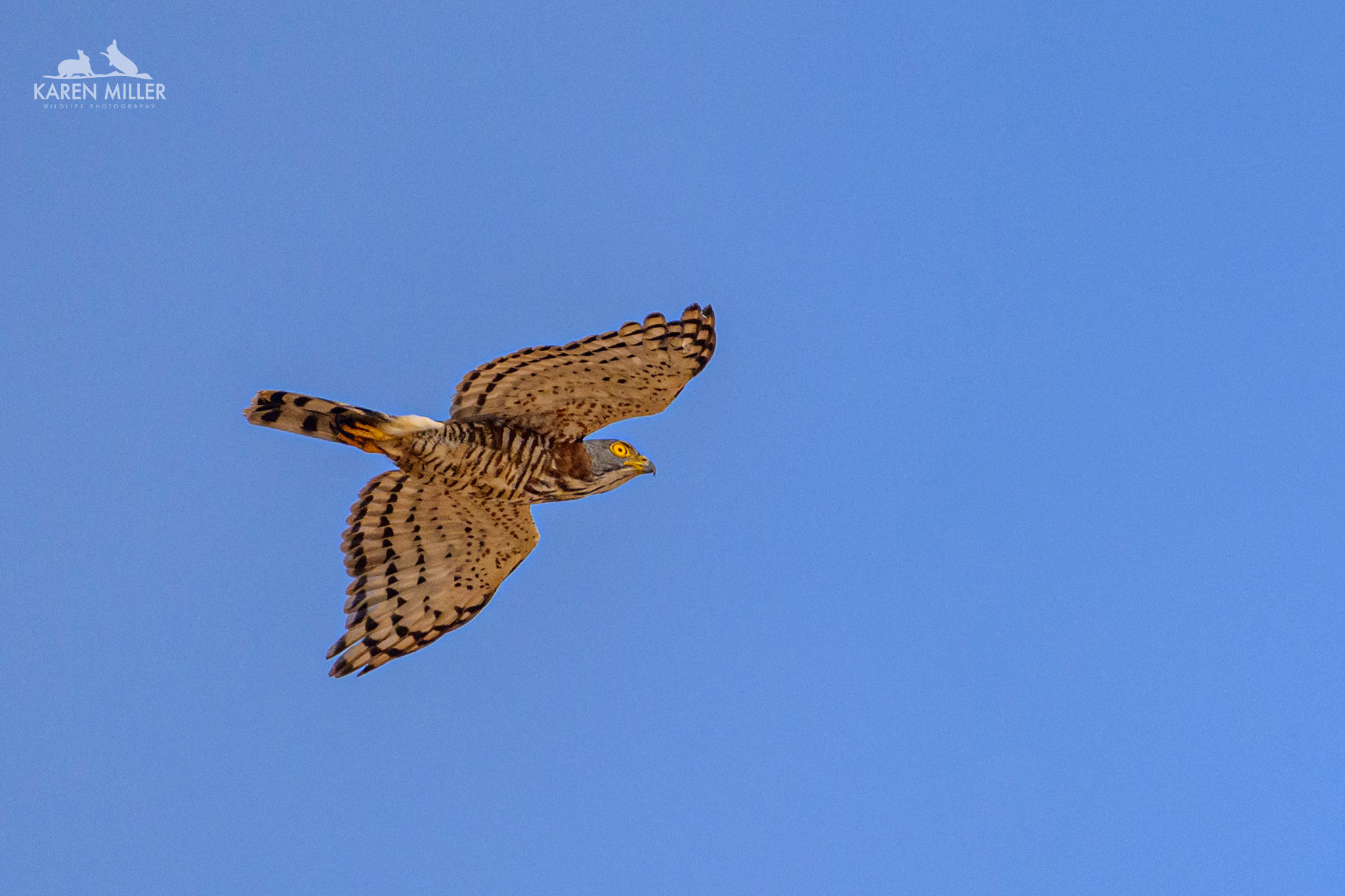
A bird I’m yet to see in the UK is the goshawk, but we had a crested goshawk fly past, beautiful bird.
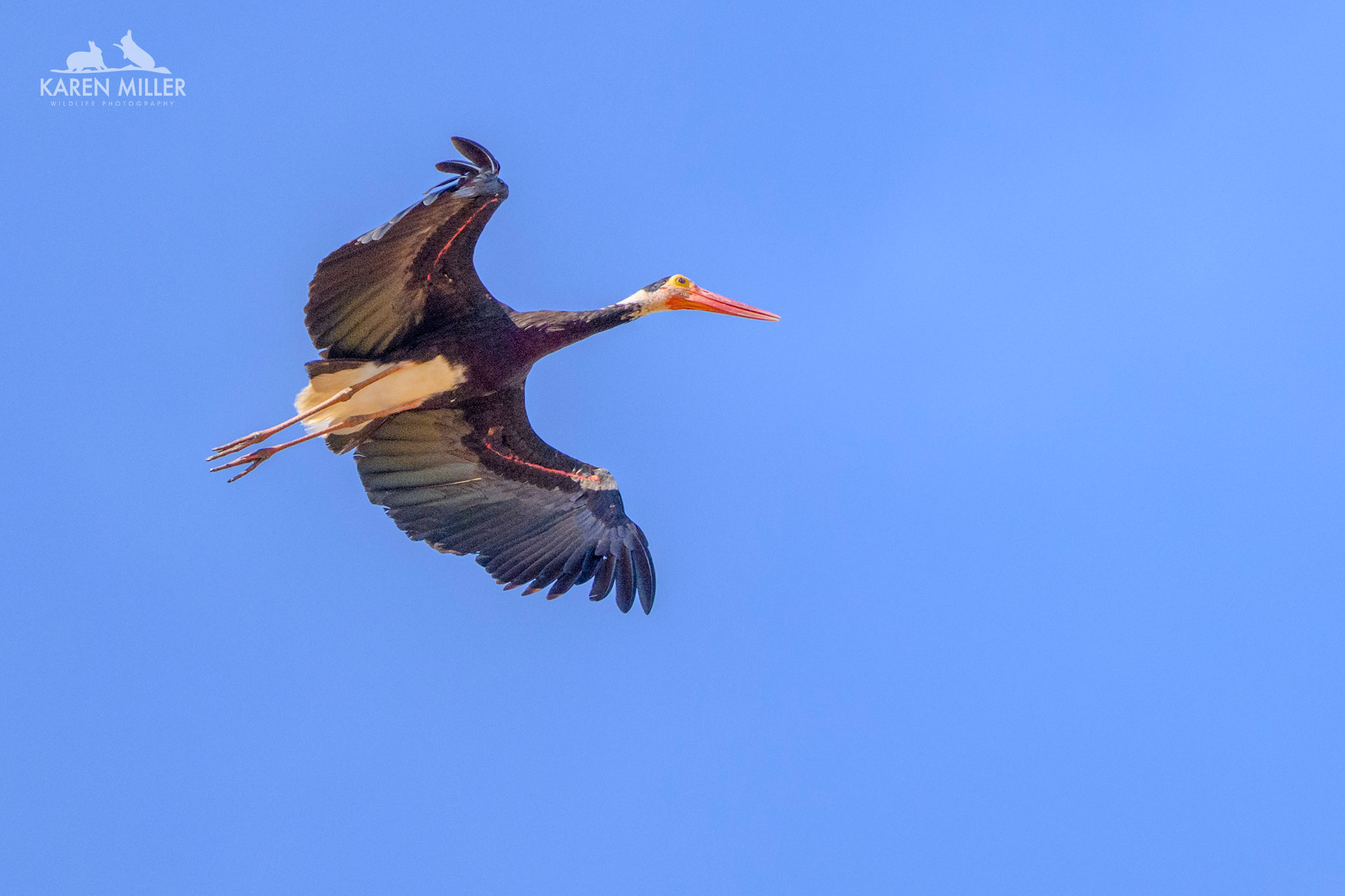
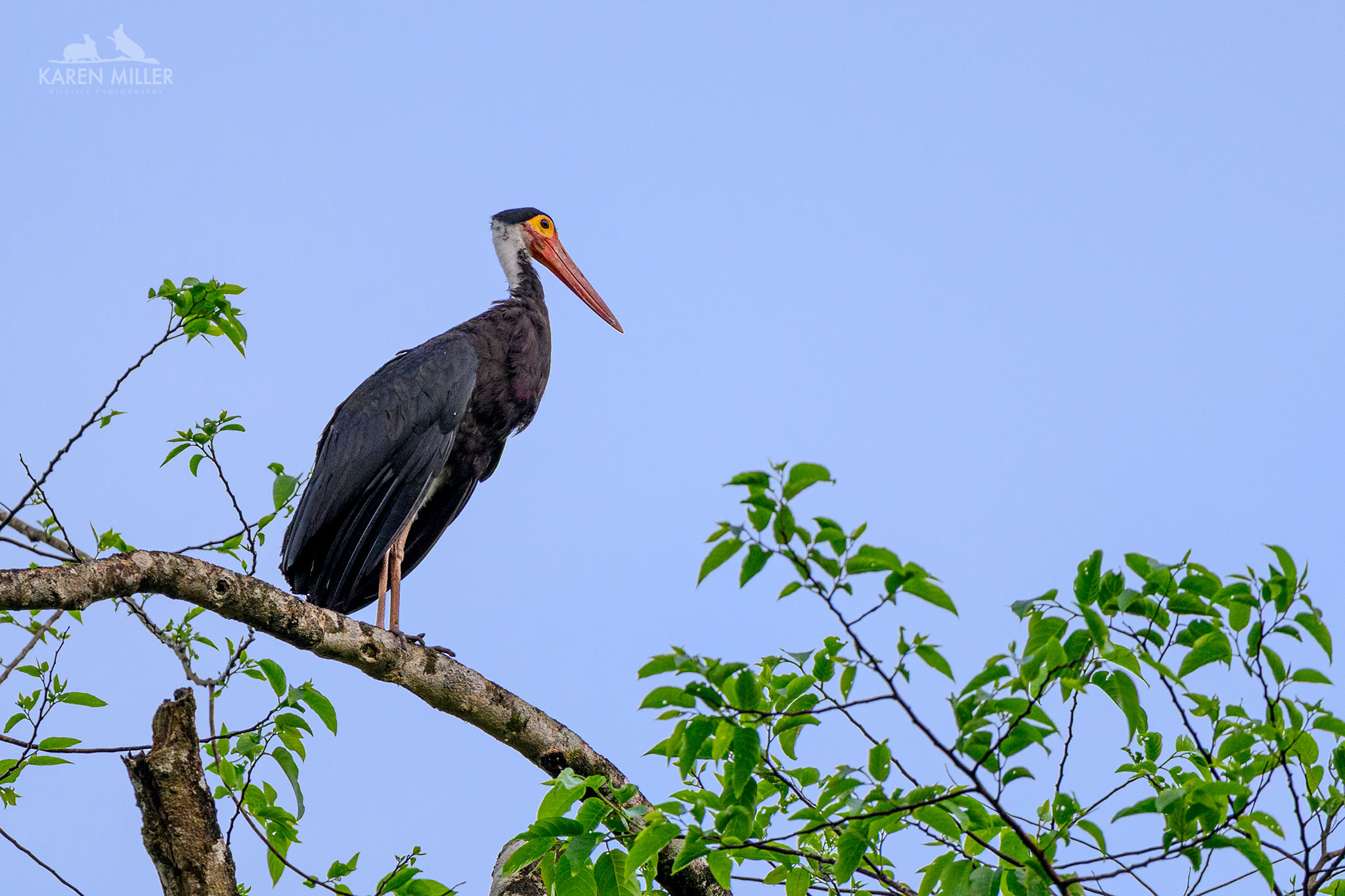
We had a few sightings of a Storm’s stork. This is the rarest stork in the world with only 500 left throughout its geographic range, so a good spot. We saw them (or it) more than once which was great.
A couple of smaller birds we were shown:
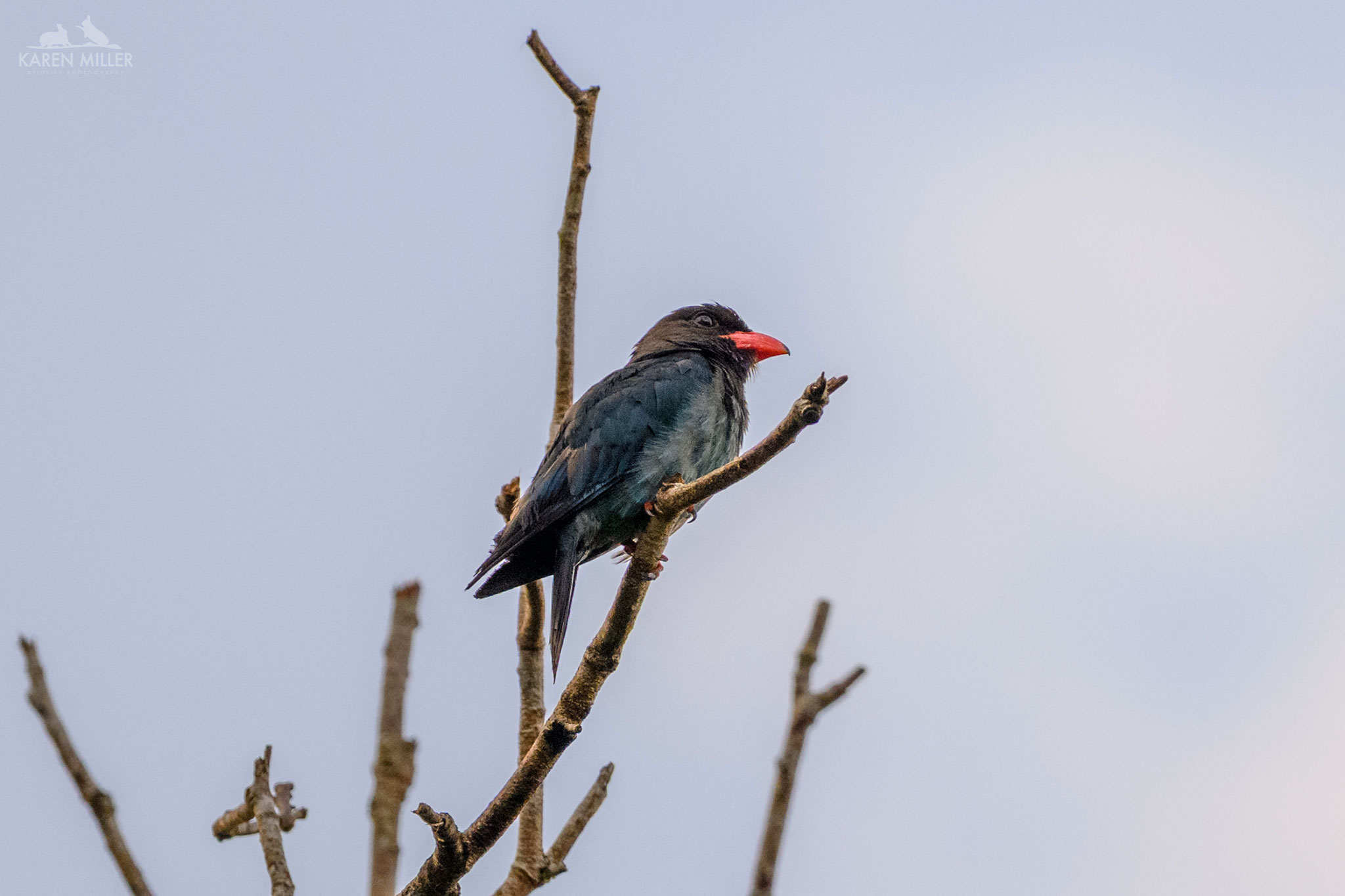
Oriental dollar bird
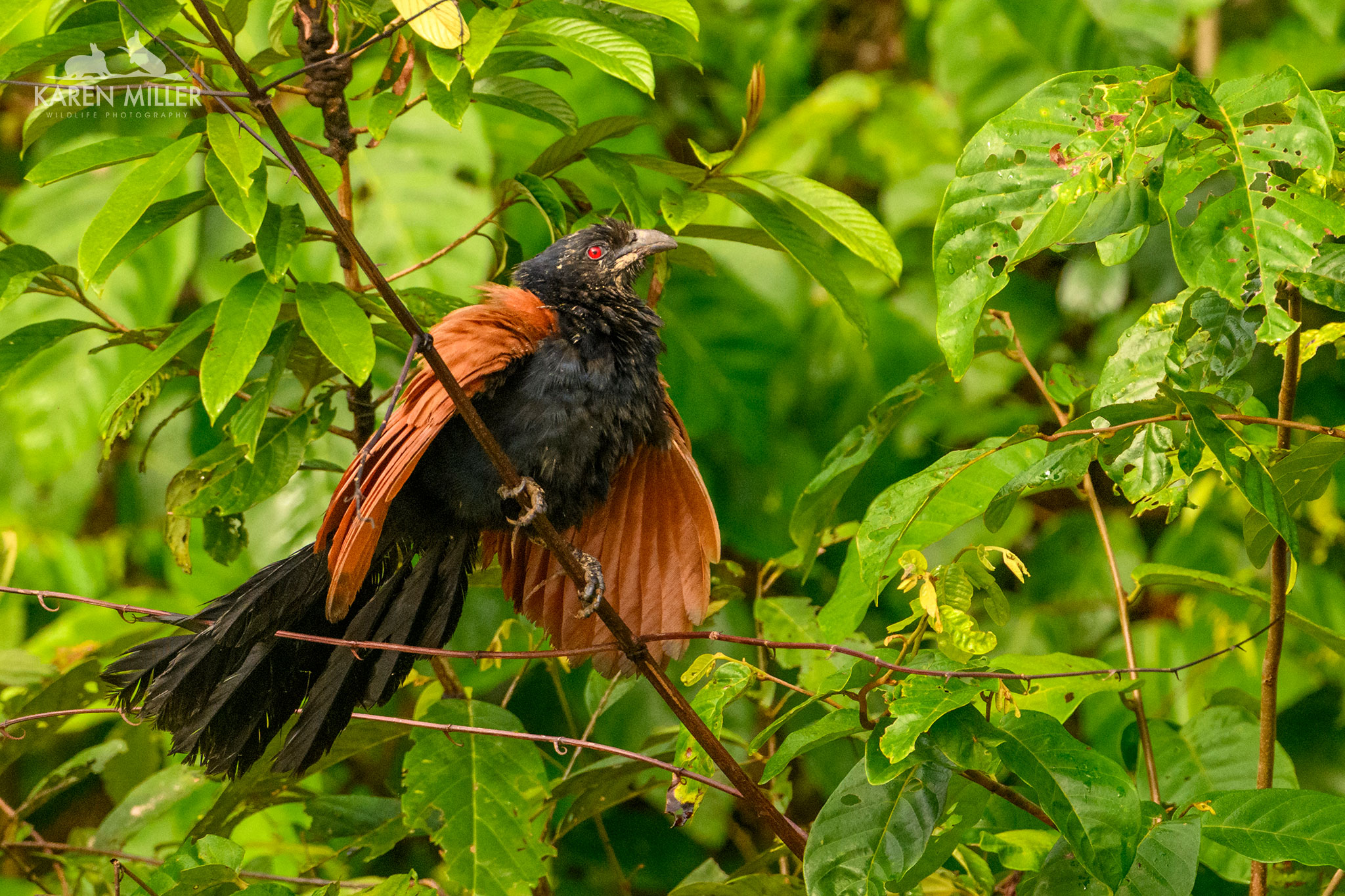
and Greater(?) Coucal
And of course, hornbills, especially rhinoceros hornbills, were seen everywhere!
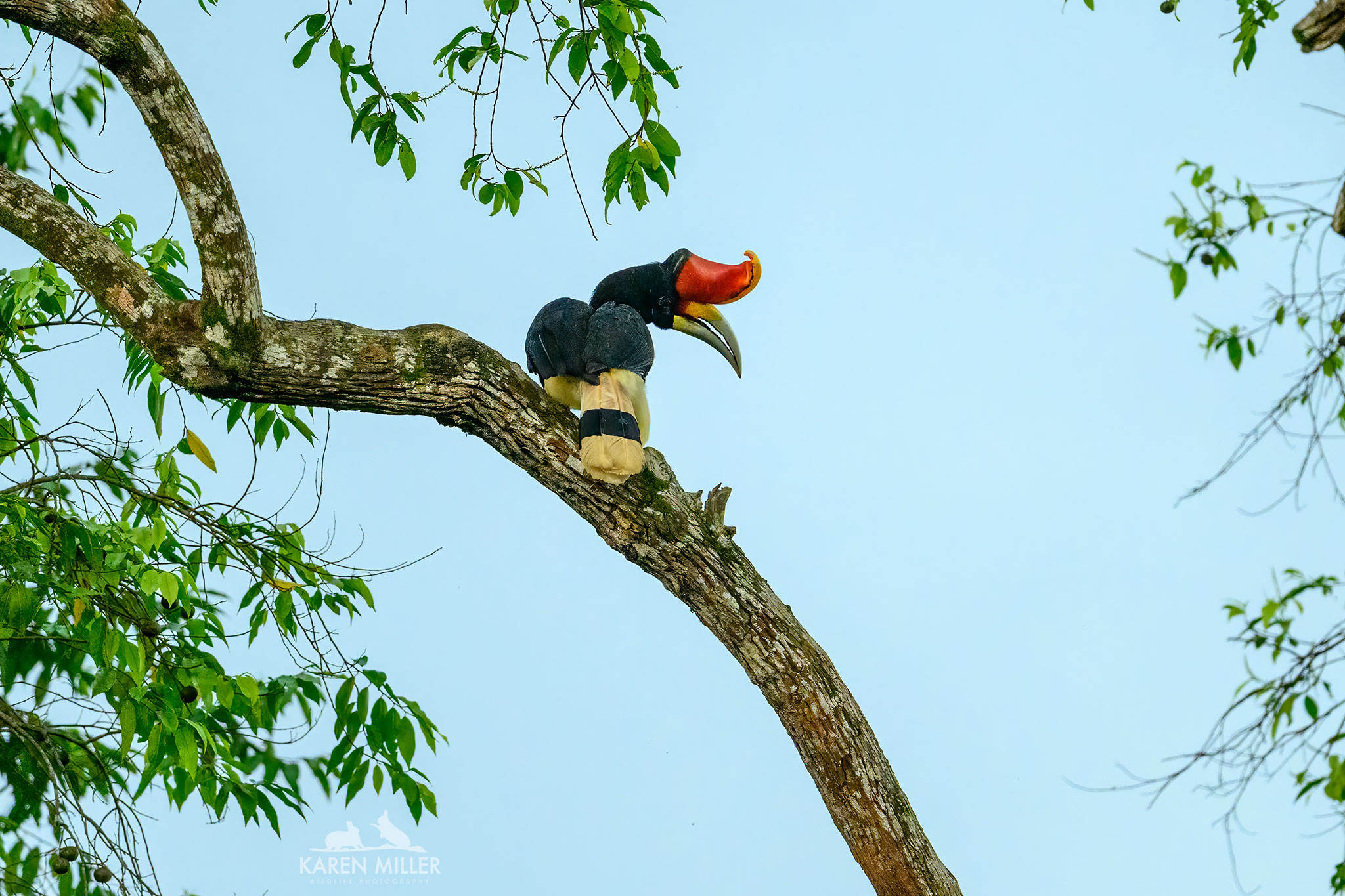
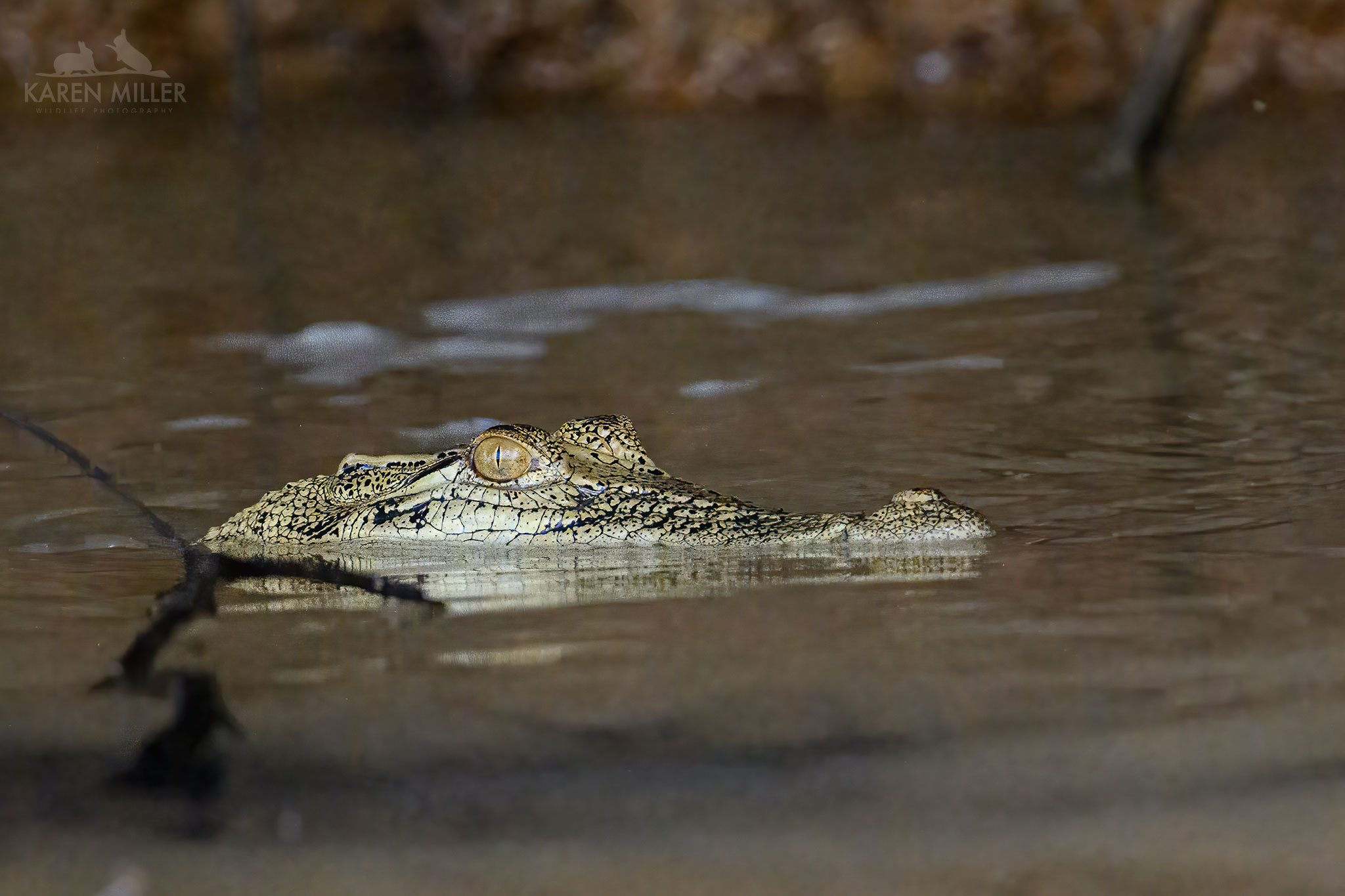
As for reptiles, the one I really wanted to see was a saltwater crocodile – an adult one. However, water levels were high and apparently this reduced sightings. We did have one swim by us in Kuching, but this was supposed to be where we’d have most success in spotting them. It wasn’t a complete bust though, Sonny did find two baby crocs. Interestingly they are white. The mums leave them on their own as being apex predators they are quite safe. Very cute (from a distance).
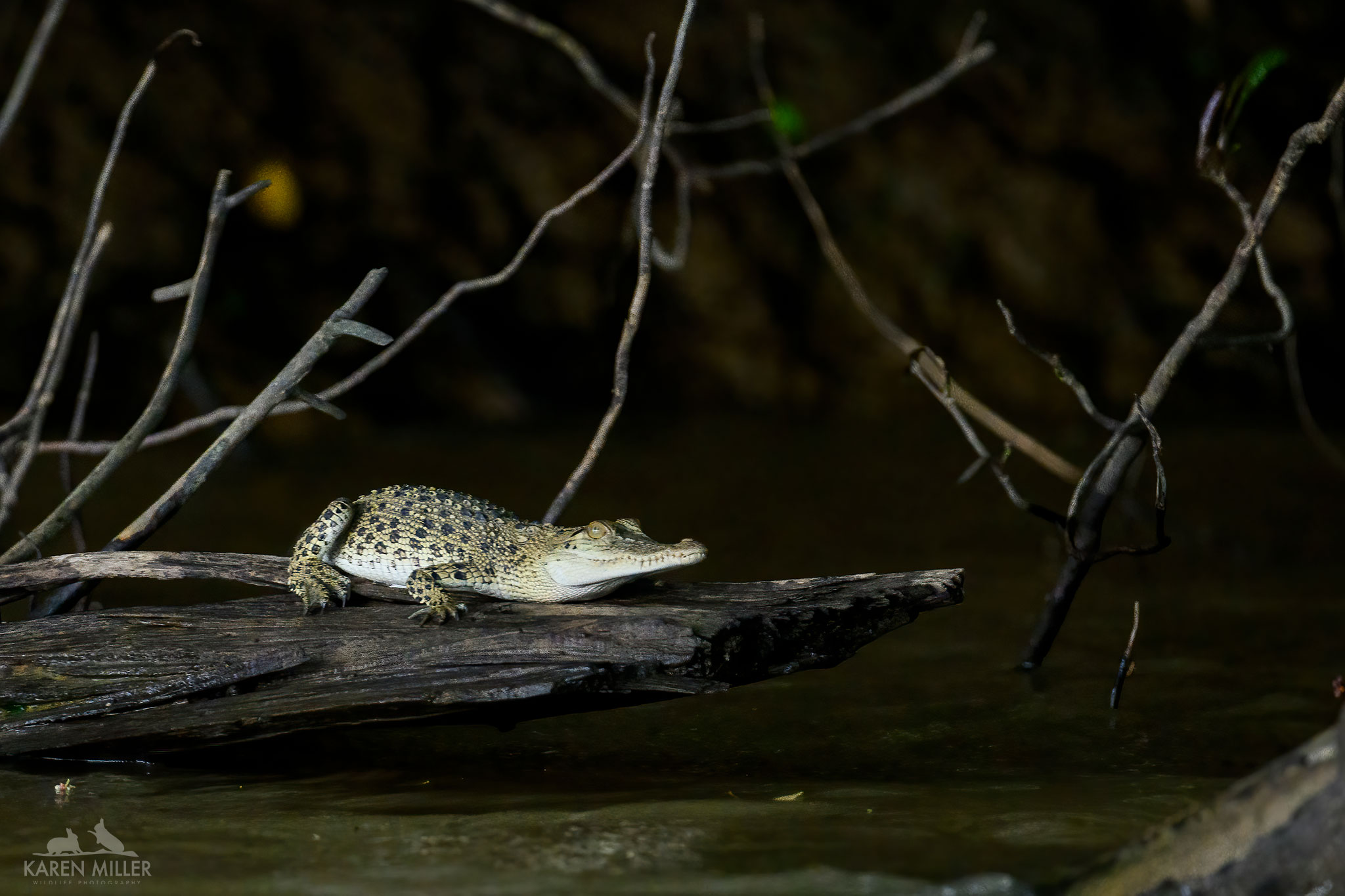
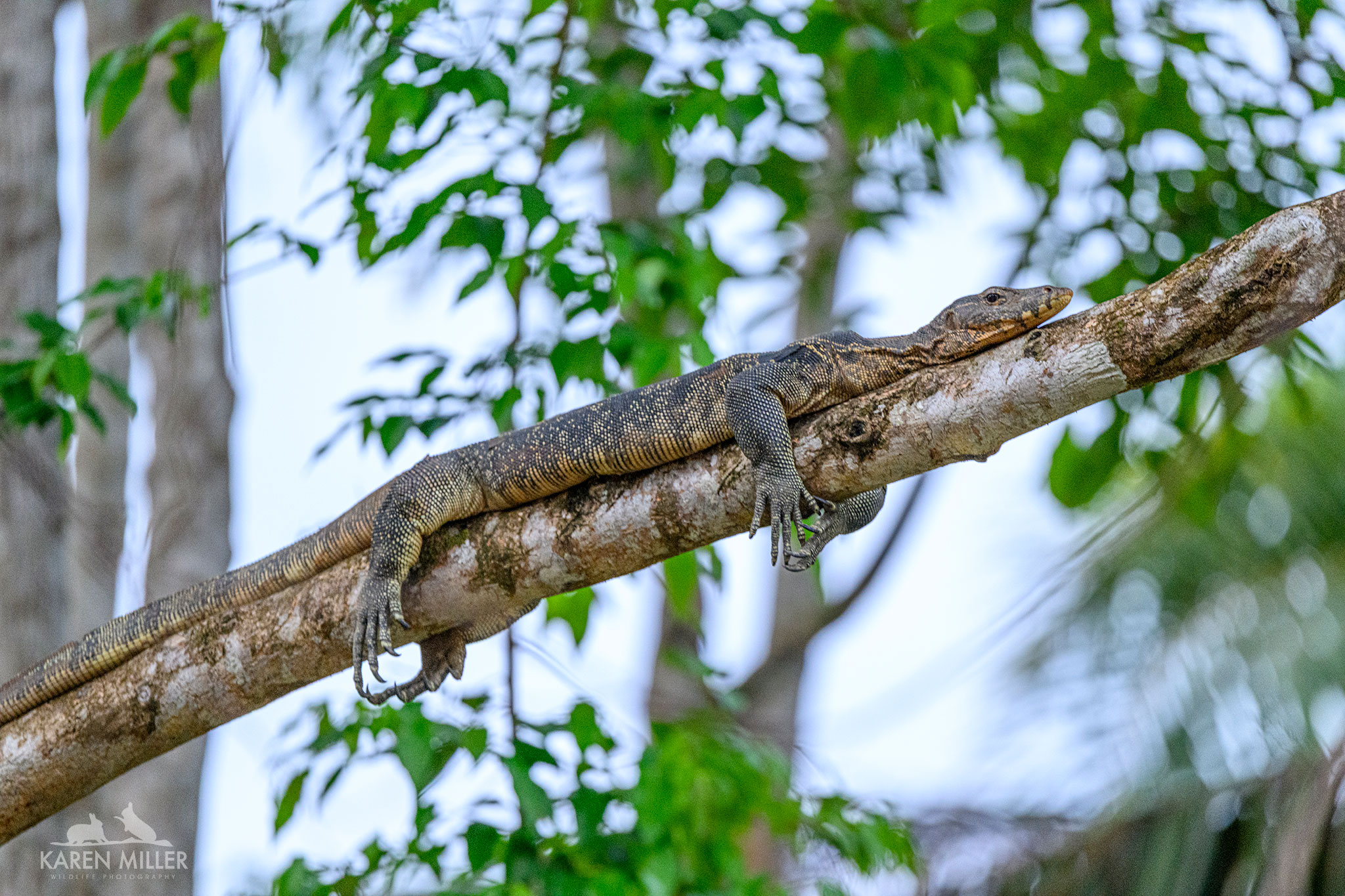
Sonny also spotted a monitor lizard slumped on a tree. Again we saw one in Kuching, but this was bigger, although still not full sized. Well camouflaged, the guides really are great at seeing the wildlife!
I really like reptiles, but let’s be honest, I was primarily in Borneo for the mammals, most specifically the monkeys and apes. In Sepilok we had fantastic views of the orangutans and proboscis monkeys at sanctuaries and both were wonderful. What I hadn’t expected was to see so many proboscis monkeys along the river’s edge, but they were everywhere in large family groups with a dominant male (“Big Daddy”) and lots of youngsters. Such a joy to watch. I’d first come across these monkeys on a David Attenborough programme, where, with the usual slightly over-the-top drama, we saw a troupe attempting to cross a crocodile infested river.
This was apparently filmed at Kinabatangan, but sadly we didn’t see this. We did get them using a rope bridge which had been put up to help orangutans cross the river.
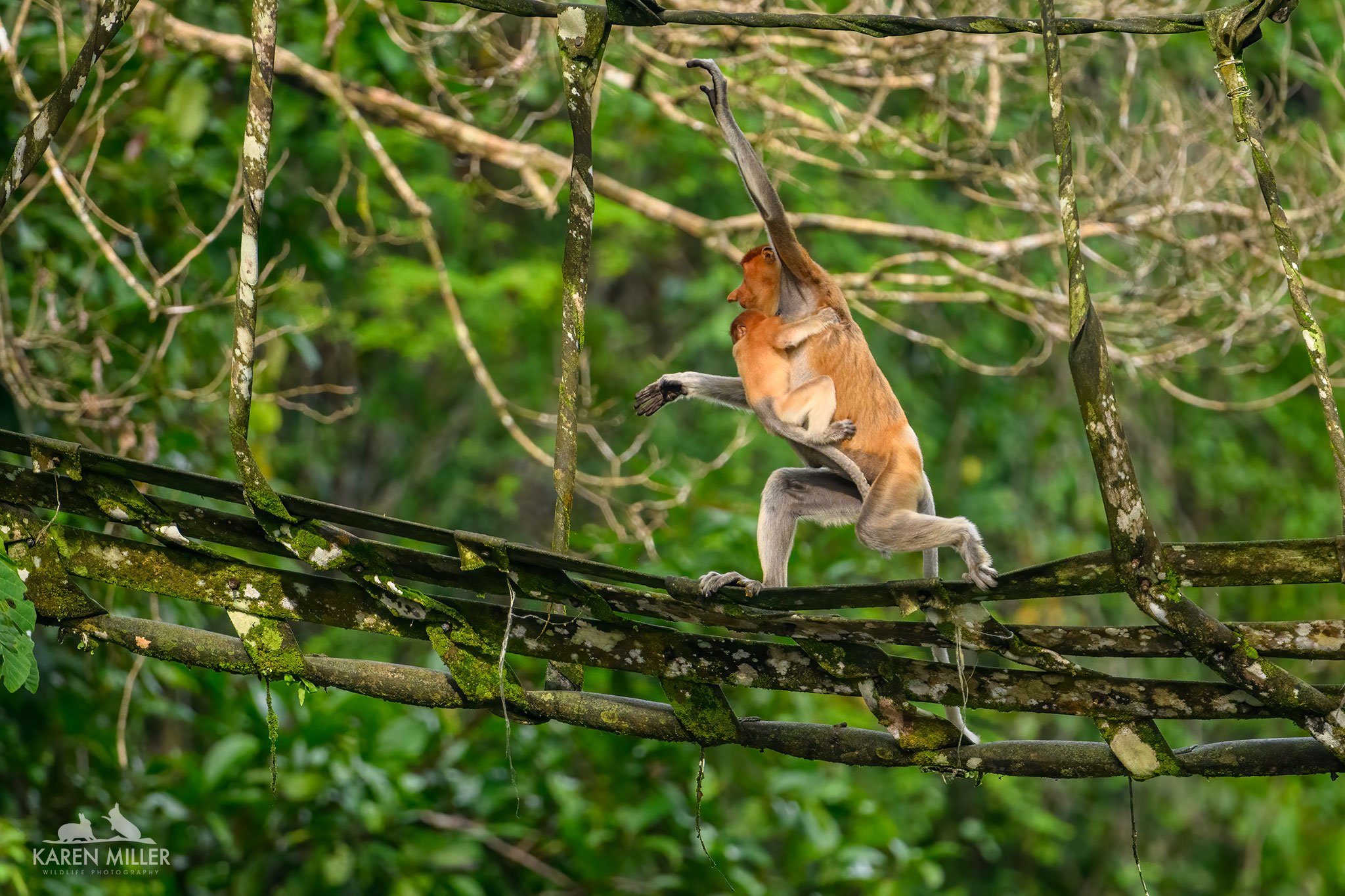
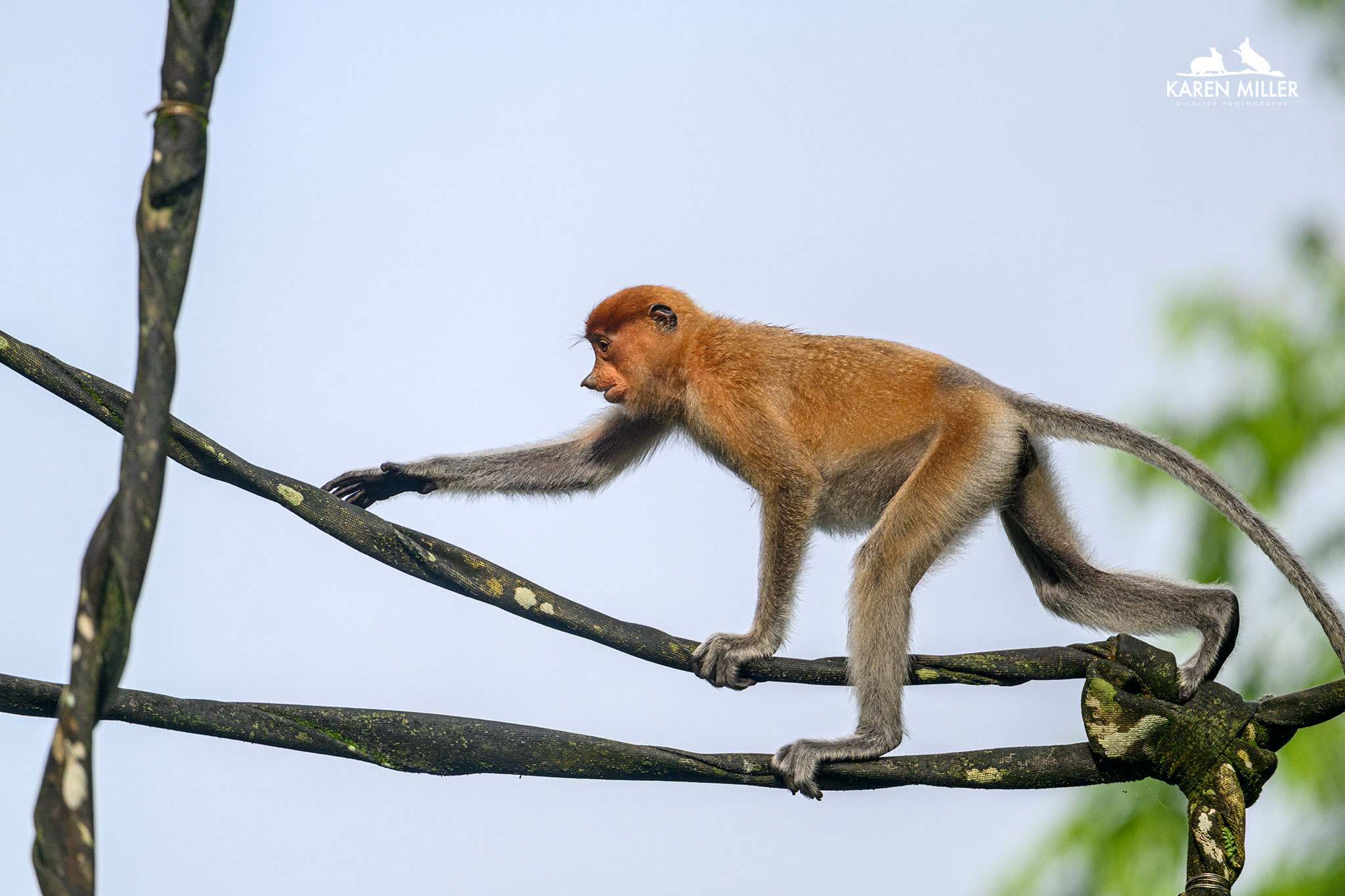
This is a great article by Jude Isabella about the proboscis monkeys on the Kinabatangan River, much more eloquent than I could hope to be.
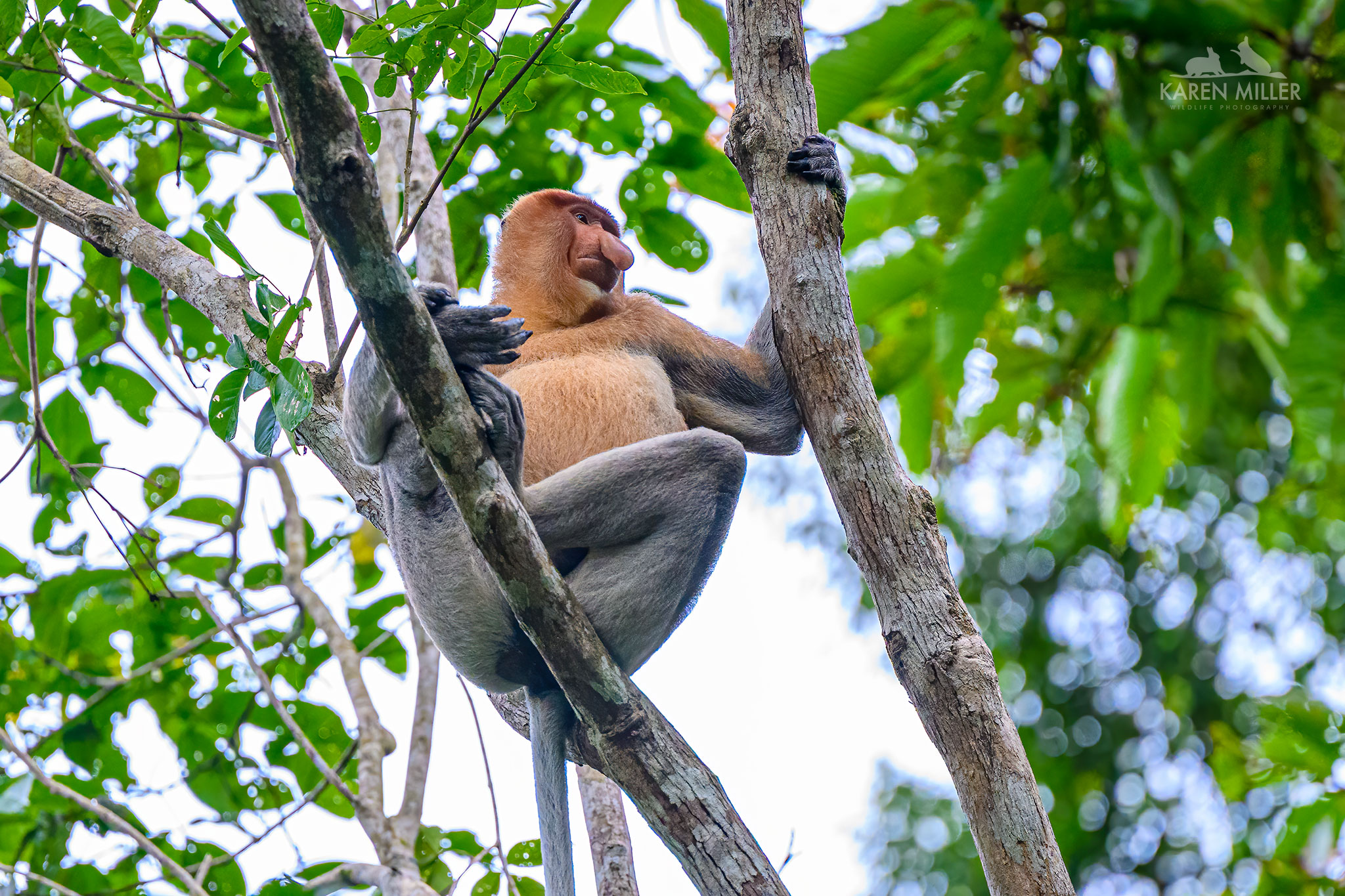
The dominant male proboscis monkey is quite distinctive. A large mammal with a huge nose and permanent very red and hard to miss erection. There’s one per group and he tends to sit in the trees keeping an eye on his family. The larger the nose the more attractive he is to the ladies.
Females have pointy noses and are quite a bit smaller than the male.
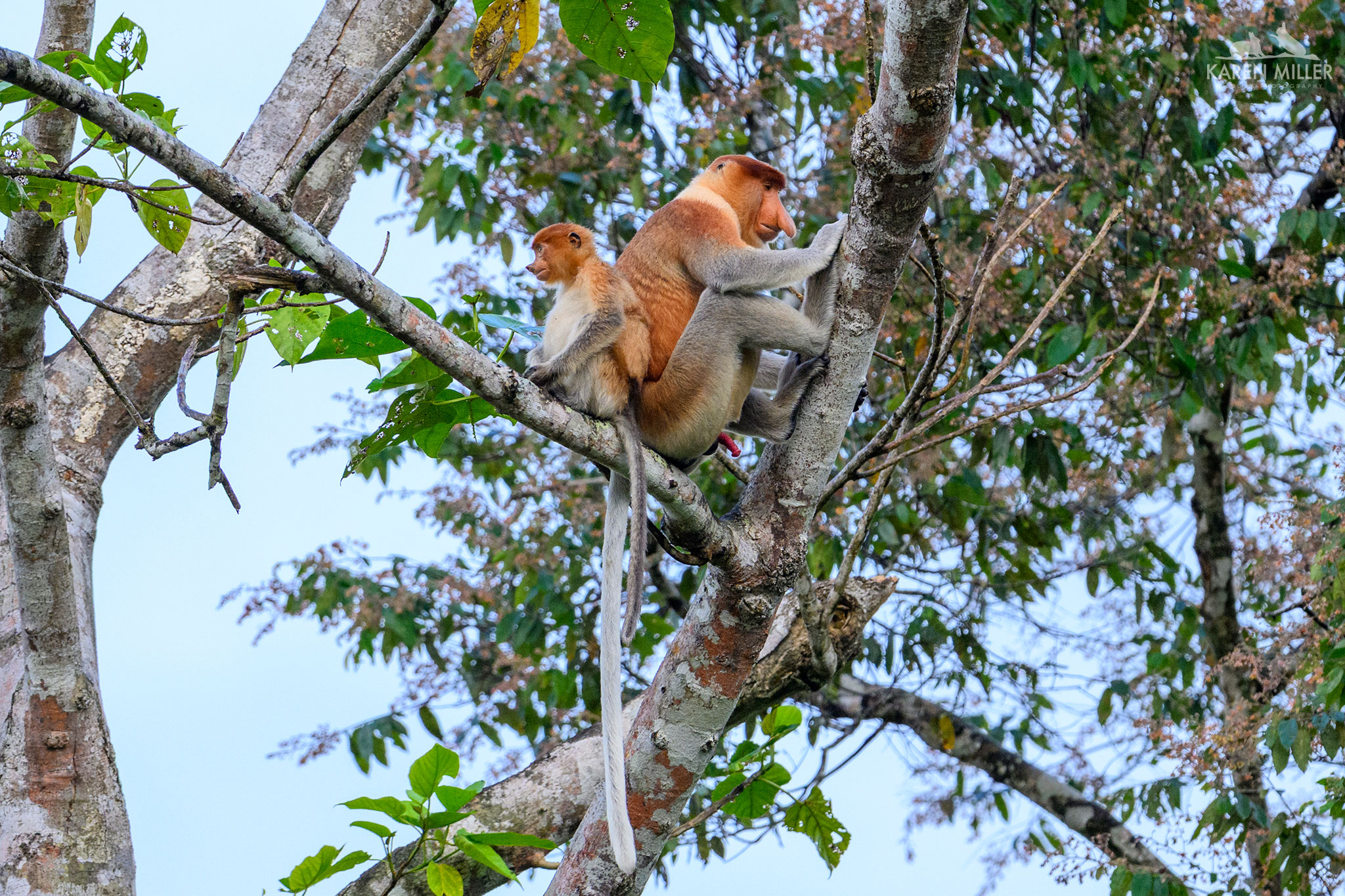
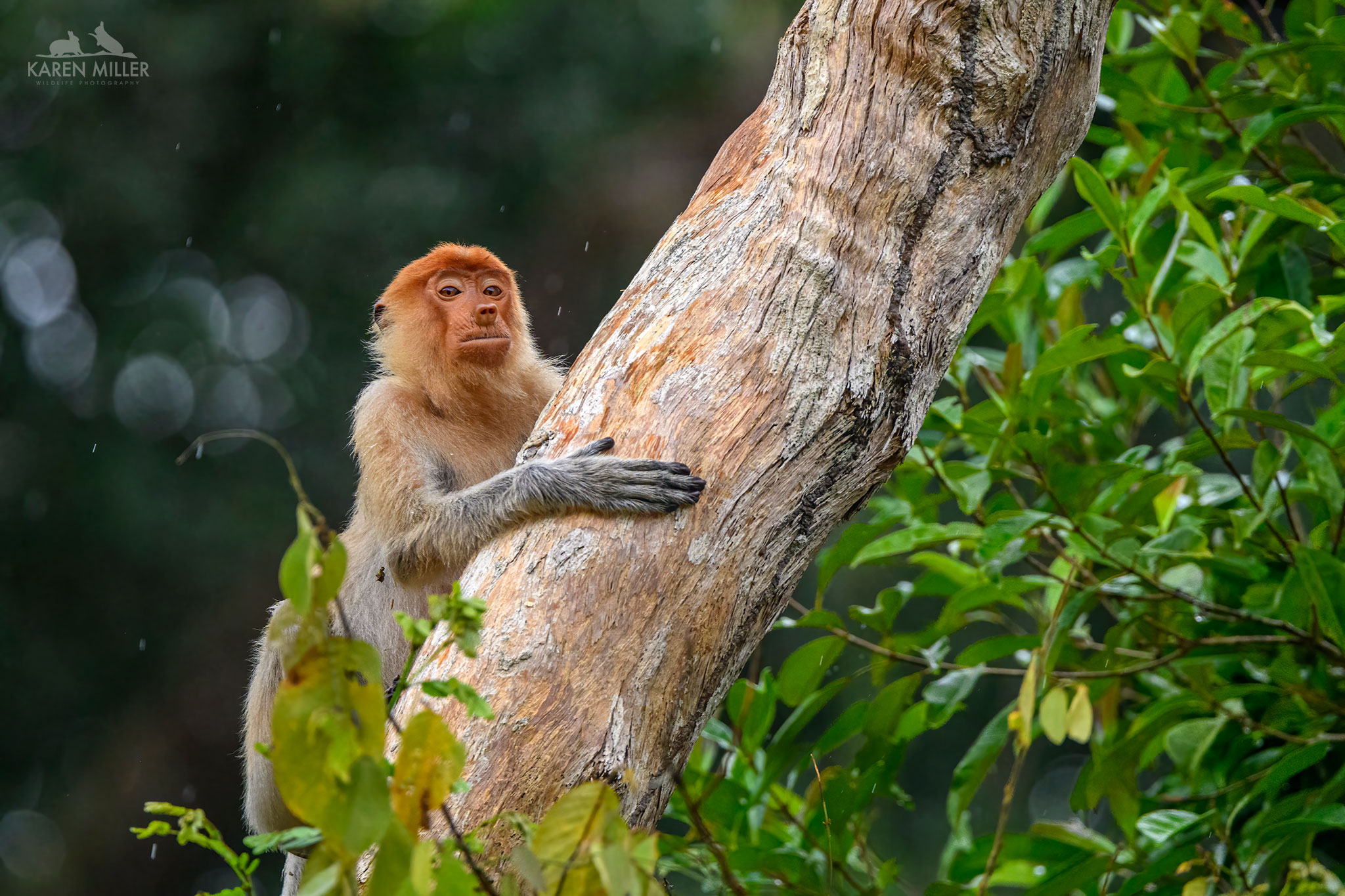
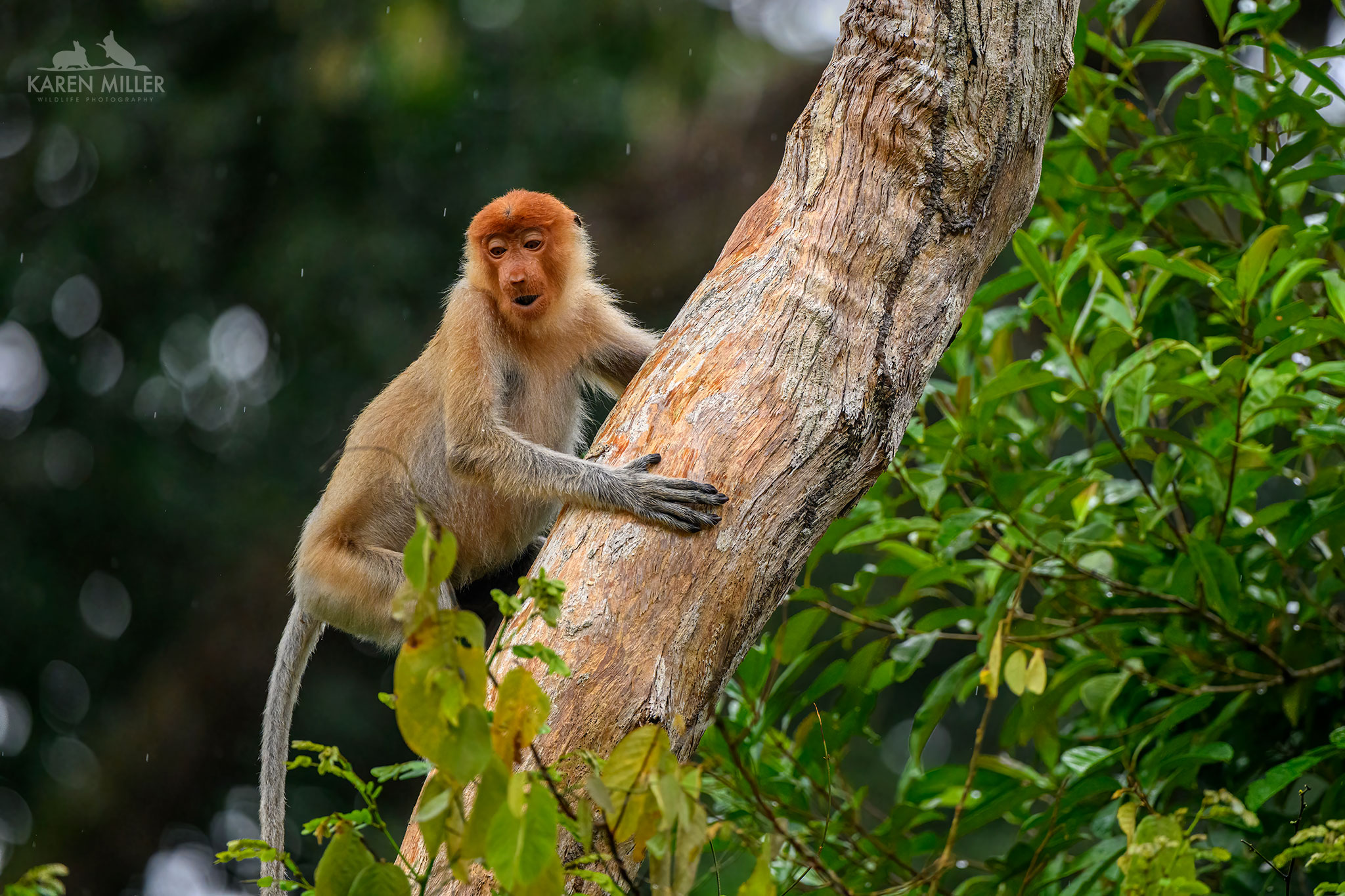
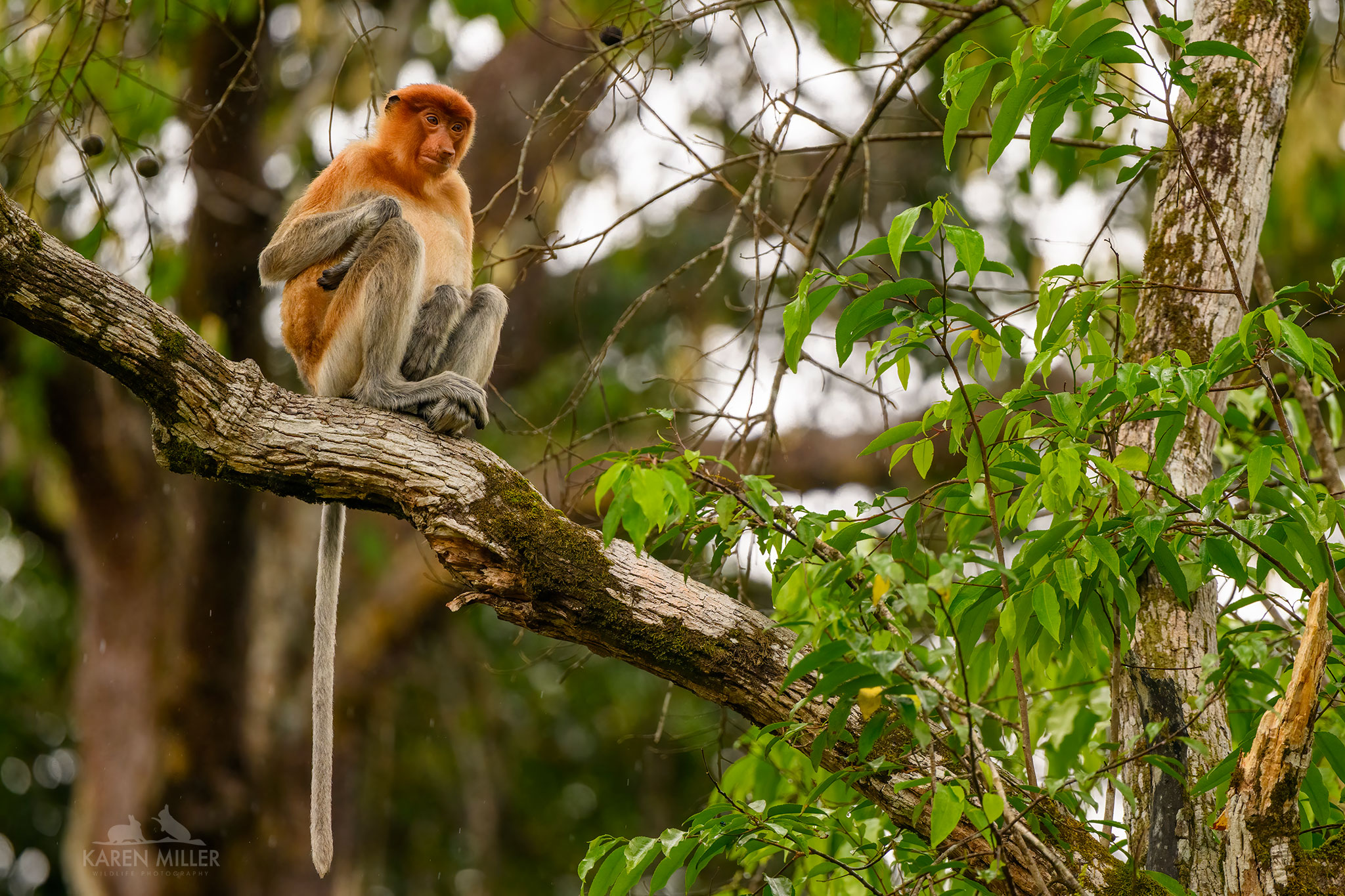
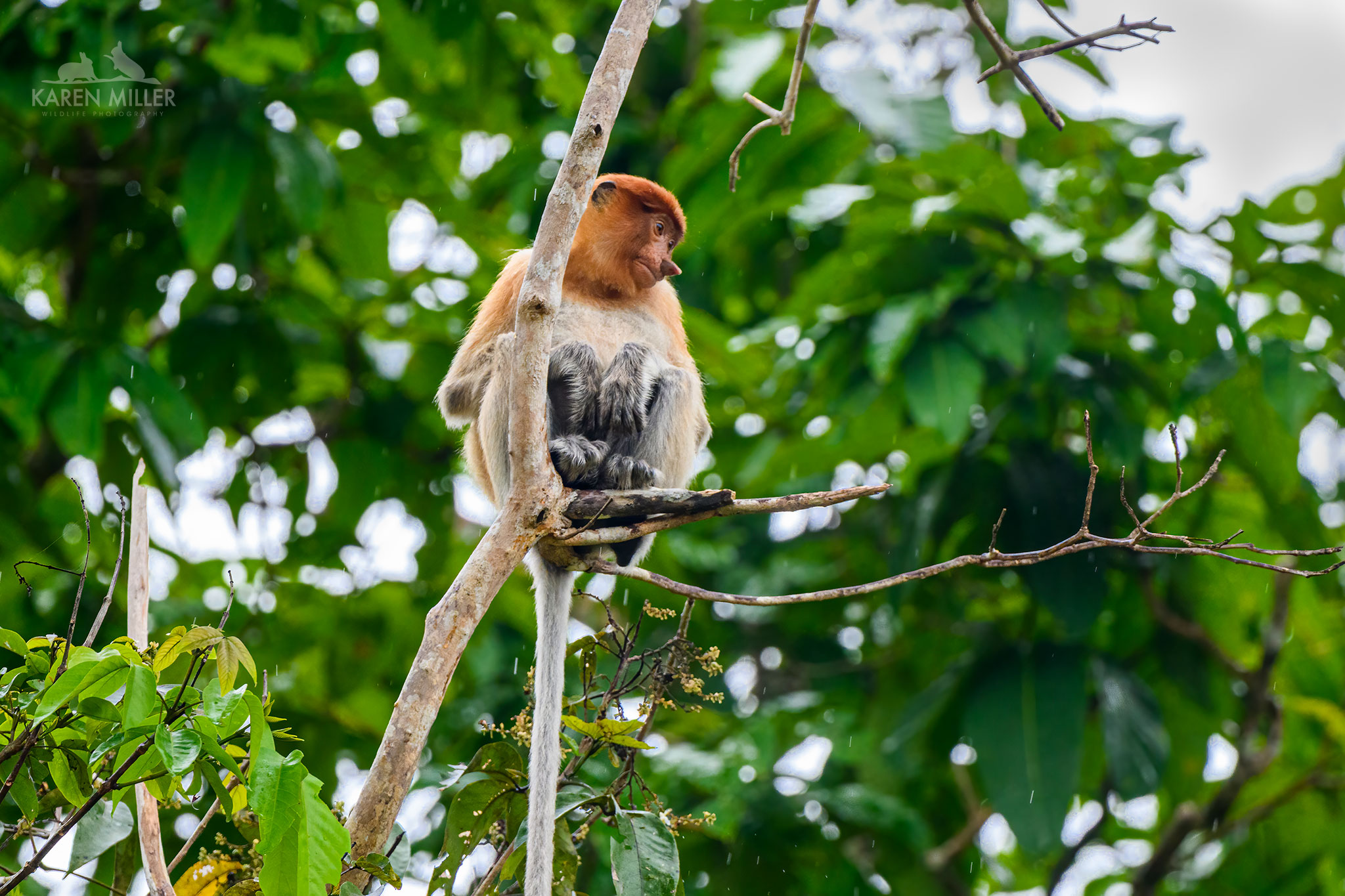
Many had young and they were fantastic to watch.
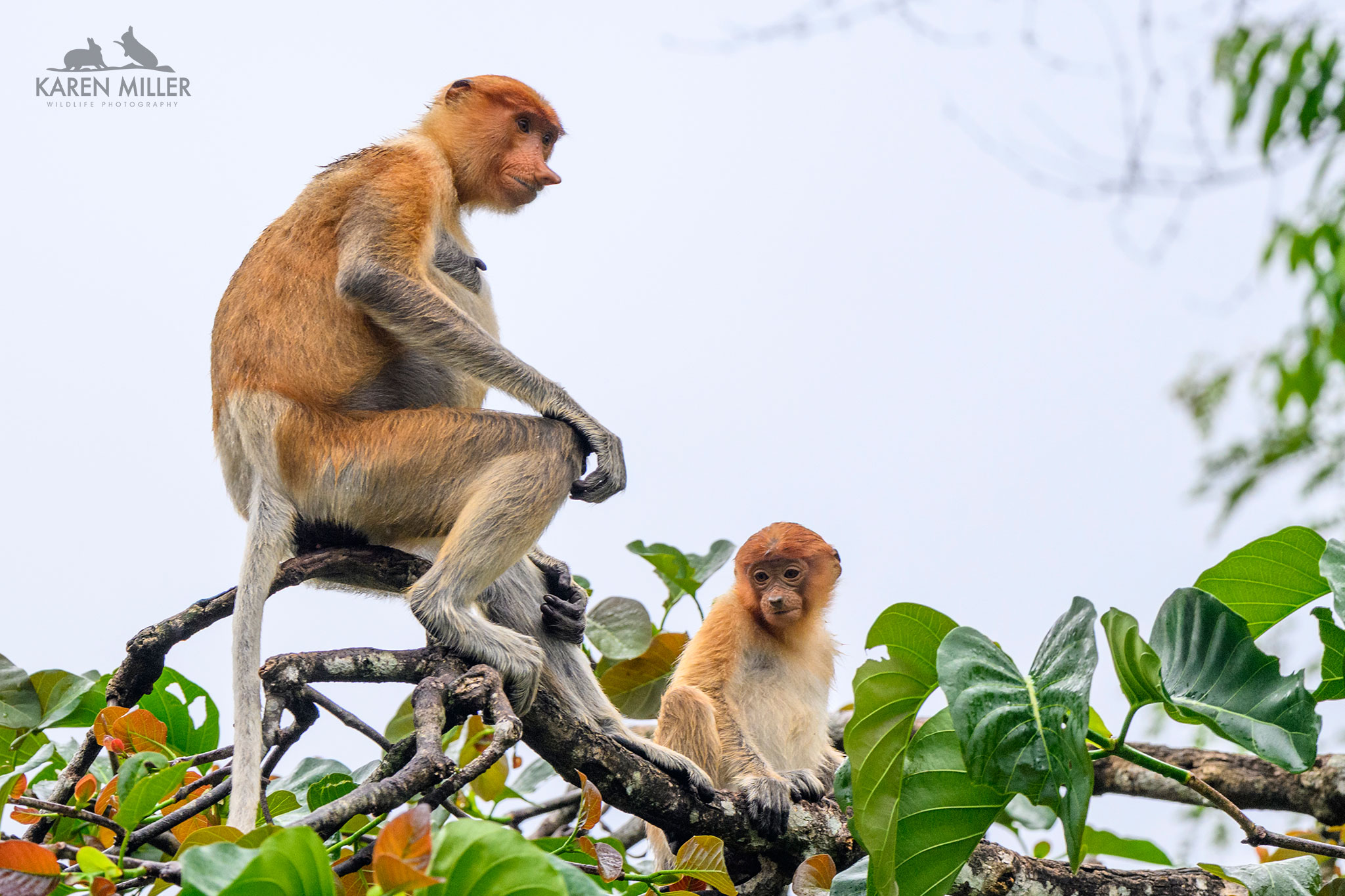
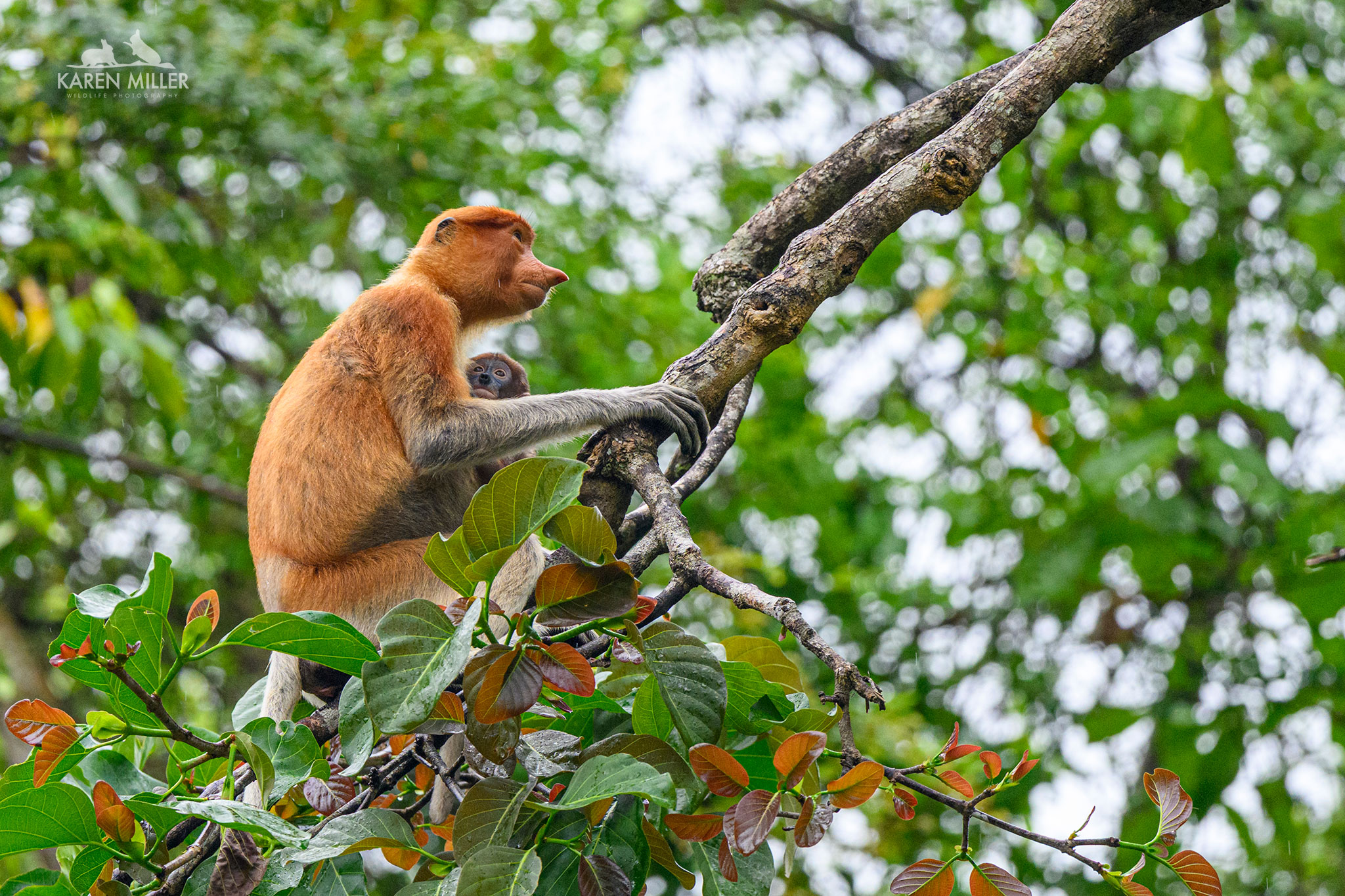
As night falls they find a high tree in which to spend the night.
Often seen near one of the groups of proboscis monkeys were silver leafed monkeys (or silvery lutung). They were gorgeous too with very long tails!
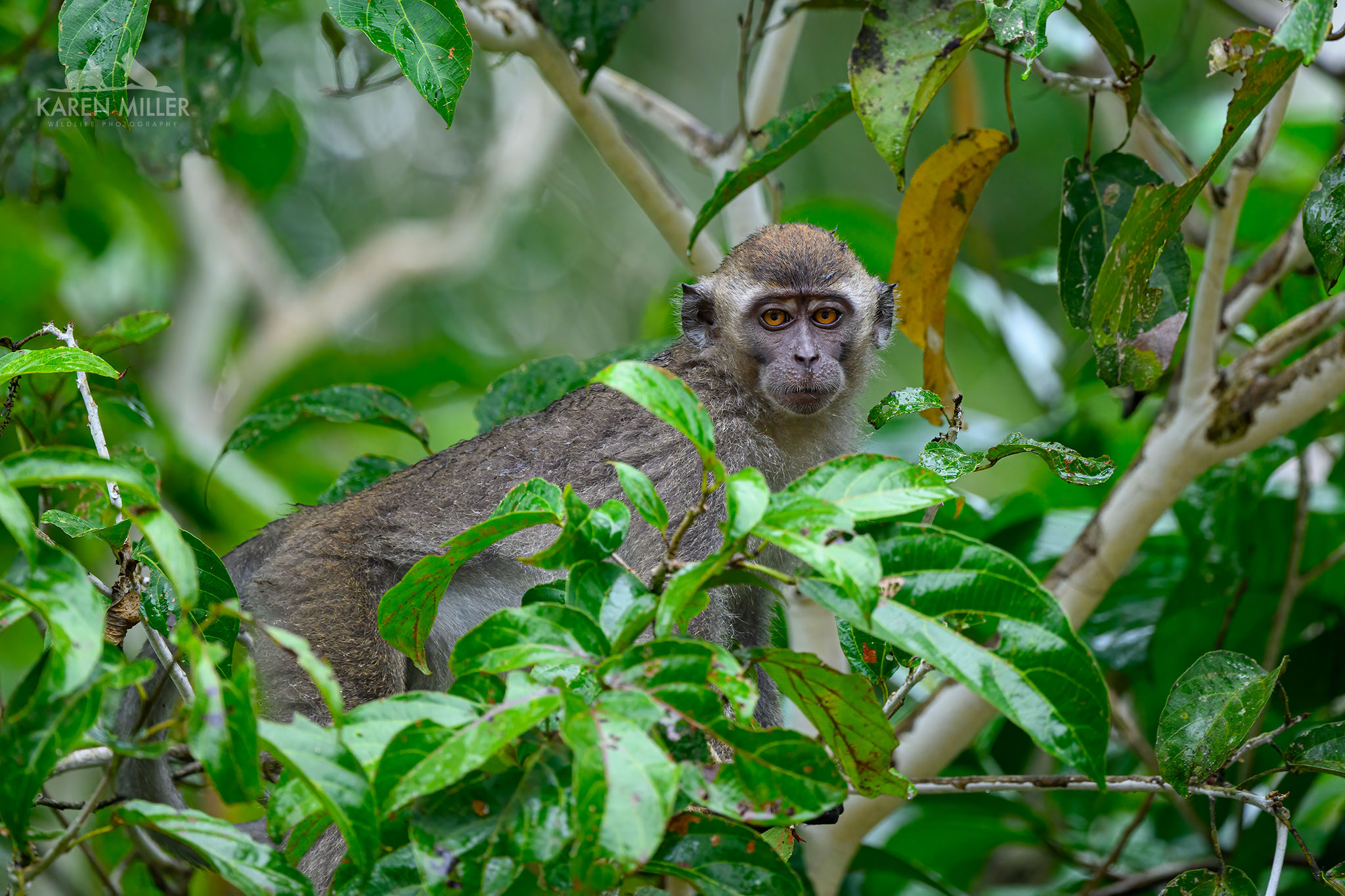
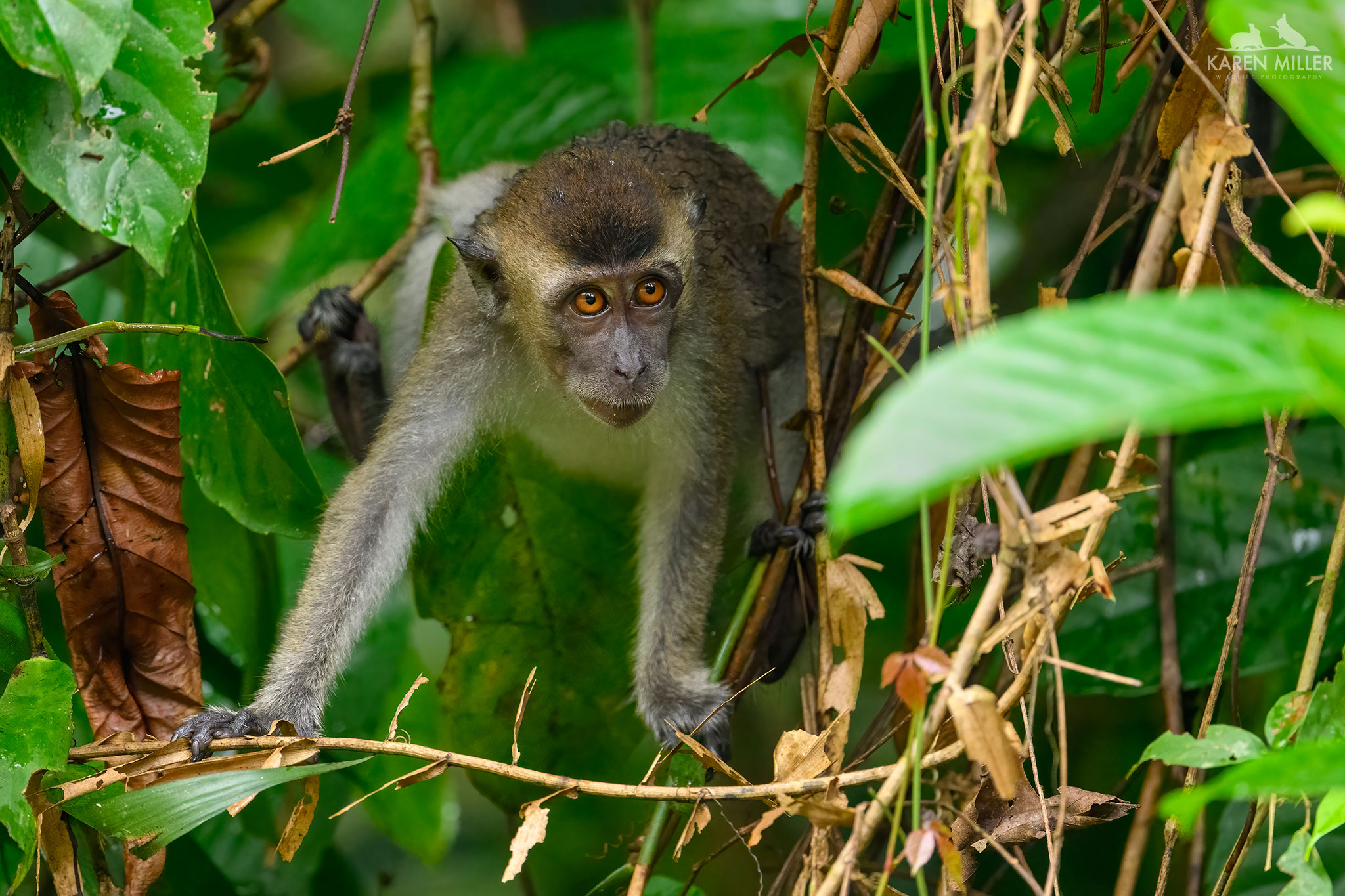
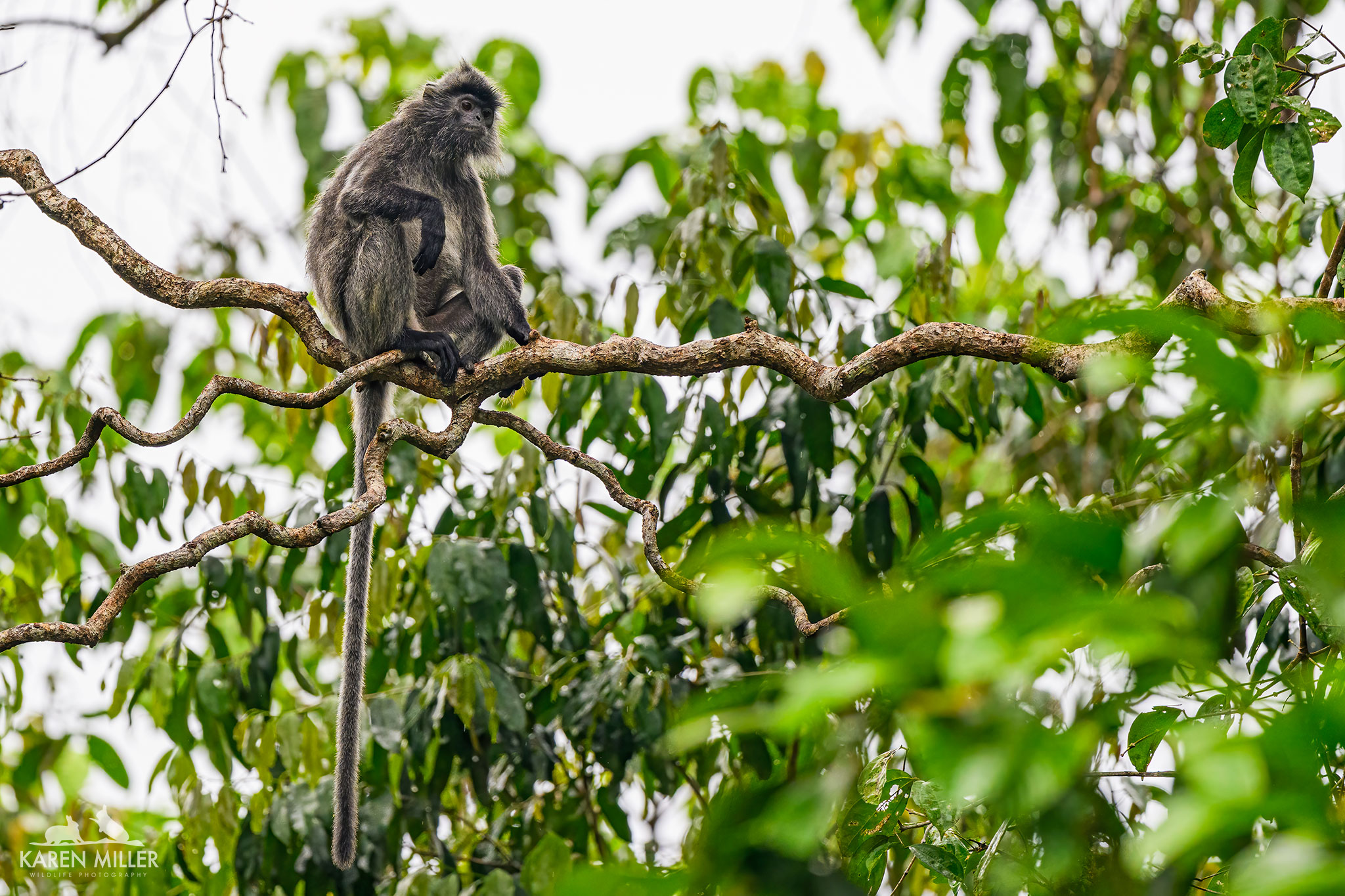
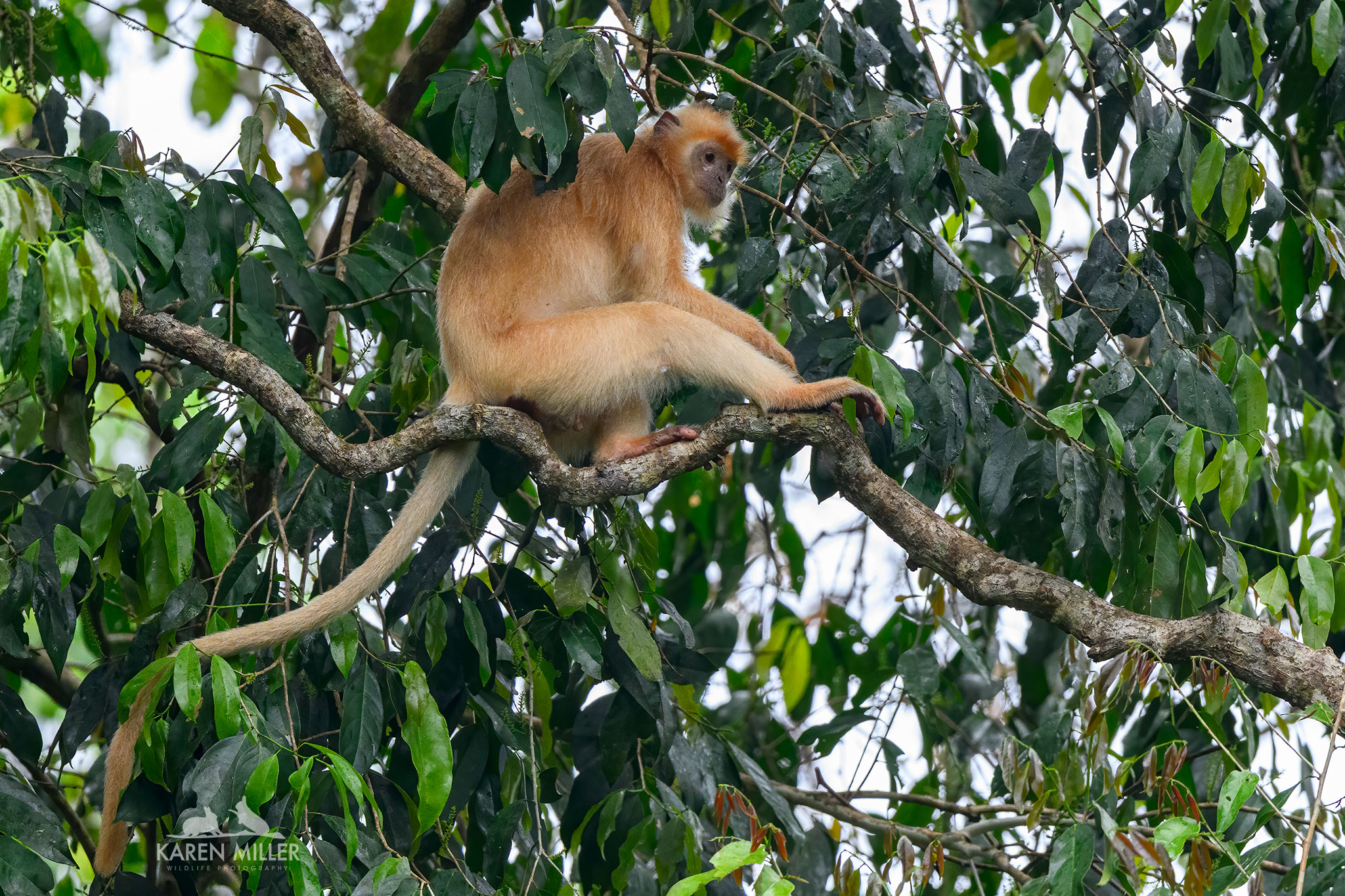
Their young are a similar colour to the proboscis monkeys so easy to spot as they cling to their mothers. This little one was so funny to watch.
What’s really interesting is that the troupe of silver-leafed monkeys we saw had a male proboscis monkey as the dominant animal and he had begun breeding with the females. This was one of the offspring. Obviously they shouldn’t be interbreeding.
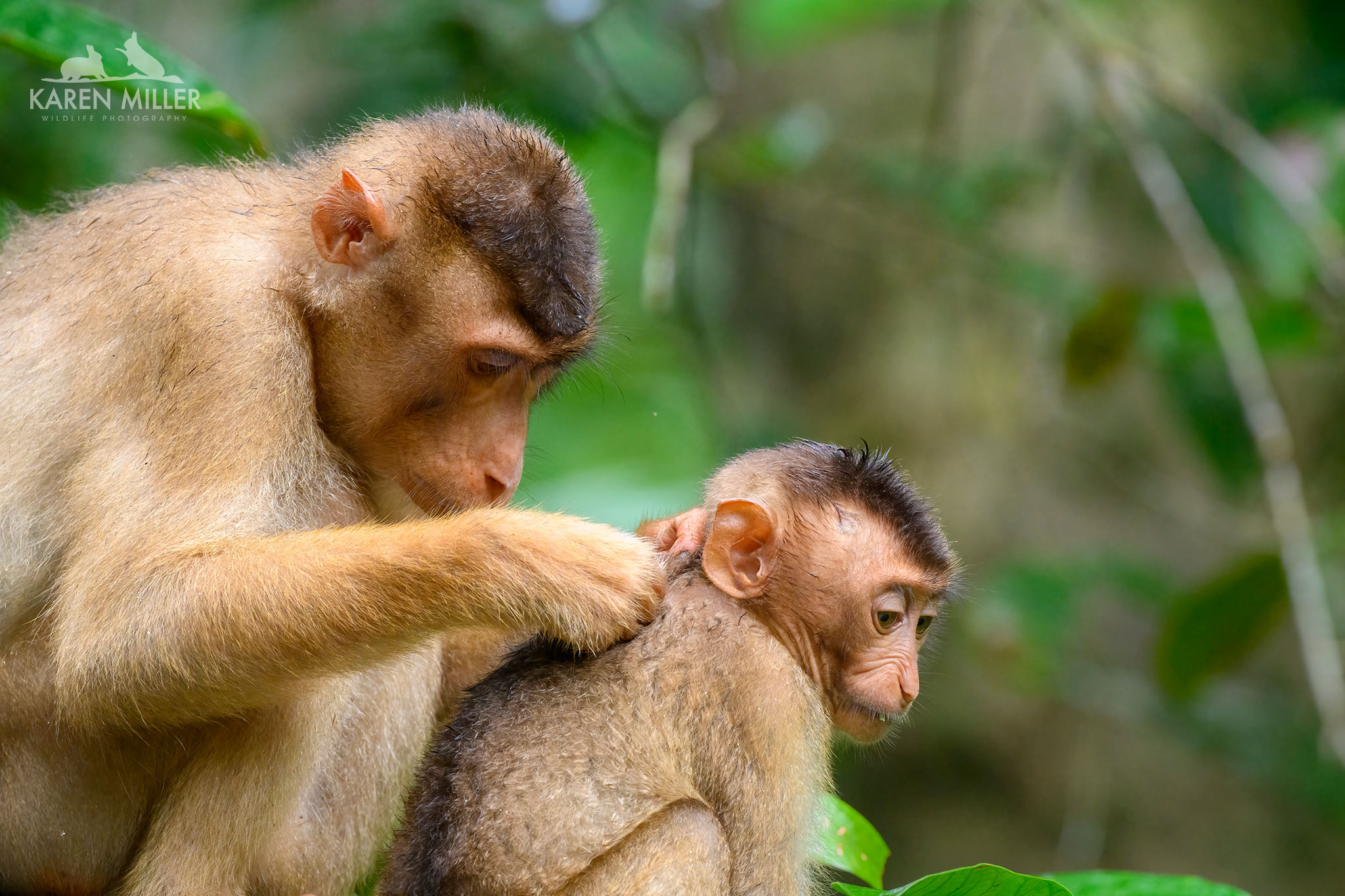
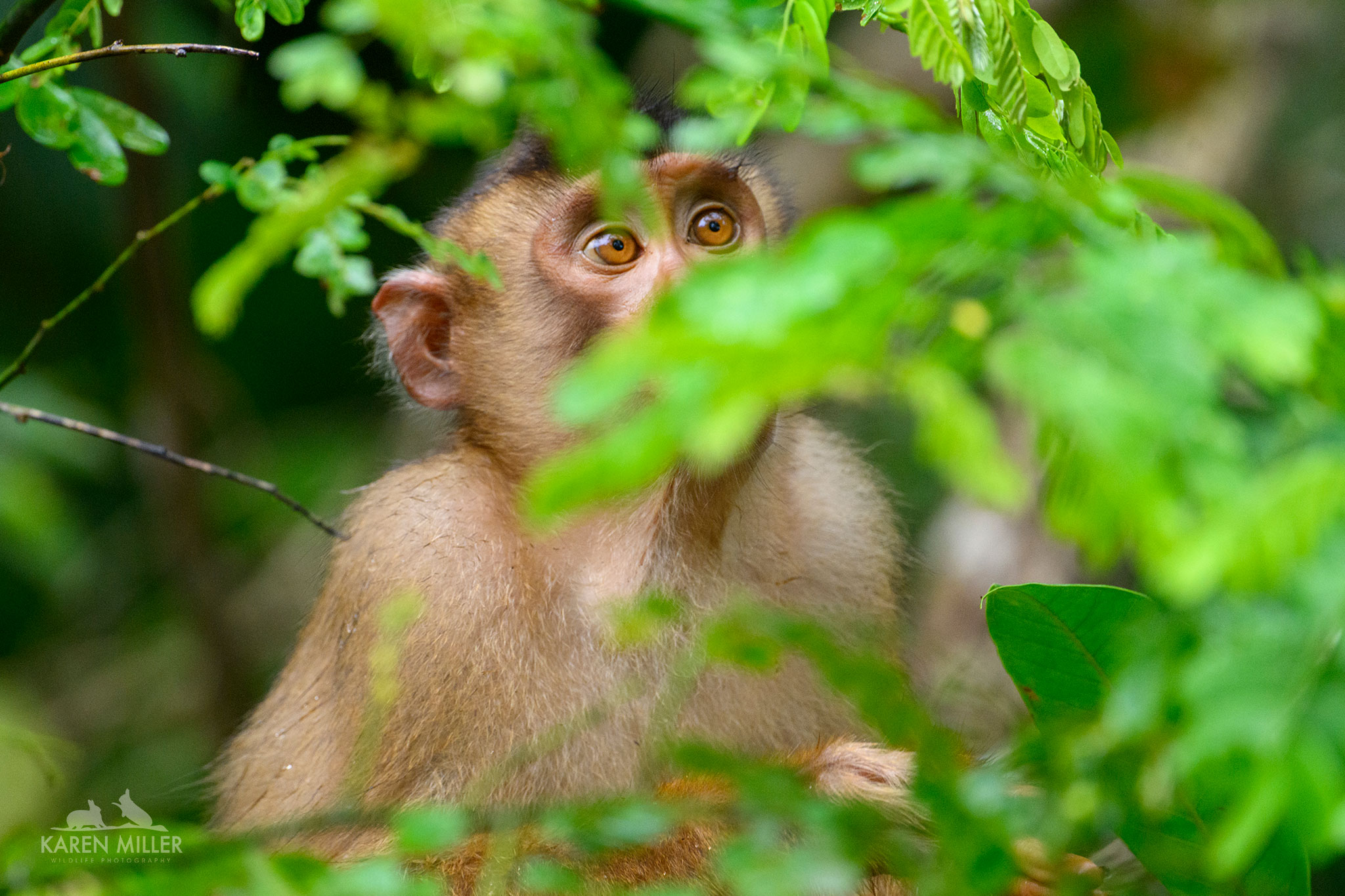
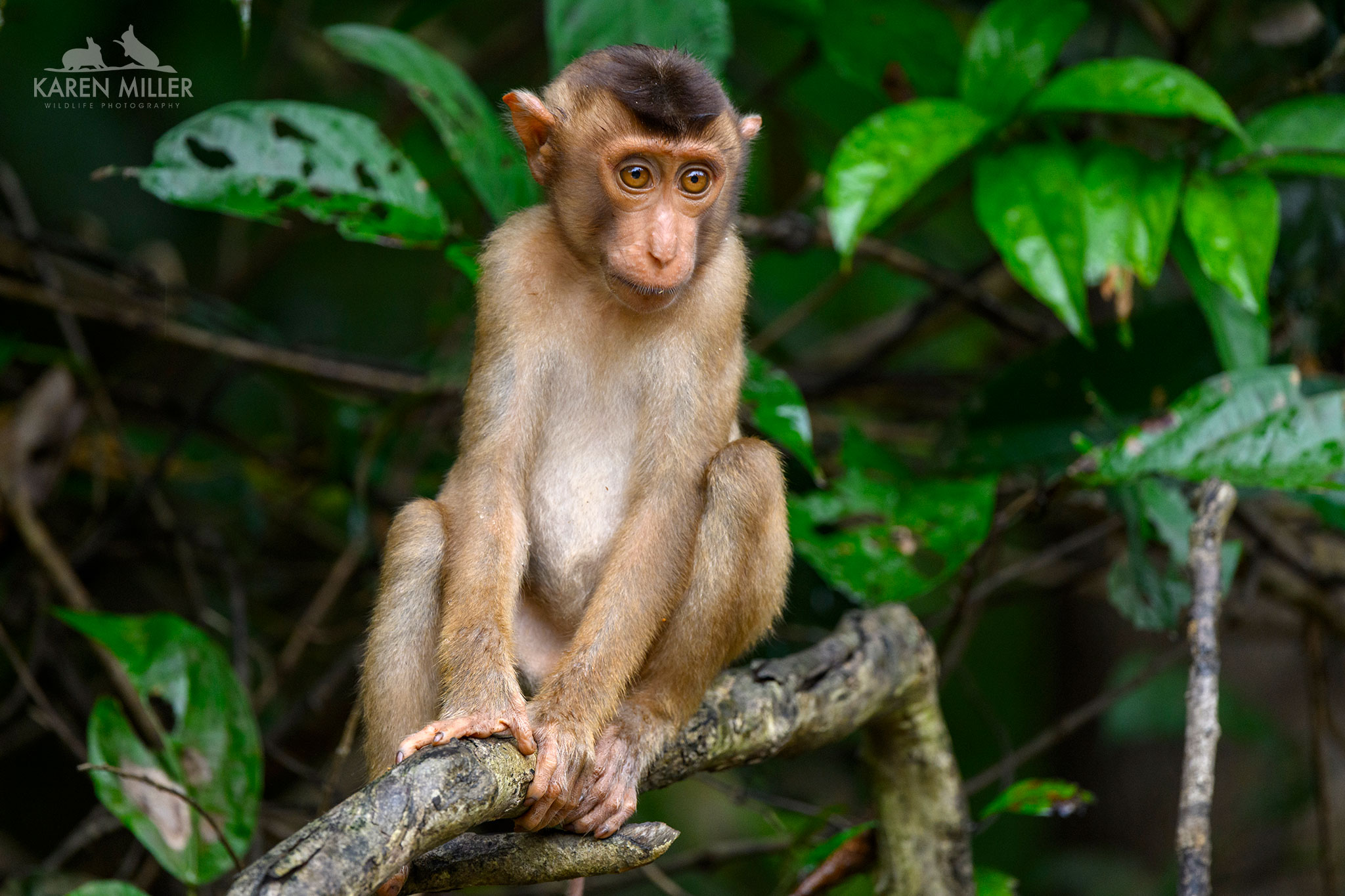
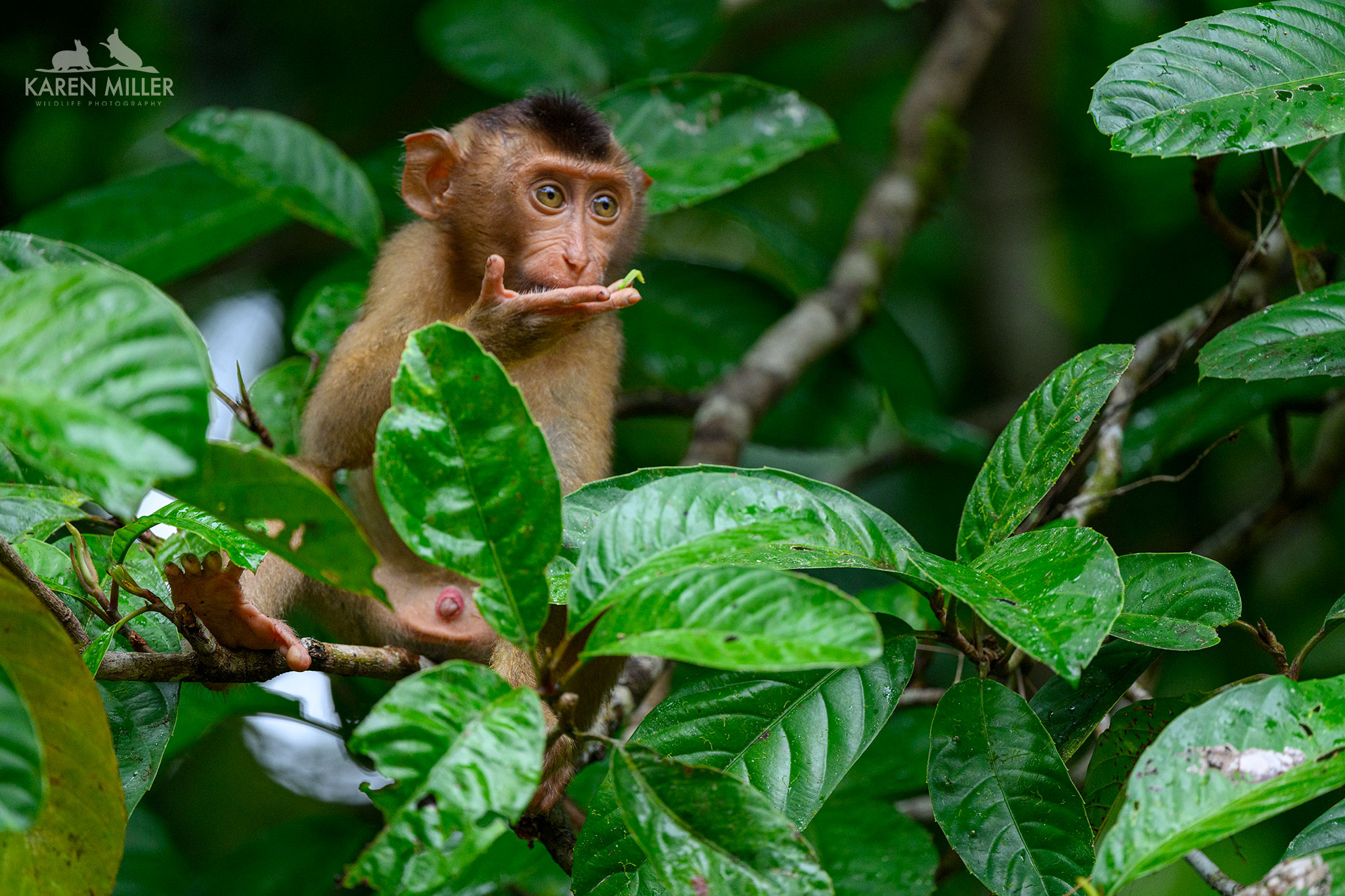
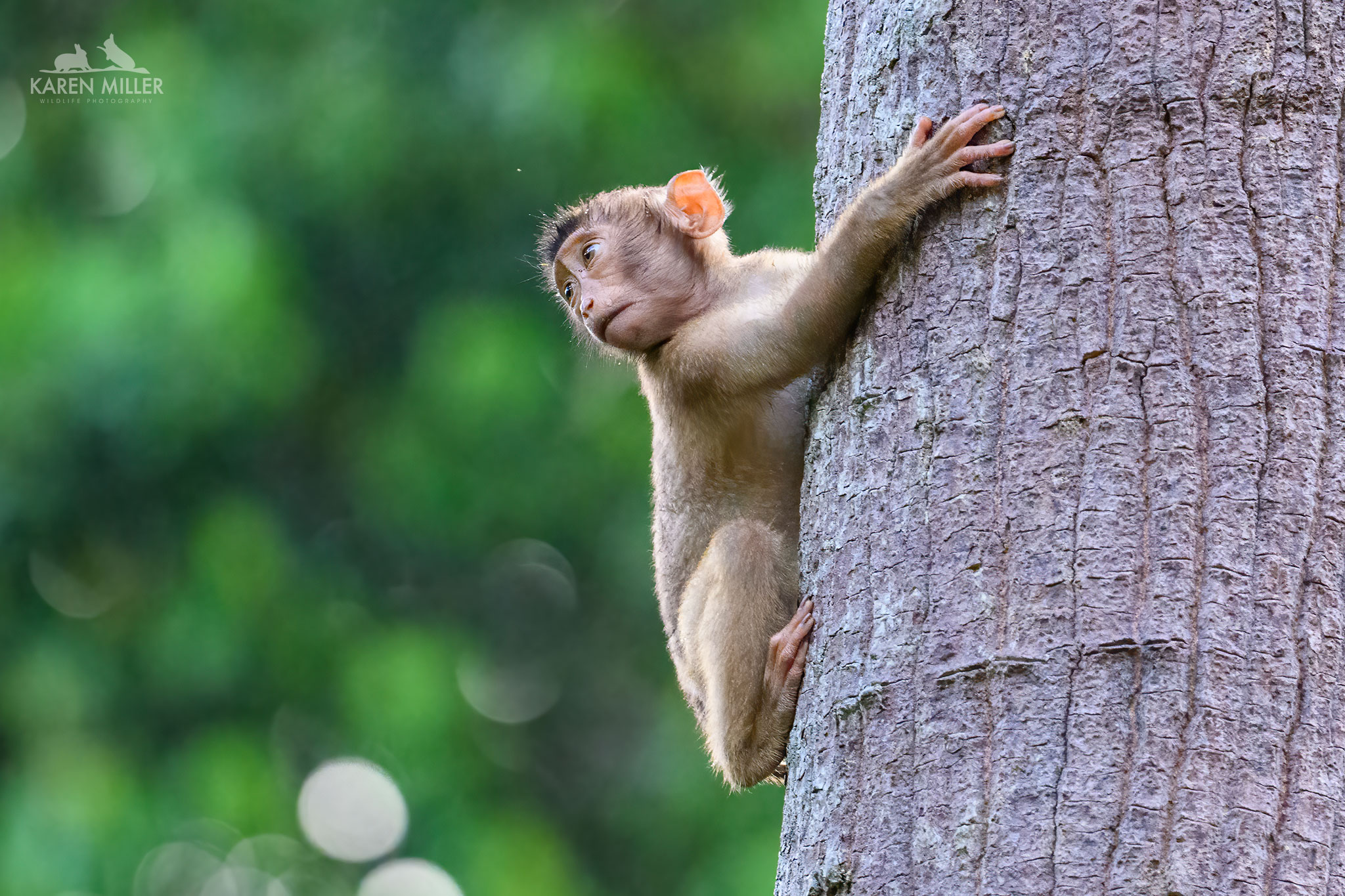
The way to spot most of the primates in the jungle was to watch for movement in the trees. Since I’ve returned home to Scotland, whenever I see leaves move I immediately think it’s a monkey when, obviously it isn’t! A lot of the time in Borneo it was macaques, either pig-tailed or long-tailed. They were everywhere! The youngsters had the most comical of faces.
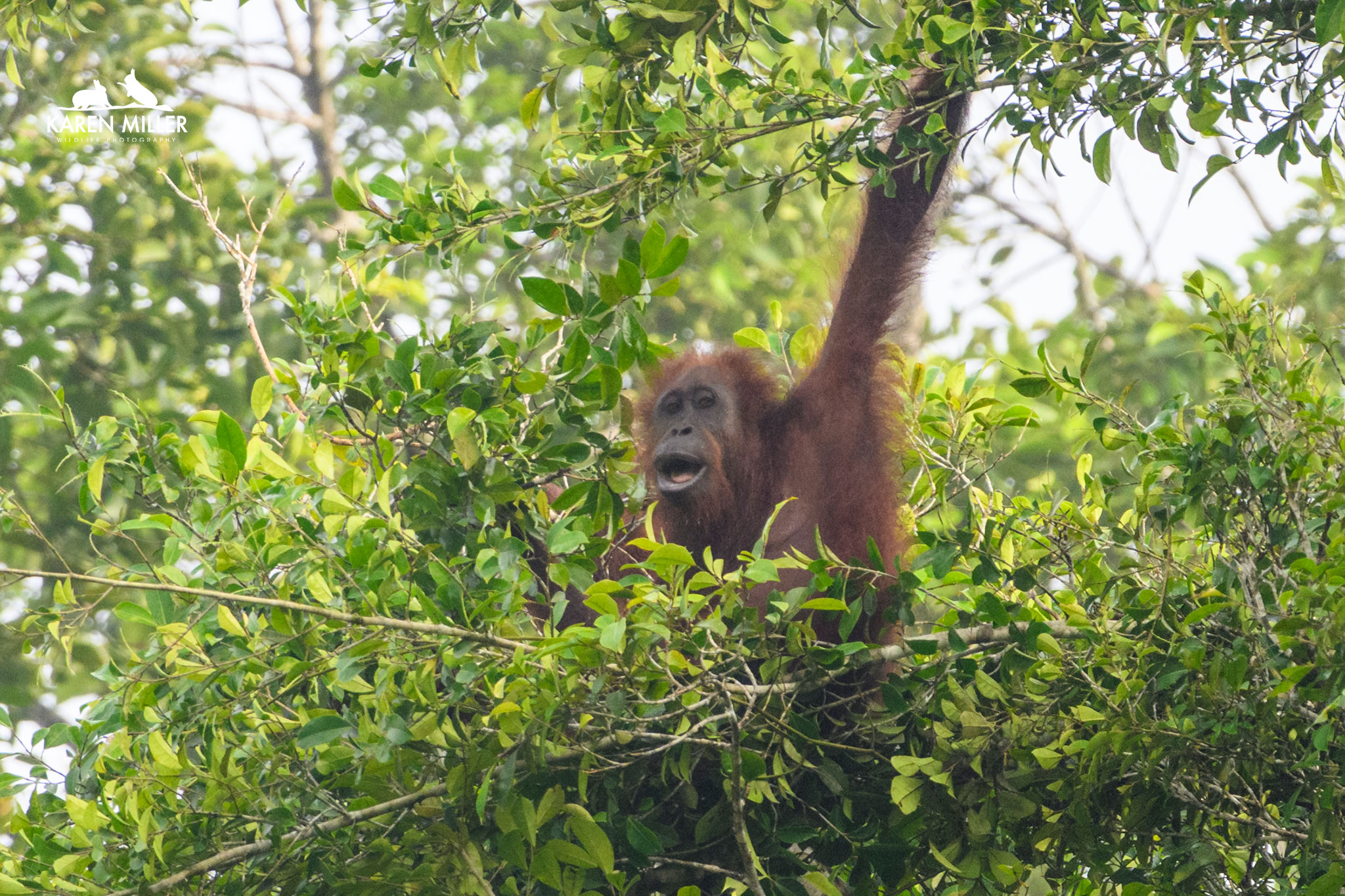
On our final morning it was just Gemma and I left with Sonny and we were absolutely delighted when we came across a truly wild orangutan female and her young infant very high up in a tree. We watched for ages as she munched on the leaves. The little one was hard to spot and we only had glimpses, but to see orangutans like this was a long-time dream of mine. It was such a privilege to have this experience.

Our very last boat trip on our final afternoon didn’t quite go to plan. It hadn’t rained when we departed which was unusual, but the sky was rapidly turning black. The monkeys were huddling in the trees aware that a storm was coming. After half an hour the rain came, as did the thunder and lightning. Within seconds we were drenched, but we continued on for an hour or so, although it was so wet and so dark we saw very little. Quite exhilarating in a way though!
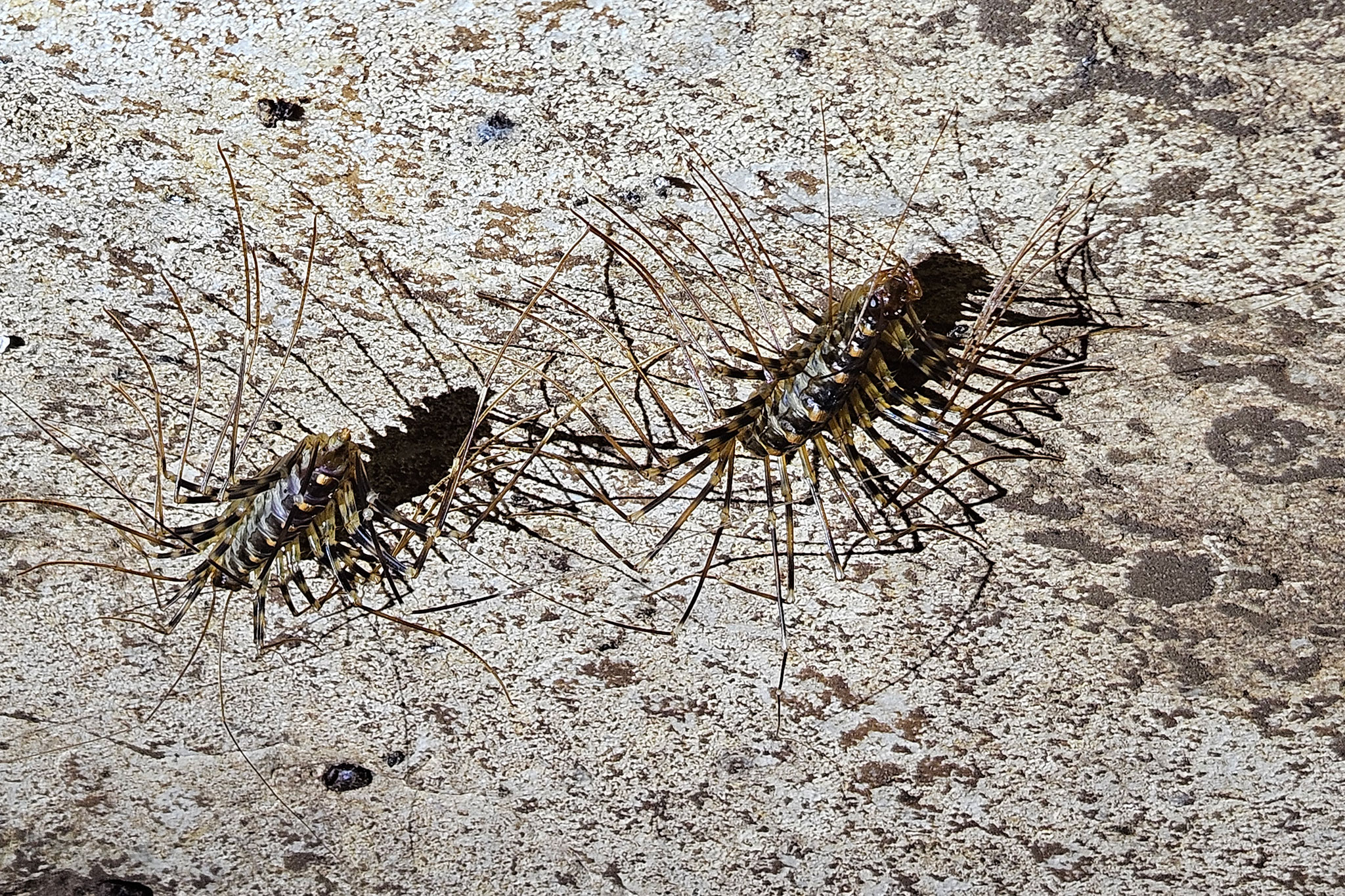
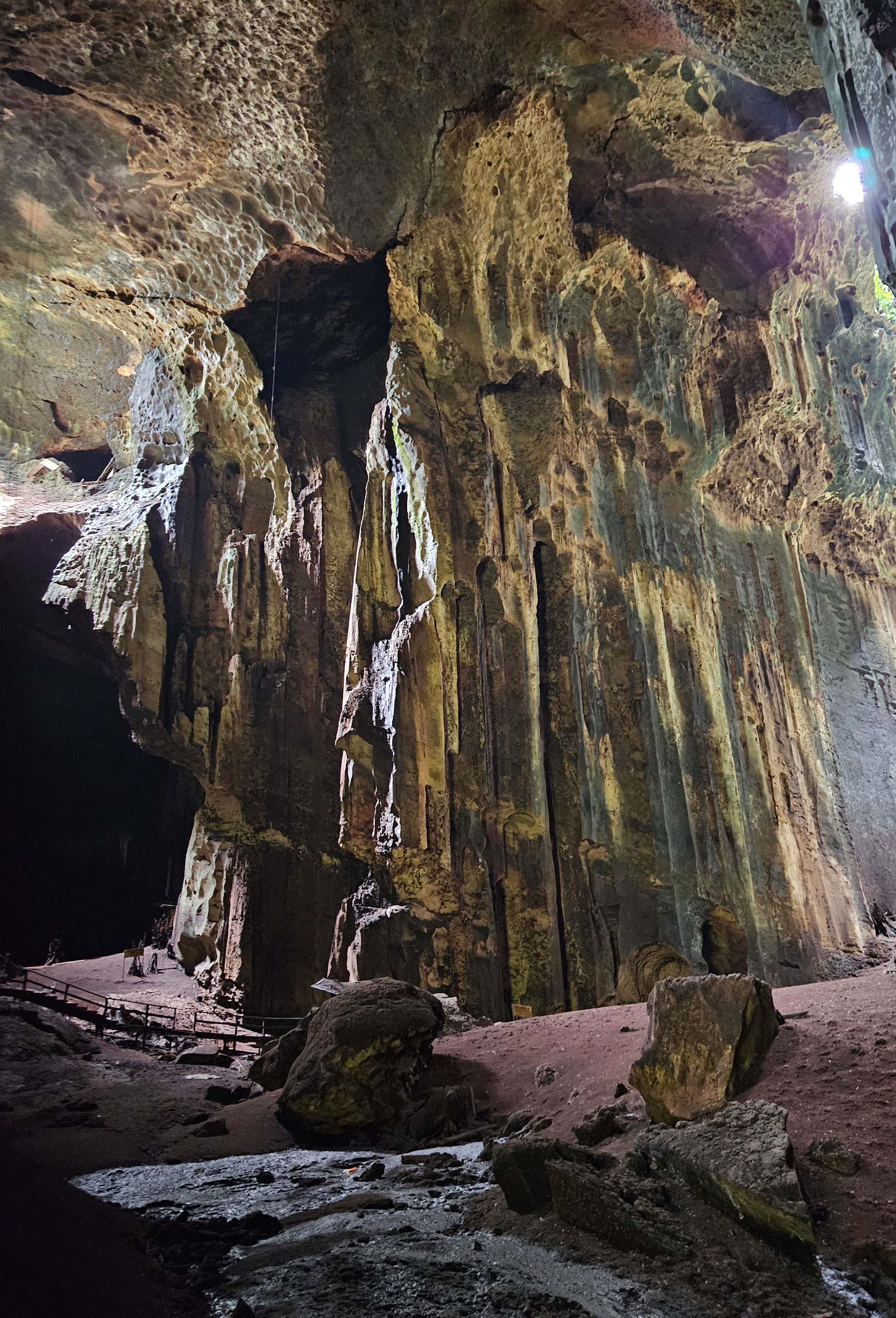
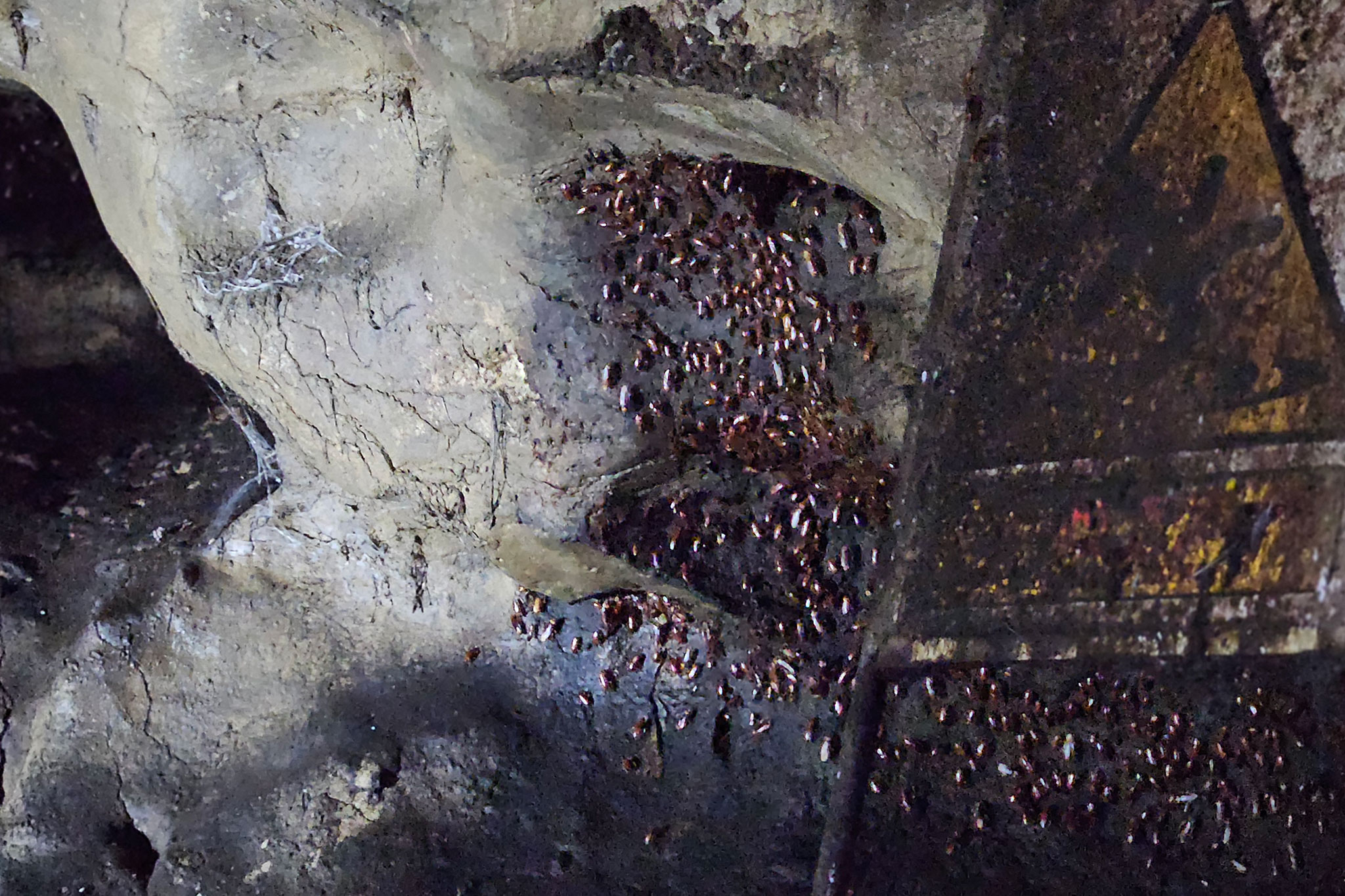
There was one land-based excursion that we were booked on whilst in Kinabatangan. That was a visit to the Gomantong Caves. This was my least favourite thing we did in Borneo. The cave was filled with huge cockroaches and very scary large poisonous centipedes the latter of which was nightmare inducing. There was a strong stench of ammonia. We wore hard hats to protect our heads from bat droppings. Some phone photos of the centipedes, the cave and the cockroaches.
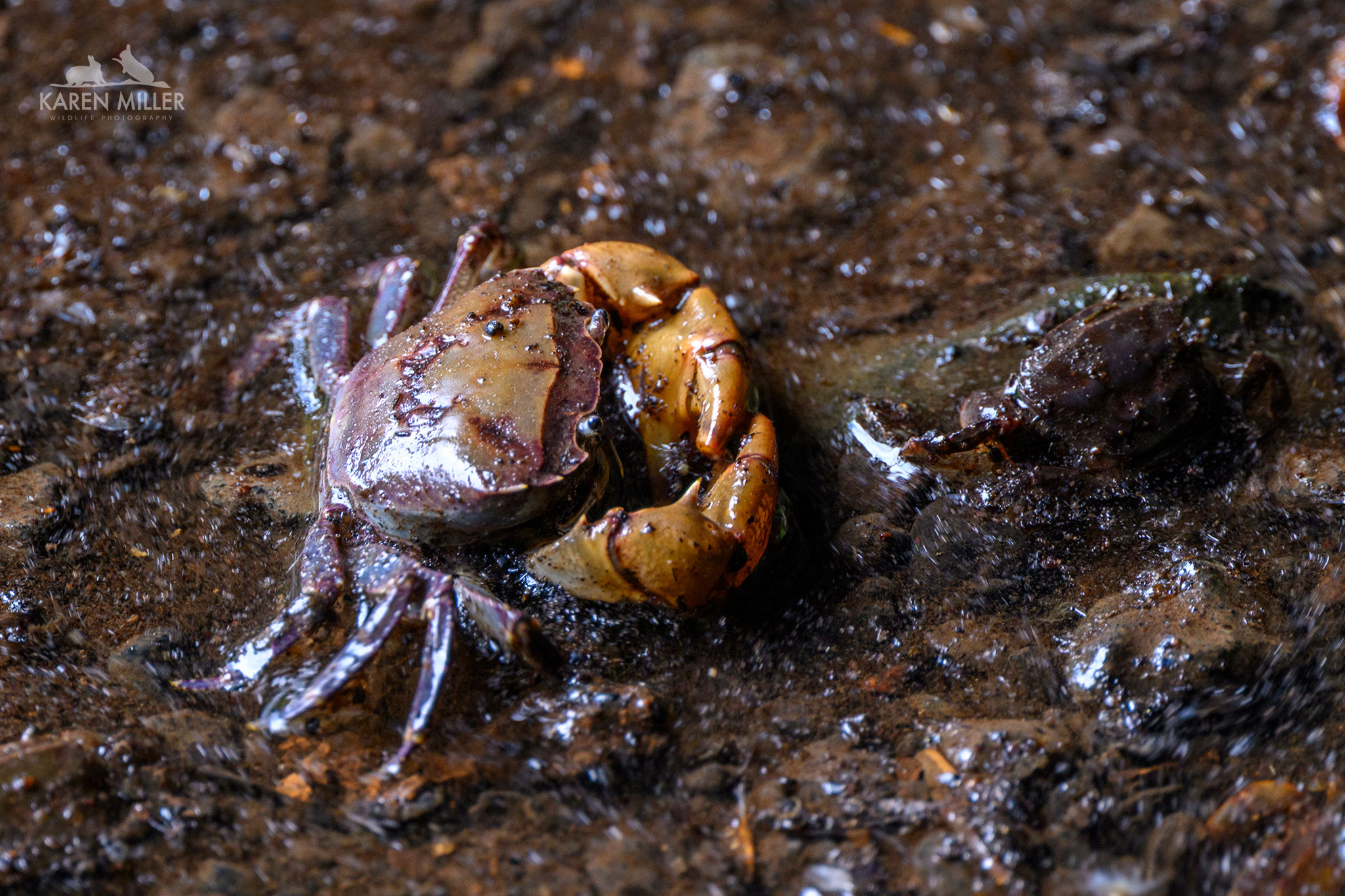
In the mud scuttled crabs
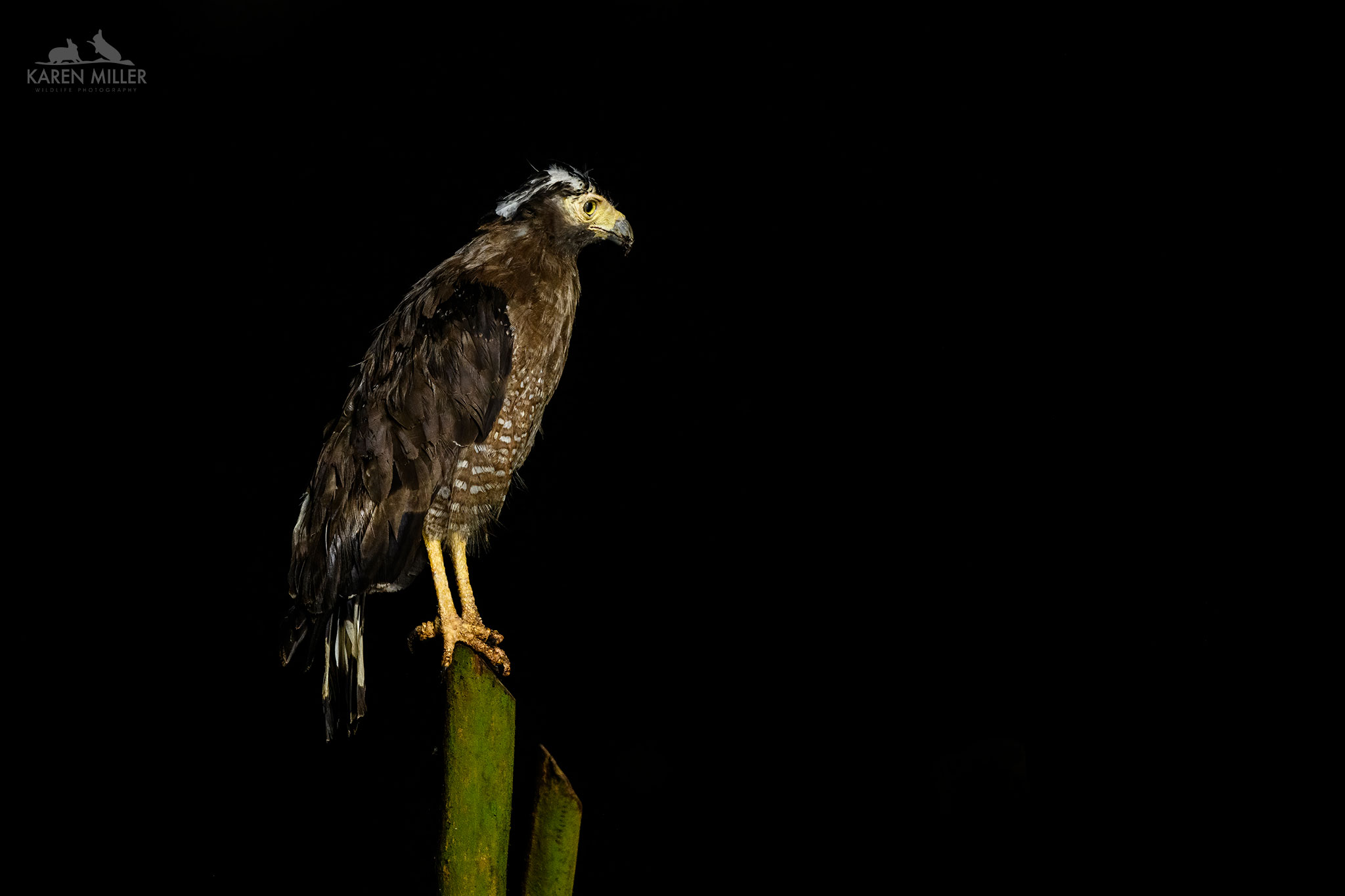
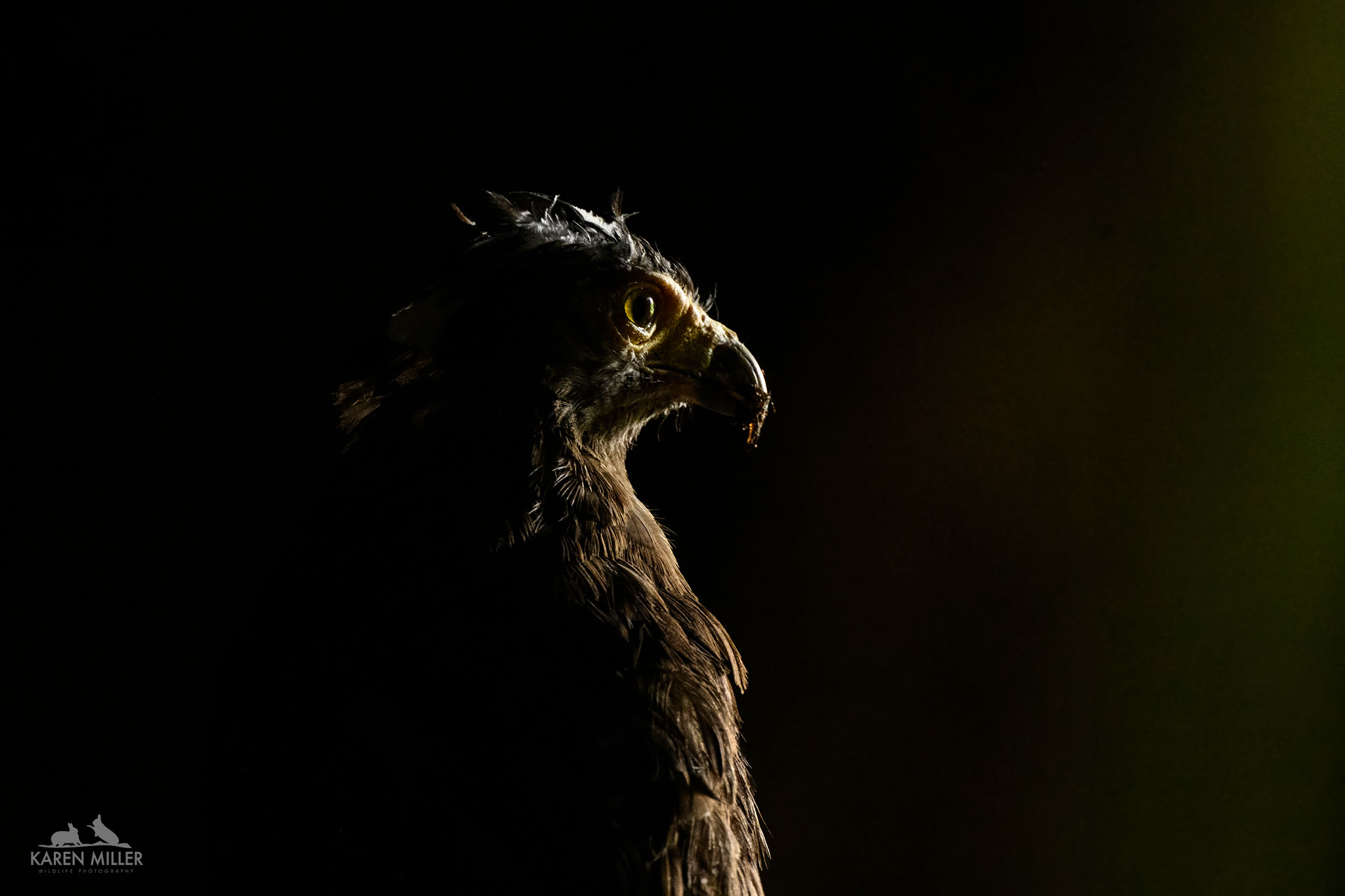
and the entrance was guarded by a very tame serpent eagle
Bats were flying about and hanging from the walls and roof
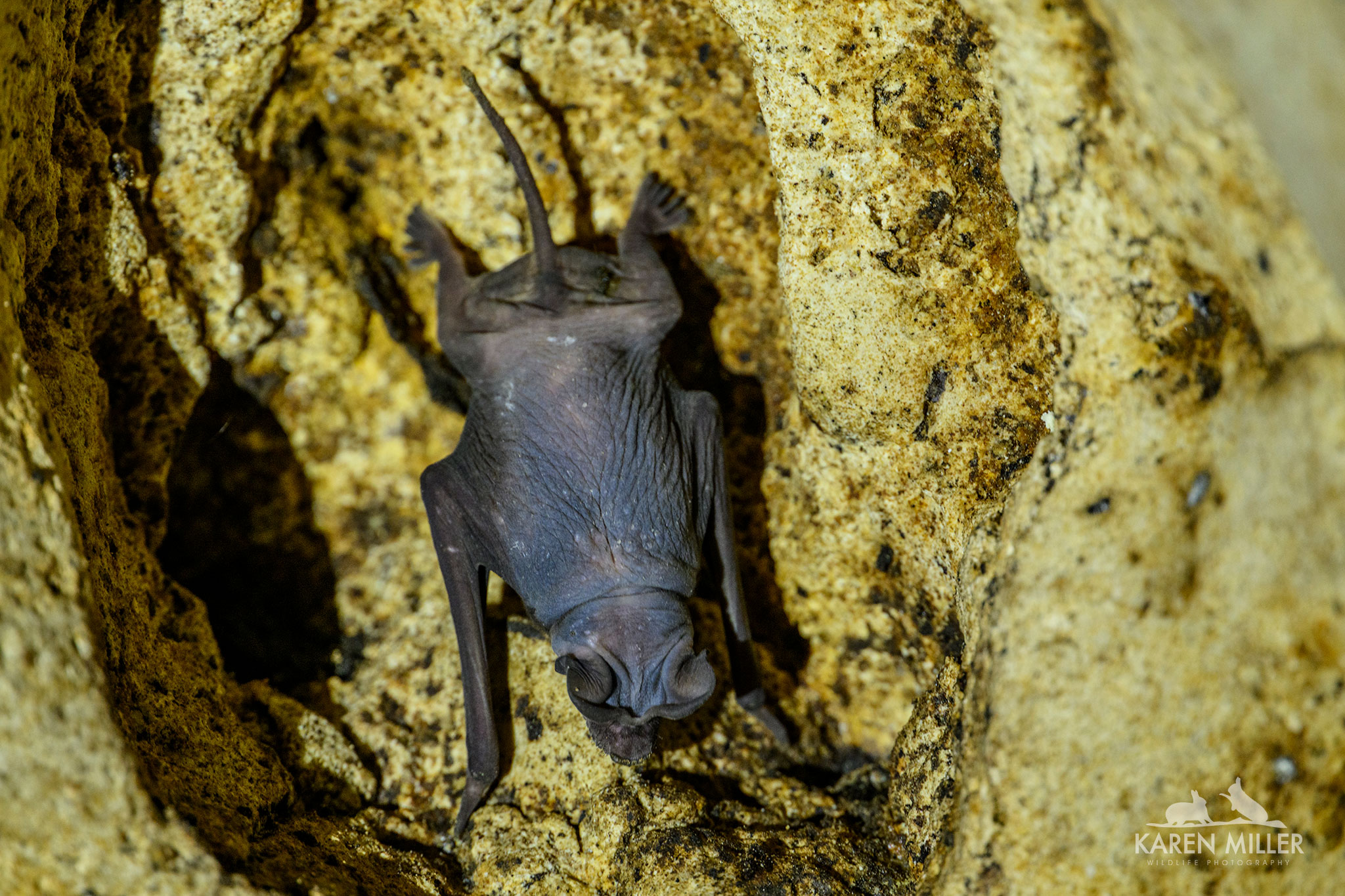
Apparently people come here to watch their evening exodus from the caves but for some reason we went in the morning. Horrible place.
Anyway… at certain times of year swiftlet nests are collected (once the young have fledged), not a job I’d want to do with all those horrible insects on the walls.
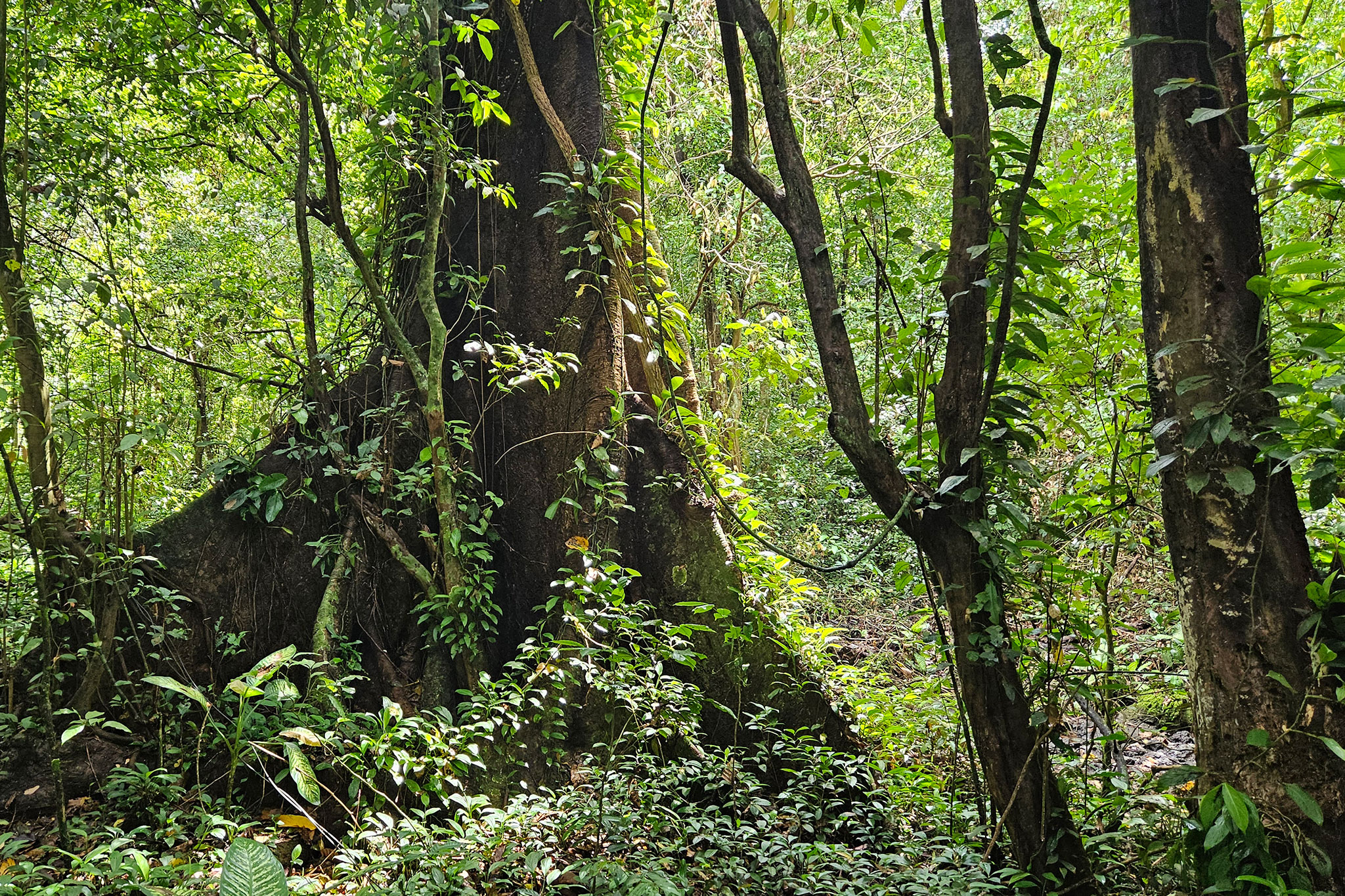
I’d read that the surrounding jungle was a very good place to spot wild orangutan, but we saw very little and the route didn’t seem to match the one I’d read about in reviews. We just missed red-leafed monkeys who were seen by the carpark whilst we were in the cave. Personally I wouldn’t recommend this, but could just be me! This is an image of the jungle we walked through to get to the cave.
But, all in all, Kinabatangan was excellent. I thoroughly enjoyed my time here. The wildlife, the boat trips, the jungle, the river, the cooler air on the boats and being with a lovely group of people and our own guide all worked brilliantly. 5* for SI Tours here.
Our final destination on our Borneo trip was Tabin, deep in the jungle. I was really looking forward to going here, but as you’ll read in my next blog (coming soon), it was a bit of a disappointment and we missed the organisational skills and efficiency of SI Tours.

 Karen Miller's Wildlife photography blog
Fascinating experience – apart from the cockroaches, of course. Mind you, the cockroaches will be here long after humanity has gone, and a little global warming will probably suit them down to the ground! Lovely photos as usual.
LikeLike
I think cockroaches and ticks will be all that remain once we destroy the planet! And, thanks. Yes, all very interesting, Kinabatangan was very enjoyable!
LikeLiked by 1 person